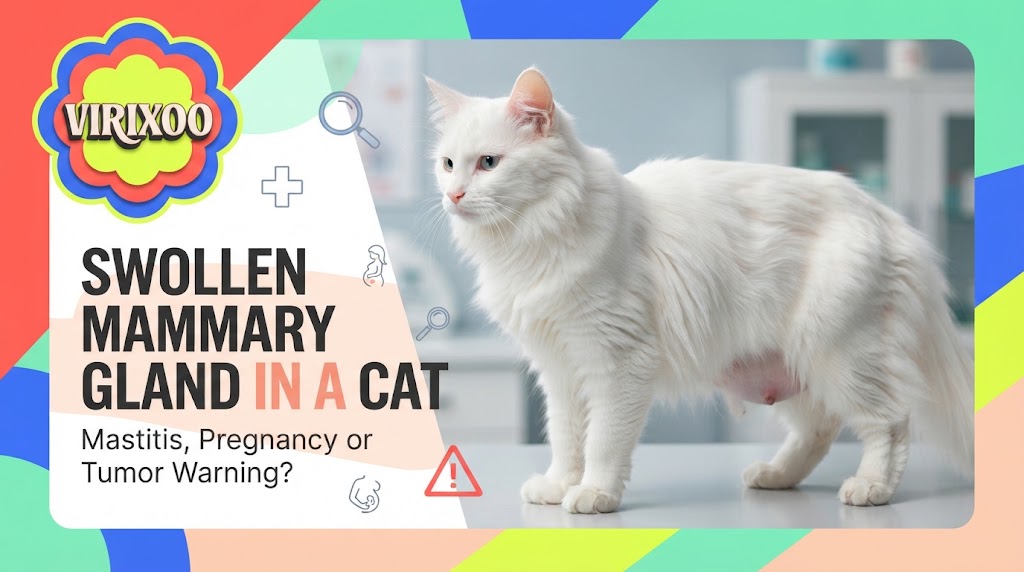
A swollen mammary gland in a cat can have several causes, ranging from normal changes around pregnancy and nursing to infection or mammary cancer. The pattern matters: one hot painful gland in a nursing queen suggests a different problem from a firm painless lump in an older unspayed cat.
Quick Answer
Arrange veterinary evaluation for any new mammary swelling that is painful, firm, persistent, ulcerated, or unexplained. Seek prompt care if a nursing cat has a hot painful gland plus fever, lethargy, food refusal, abnormal milk, or distressed kittens. A firm mammary lump should not be watched for months because feline mammary tumors can be aggressive.
Normal Pregnancy and Nursing Changes
Mammary glands enlarge during late pregnancy and milk production. Symmetrical enlargement across several glands can be normal in a healthy nursing cat, but sudden pain, heat, redness, or abnormal discharge is not.
Mastitis
Mastitis is inflammation or infection of the mammary gland, most often seen during lactation. An affected gland may become swollen, firm, hot, red, or painful. Milk can look discolored, thick, bloody, or abnormal, and the mother cat may become feverish or stop eating.
Why Kittens Matter
If a nursing mother develops mastitis, kittens may fail to gain weight, cry more, or avoid an affected nipple. Veterinary guidance is important because feeding plans may need to change depending on the mother’s treatment and the condition of the milk.
Hormonal Mammary Enlargement
Some young female cats can develop dramatic mammary enlargement related to progesterone exposure. This can occur after heat cycles, pregnancy, or certain hormone medications. The glands may become very large even without infection.
Mammary Tumors
Feline mammary tumors are an important concern, especially in older intact females. They may begin as small firm nodules near a nipple and can be easy to overlook. Early evaluation matters because many feline mammary tumors are malignant.
What a Suspicious Lump Can Feel Like
A tumor may feel firm, irregular, or attached to surrounding tissue. It may be painless at first. As it grows, the skin can ulcerate or the mass can interfere with movement. Do not rely on pain level to judge seriousness.
Trauma and Local Infection
Bites, scratches, or skin infection near a mammary gland can cause localized swelling that resembles mastitis. Outdoor cats and cats living with other animals may develop abscesses in this region.
What to Check at Home
Gently observe all mammary glands from front to back. Note whether one gland or several are affected, whether the area is hot, painful, firm, soft, or ulcerated, and whether any discharge is present. Do not squeeze the gland aggressively.
Red Flags
| Finding | Concern |
|---|---|
| Hot painful gland in nursing cat | Possible mastitis |
| Fever or lethargy | Systemic infection possible |
| Firm persistent lump | Needs evaluation for mammary tumor |
| Ulceration or bleeding | Prompt veterinary assessment |
| Kittens not gaining weight | May indicate feeding or milk problem |
What the Veterinarian May Do
The veterinarian may examine every mammary gland and nearby lymph nodes. Depending on the pattern, tests can include cytology, biopsy, blood work, imaging, bacterial culture, or chest imaging if a tumor is suspected.
Treatment Depends on the Cause
Mastitis may require antibiotics, pain control, supportive care, and management of nursing. Hormonal enlargement may require removing the hormonal trigger and monitoring. Mammary tumors are often treated surgically when appropriate, and the extent of surgery depends on tumor location and staging.
Why Spaying History Matters
Hormonal exposure influences mammary-tumor risk. Tell the veterinarian whether the cat is spayed, when spaying occurred, whether she has had litters, and whether hormone medications have ever been used.
Bottom Line
A swollen mammary gland can be related to nursing, infection, hormones, trauma, or cancer. Painful hot swelling in a nursing cat and firm persistent lumps in an adult cat both deserve veterinary attention, but for different reasons.
Why Early Mammary Tumor Evaluation Matters
Smaller tumors are generally easier to stage and remove than large ulcerated masses. Because feline mammary tumors are often malignant, waiting for a lump to become painful is not a safe screening strategy.
What to Record in a Nursing Cat
Track the mother’s appetite, temperature if instructed, milk appearance, and which glands are swollen. Weigh kittens daily if the veterinarian recommends it. Poor kitten weight gain can be an early sign that nursing is not going well.
When the Skin Over the Gland Changes
Redness, thinning, ulceration, discharge, or bleeding over a mammary mass or infected gland increases urgency. Prevent licking and contact the clinic rather than applying creams or attempting to drain the area.
A Practical Decision Guide
For swollen mammary gland in a cat, start by deciding whether the change is truly new and whether the cat can still perform basic functions normally. Breathing, walking, eating, drinking, urinating, defecating, grooming, and responding to the environment are more useful than one isolated sign. A cat that becomes weak, painful, unable to urinate, unable to swallow, or neurologically abnormal has moved beyond routine home monitoring.
Next consider speed. A problem that develops over minutes or hours generally deserves more urgency than a stable finding that has looked the same for months. Finally, look for combinations of signs. Pain plus food refusal, weakness plus pale gums, eye change plus vision loss, or swelling plus breathing difficulty are more concerning than a single mild feature.
What to Record Before the Appointment
Write down when the problem began, whether onset was sudden or gradual, and whether it is constant or intermittent. Record appetite, water intake, urination, stool, grooming, sleep, breathing, movement, and behavior. Include recent trauma, falls, fights, medication changes, toxin exposure, weight loss, vomiting, diarrhea, or outdoor access when relevant.
A short photo or video can be useful if the sign comes and goes, but do not provoke pain, force movement, manipulate an injured area, or delay urgent care just to document the problem.
Common Mistakes Owners Make
- Waiting for a dramatic symptom before calling.
- Using leftover medication from another illness.
- Giving human pain medicine.
- Repeatedly touching or testing a painful body part.
- Assuming normal eating means the cat is not in pain.
- Stopping treatment as soon as one visible sign improves.
How to Keep the Cat Comfortable While Waiting
Use a quiet indoor room, minimize unnecessary handling, and keep food, water, and the litter box easy to reach. Prevent access to stairs or high furniture when movement is abnormal. If trauma is suspected, restrict activity. Do not force food, water, exercise, or handling when the cat is distressed.
What Follow-Up Should Focus On
After treatment begins, improvement should involve the whole cat rather than only the visible sign. Appetite, grooming, mobility, litter-box habits, breathing, sleep, and social behavior should move back toward the cat’s normal baseline. Contact the clinic if the original problem returns, new signs appear, or the cat worsens after initially improving.
When to Recheck Even After Initial Improvement
A cat can look better for a few hours while the underlying problem remains. Recheck is appropriate when the sign returns, appetite falls, the cat hides more, breathing changes, mobility worsens, or new pain appears. Follow any scheduled veterinary recheck even if the visible sign seems smaller or less dramatic.
Do not stop prescribed medication early, change the dose, or add supplements without discussing it with the veterinarian. If a new symptom appears after treatment begins, report both the new sign and the timing relative to medication, feeding, or activity changes.
Why Every Mammary Gland Should Be Checked
Cats have multiple mammary glands arranged in two chains. A lump in one area does not rule out smaller nodules elsewhere. Veterinary examination usually includes the entire chain and nearby lymph nodes because more than one gland can be affected.
Why Size Alone Does Not Define Seriousness
A tiny firm nodule can be clinically important even if the cat feels completely normal. Conversely, dramatic enlargement during lactation can be inflammatory rather than cancerous. The pattern, age, reproductive history, and tissue diagnosis matter more than appearance alone.
Why a Nursing Mother Can Become Sick Quickly
Mastitis can progress from one painful gland to systemic illness. Fever, dehydration, poor appetite, lethargy, or reduced interest in the kittens means the mother needs prompt veterinary treatment rather than local massage alone.
Final Safety Check
Before continuing home observation, confirm that the cat is comfortable, breathing normally, responsive, and able to eat, drink, move, urinate, and defecate. A worsening change in any of these basic functions is more important than one isolated symptom appearing slightly better. When the cause is uncertain or the sign is progressing, veterinary reassessment is safer than prolonged experimentation at home.
Why Reproductive History Helps the Veterinarian
Age at spaying, previous pregnancies, current nursing status, and any use of hormone medications can all help interpret mammary changes. Bring this history even if the swelling appears unrelated to reproduction.
If a lump has been present for some time, estimate when it was first noticed and whether it has grown. Serial measurements or photographs can help show progression, but they should not replace timely evaluation of a firm persistent mammary mass.