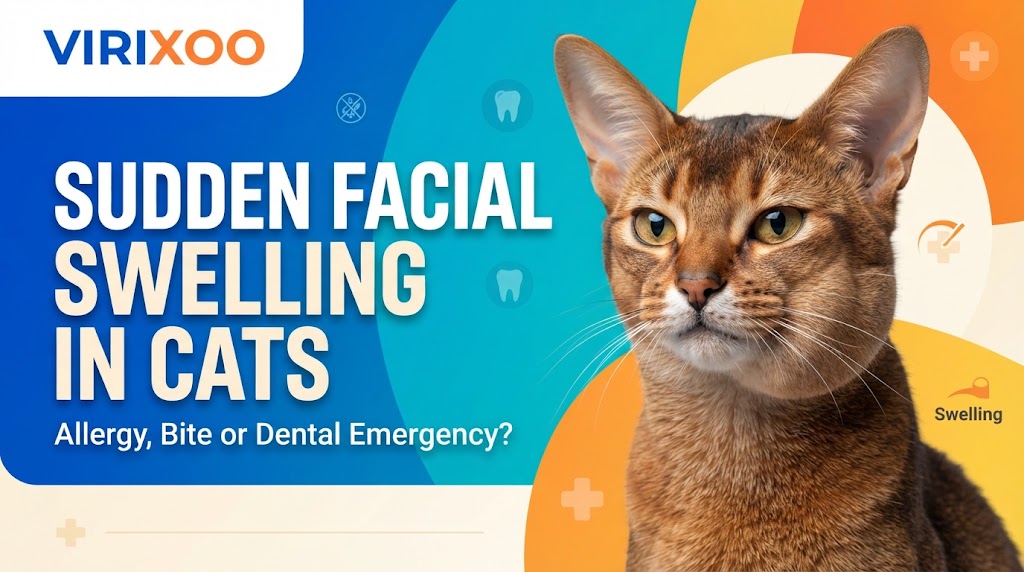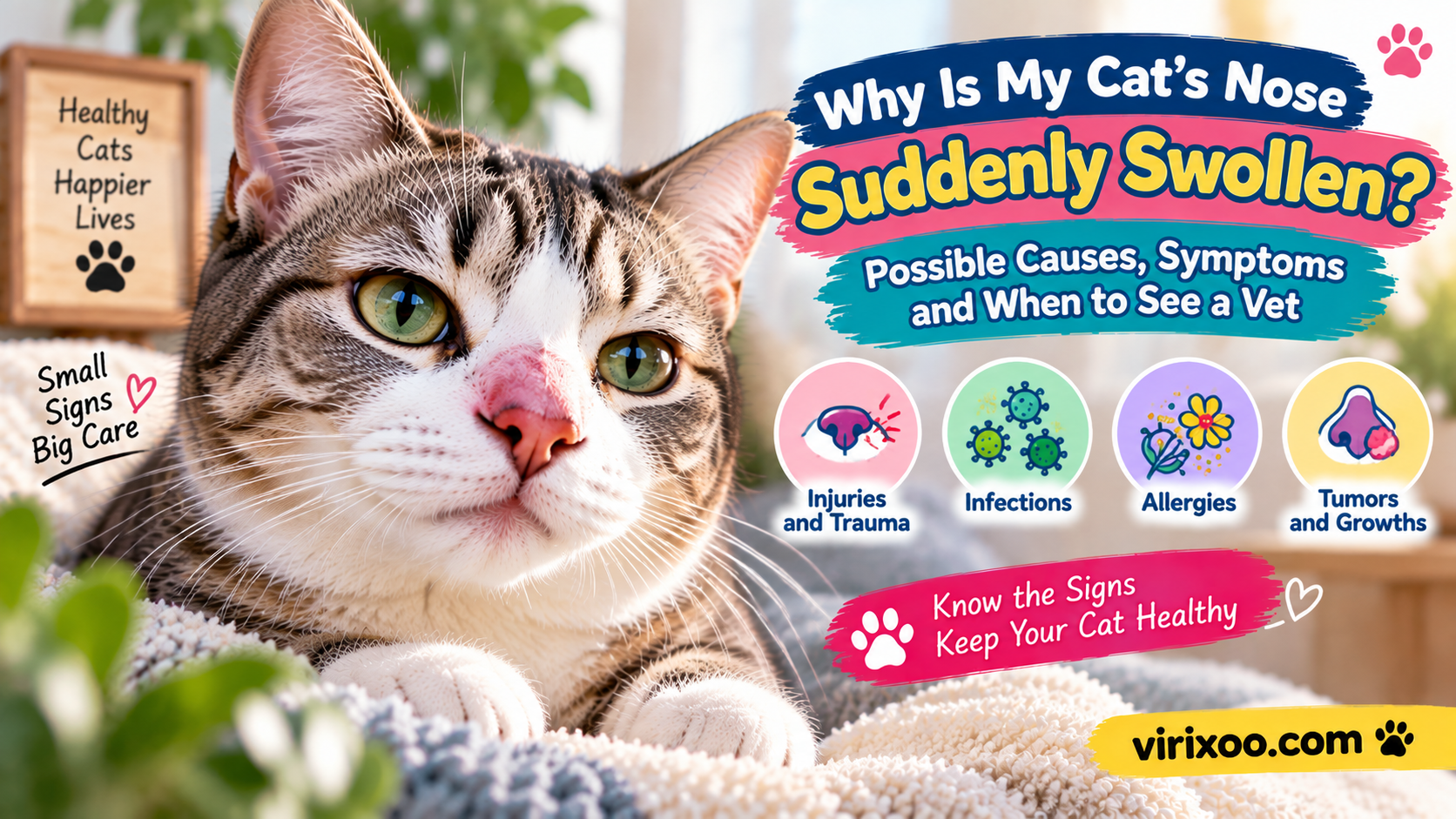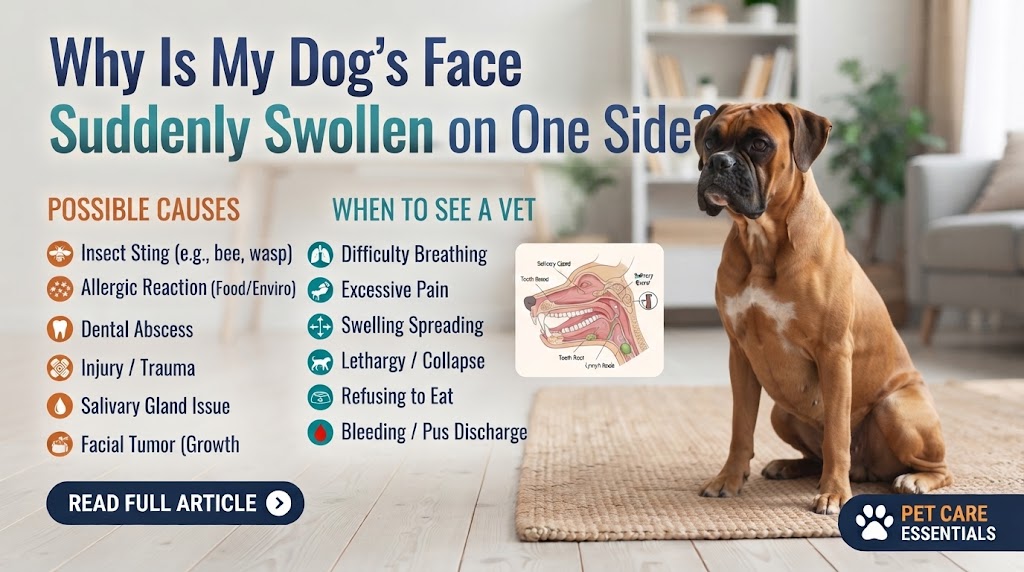
Sudden swelling of one whisker pad or one side of a cat’s muzzle should be treated as a medical sign, not a cosmetic change. Dental infection, a bite wound, insect sting, trauma, skin infection, or an oral mass can all create one-sided facial swelling.
Quick Answer
Check whether swelling is rapidly increasing and whether the cat is breathing, swallowing, and eating normally. Look for dental odor, drooling, a broken tooth, puncture wound, pain, heat, discharge, or recent outdoor exposure. Rapid facial swelling with breathing difficulty, tongue swelling, collapse, or severe weakness is an emergency. A painful one-sided swelling should be examined promptly even when breathing is normal.
Dental Abscesses Can Cause Facial Swelling
Infection around a tooth root can sometimes create swelling of the face or muzzle. Bad breath, drooling, reduced chewing, food dropping, or a damaged tooth may be present. Dental infection cannot be reliably treated by draining the visible swelling alone because the diseased tooth may still require treatment.
For related oral clues, see Why Does My Cat Have Bad Breath?.
Bite Wounds and Abscesses
A bite puncture can seal quickly, trapping bacteria below the skin. Over several days the area may become warm, painful, soft, or firm and can eventually drain pus. Cats that go outdoors or recently fought are at higher risk.
Insect Stings and Allergic Reactions
A localized sting can cause sudden swelling. If swelling remains mild and the cat is otherwise normal, contact a veterinarian for advice. Rapid progression, vomiting, weakness, breathing difficulty, or tongue and throat swelling raises concern for a severe allergic reaction.
Trauma
A fall, collision, bite, or blunt injury can produce swelling even without an obvious wound. Facial trauma can also damage teeth or the jaw. Pain when chewing or an abnormal bite warrants prompt examination.
Oral or Skin Masses
Gradually enlarging one-sided swelling can reflect a growth in the mouth, under the skin, or around the tooth roots. Weight loss, bleeding, foul odor, or persistent drooling increases concern. A mass should not be assumed to be an abscess based on appearance alone.
Do Not Squeeze the Swelling
Trying to drain or press the area can cause pain and does not identify the cause. Do not puncture it with a needle or apply caustic products.
What to Observe
- How quickly the swelling appeared.
- Whether it is one-sided or spreading.
- Whether the cat can breathe and swallow normally.
- Bad breath, drooling, or food dropping.
- Puncture wounds, scabs, or discharge.
- Recent dental trauma, fights, or insect exposure.
When to Seek Care
| Finding | Response |
|---|---|
| Small stable swelling, cat comfortable | Arrange veterinary evaluation |
| Painful swelling, dental signs, pus, fever | Prompt care |
| Rapidly increasing swelling | Urgent assessment |
| Breathing difficulty, tongue swelling, collapse | Emergency care |
What the Veterinarian May Do
The veterinarian may examine the mouth, teeth, skin, lymph nodes, and jaw. Depending on the findings, dental radiographs, needle sampling, culture, blood tests, imaging, or biopsy may be recommended. Treatment is directed at the cause, not simply at reducing the visible swelling.
Related Virixoo Guides
If a tooth is visibly damaged, see Broken or Chipped Tooth in Cats. If the jaw cannot close normally, use Cat Cannot Close Its Mouth.
Bottom Line
One-sided whisker-pad swelling can come from dental, skin, allergic, traumatic, or mass-related causes. Because facial swelling can progress and dental disease can hide below the gum line, persistent or painful swelling deserves examination. Breathing or swallowing changes make the situation urgent.