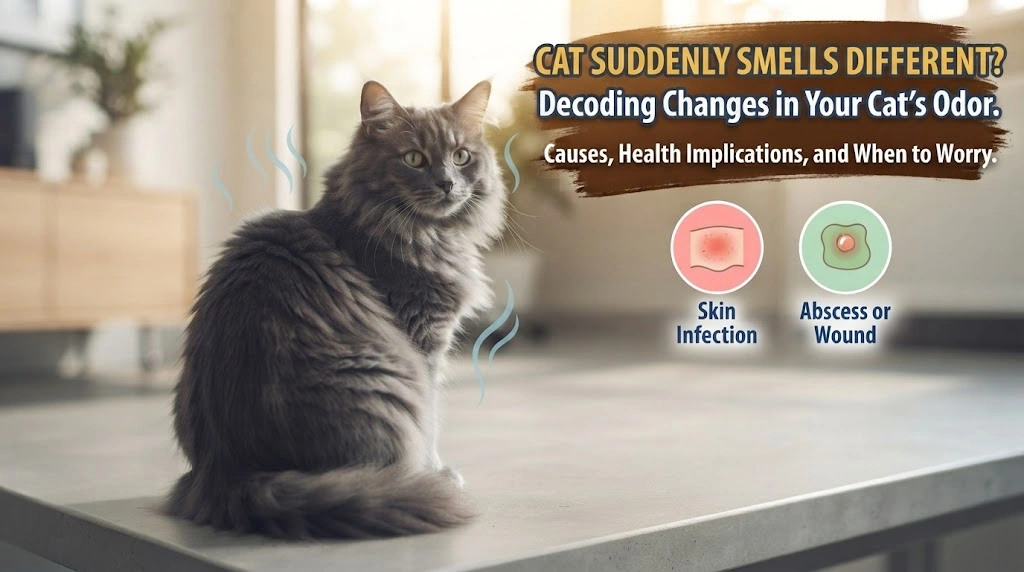
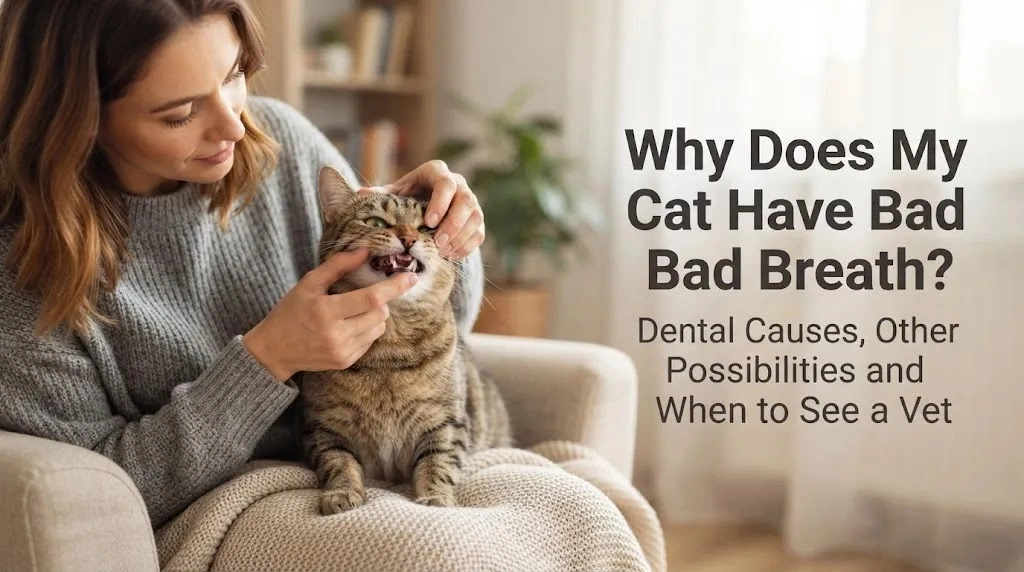
A meal of strong-smelling food can briefly change a cat's breath, but persistent foul odor is not something to cover up with treats or additives. The mouth is the most common place to start looking: plaque, inflamed gums, diseased teeth, tooth resorption and other oral problems can create odor and pain. Less commonly, an unusual breath odor may accompany disease elsewhere in the body, so the whole cat matters as much as the smell.
Quick Answer
If the odor is new and lasts beyond a meal, arrange a mouth and dental check, particularly if you notice red or bleeding gums, drooling, food dropping, chewing changes, facial swelling or reduced appetite. Do not use human toothpaste, mouthwash or breath products. A strong odor together with weight loss, increased thirst, vomiting, weakness or other illness signs also warrants veterinary assessment.
Common Reasons a Cat's Breath Smells Bad
Plaque, gingivitis and periodontal disease
Bacteria and inflammation around the teeth and gums are common sources of persistent odor. The visible part of a tooth may look acceptable while disease exists below the gum line, which is one reason a proper veterinary oral examination matters.
Tooth resorption or painful teeth
Cats can develop painful lesions in which tooth structure is progressively lost. Signs may be subtle: chewing on one side, jaw chattering, dropping kibble, avoiding hard food or suddenly pulling away from the bowl. Breath odor can occur alongside these changes.
Inflammation elsewhere in the mouth
Ulcers, gingivostomatitis, oral trauma, infected wounds or masses can alter odor and make eating uncomfortable. Excess saliva, blood, pawing at the mouth or obvious pain should move the problem beyond simple home dental care.
Food and temporary odors
Fishy or strongly scented food can cause short-lived odor. The distinction is persistence. If the smell remains after the meal or becomes progressively worse, food alone is a weak explanation.
Systemic illness
Kidney, metabolic, liver and other illnesses can sometimes change breath odor, usually with additional signs such as increased thirst, urination changes, vomiting, appetite loss or weight loss. Odor alone cannot identify these diseases.
What to Look for Along With the Odor
You do not need to force the mouth open. Observe eating and gently lift the lip only if your cat remains comfortable.
| What You Notice | Why It Matters | Best Response |
|---|---|---|
| Red gum line or visible tartar | Dental inflammation is likely | Book an oral examination |
| Dropping food or chewing on one side | Painful tooth or mouth disease is possible | Veterinary assessment soon |
| Drooling or blood from the mouth | More significant oral disease may be present | Do not delay evaluation |
| Bad breath plus increased thirst or weight loss | A systemic problem should be considered | Discuss full pattern with vet |
| Brief food odor only | May be temporary | Recheck after the odor should have cleared |
What You Can Do Safely at Home
Home dental care is preventive; it is not a substitute for treating a painful or diseased mouth.
- Watch your cat eat and note any food dropping, hesitation or preference for one side.
- Check for visible redness or swelling along the front gum line without forcing the jaw open.
- Use only cat-safe dental products recommended by your veterinarian.
- If brushing is already comfortable, keep it gentle; do not start forceful brushing on an obviously painful mouth.
- Record changes in appetite, weight, thirst and grooming.
What to Track Before the Vet Visit
These observations help your veterinarian understand whether the problem is primarily dental or part of a broader health change.
- How long the odor has been present and whether it is getting stronger.
- Type of food and whether the odor disappears between meals.
- Drooling, pawing at the mouth, jaw chattering or facial swelling.
- Changes in chewing, appetite or body weight.
- Increased thirst, urination, vomiting or lethargy.
What Not to Do
Do not use human toothpaste, mouthwash, baking soda, essential oils or breath sprays in a cat's mouth. Do not scrape tartar off at home with sharp tools. If the mouth hurts, forcing tooth brushing can create fear and can injure already inflamed tissue.
When to Contact a Veterinarian
Book a veterinary exam for persistent bad breath, visible tartar with gum inflammation, oral pain, drooling, bleeding, difficulty eating or unexplained weight loss. Professional dental assessment may require examination of areas that cannot be seen during a quick look at home.
When It Is an Emergency
Prompt care is appropriate for rapidly developing facial swelling, severe oral bleeding, inability to eat or swallow, suspected electrical-cord injury, breathing difficulty or marked weakness.
Related Virixoo Guides
Virixoo's Cat Dental Care at Home explains preventive habits. If eating has dropped, see Why Is My Cat Not Eating?. For increased drinking, read Why Is My Cat Drinking So Much Water?.
Why Dental Problems Can Be Easy to Miss
Cats often continue eating despite substantial oral pain. They may swallow kibble with little chewing, shift food to one side, approach the bowl and pause, or simply become slower at meals. Much of a tooth and its supporting tissue sits below the gum line, so a quick look at the visible crowns cannot rule out disease. Veterinary dental assessment may include a detailed examination under anesthesia and dental radiographs when indicated. That is very different from a cosmetic “cleaning” of visible tartar. If breath odor keeps returning, focus on finding the source rather than trying to make the mouth smell fresher.
Make Home Dental Care Preventive, Not Painful
Once painful disease has been treated and your veterinarian says home care is appropriate, build tooth brushing slowly. Let the cat lick a cat-safe veterinary toothpaste first, then introduce brief lip lifting and eventually gentle brushing along the outer gum line. A few calm seconds repeated consistently are more valuable than wrestling through the whole mouth. Stop if the cat shows pain or sudden resistance, because a change in tolerance can be a new health clue.
Bottom Line
Healthy cat breath should not be persistently offensive. Treat ongoing bad breath as useful health information: inspect gently, watch eating, avoid masking the odor and have the mouth checked when the smell persists.