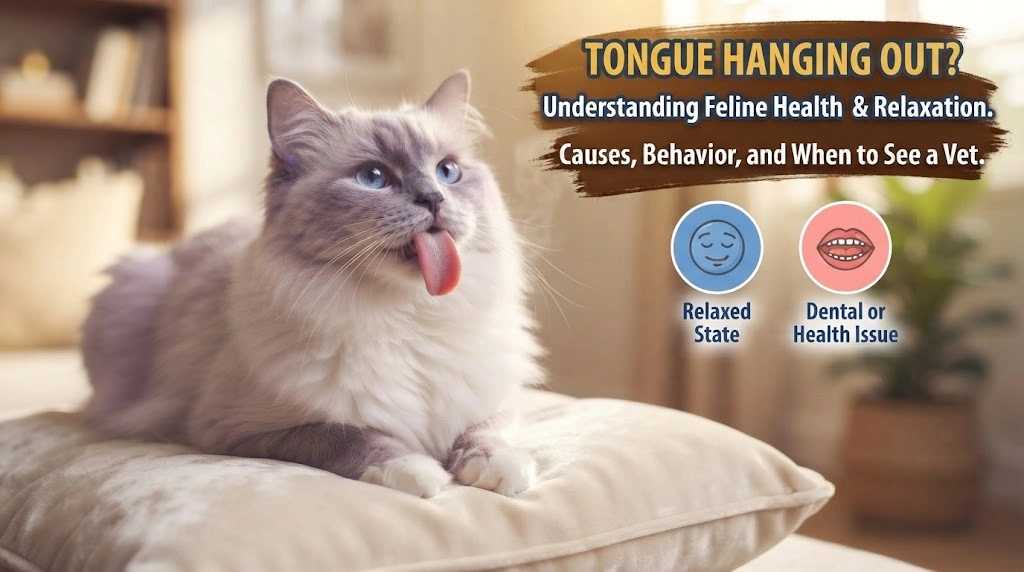

A tiny tongue tip showing during sleep or relaxation can be harmless, but a tongue that suddenly hangs out and cannot be pulled back in normally deserves attention. Oral pain, missing teeth, jaw injury, facial swelling, nausea, heat stress, and neurologic disease can all change how a cat holds its tongue.
Quick Answer
If your cat suddenly cannot keep the tongue inside the mouth, check for breathing difficulty, heavy drooling, facial trauma, jaw misalignment, severe weakness, or abnormal behavior. Seek urgent care if the cat cannot close the mouth, is struggling to breathe, has blue-gray gums, or the tongue is swollen, dark, or injured.
When a Small “Blep” Can Be Normal
Some relaxed cats briefly leave the tip of the tongue exposed after grooming or while sleeping. If the tongue returns to normal when the cat wakes and there is no drooling, pain, mouth odor, eating difficulty, or behavior change, the finding may be benign.
Dental Pain and Missing Teeth
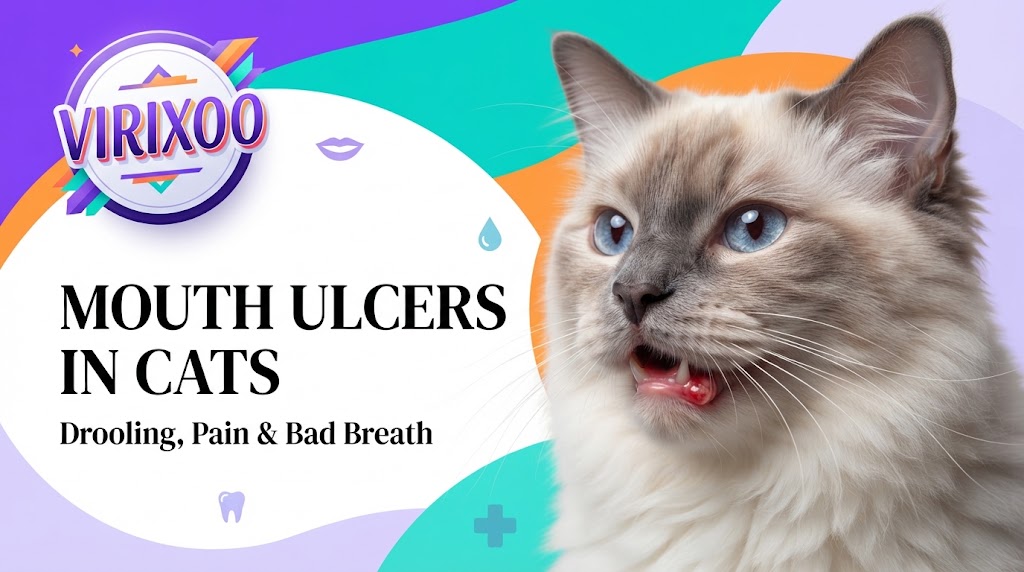
Dental disease can change how the tongue rests. Cats with painful gums, broken teeth, resorptive lesions, or missing front teeth may let the tongue protrude more than before. New drooling, bad breath, food dropping, or chewing changes strengthen concern for oral pain.
Jaw Injury or Dislocation
A cat that cannot close the mouth after trauma may have a jaw fracture, temporomandibular joint problem, or other facial injury. In this situation the tongue may hang out simply because the mouth cannot close normally. This deserves prompt veterinary evaluation.
Oral Swelling or Foreign Material
Swelling of the tongue, lips, or tissues beneath the tongue can interfere with normal mouth closure. String or thread can also become trapped around the tongue base. Never pull on string emerging from a cat’s mouth because it may be anchored internally.
Nausea and Drooling
A nauseated cat may lick the lips repeatedly, drool, and hold the tongue strangely for short periods. If vomiting, food refusal, or lethargy accompanies the change, the underlying gastrointestinal or systemic illness matters more than the tongue position alone.
Heat Stress and Open-Mouth Breathing
Cats do not normally pant for long periods the way dogs do. A cat that is hot, panting, weak, or breathing with the mouth open needs prompt attention. Heat stress can cause the tongue to extend, but respiratory distress or severe anxiety can look similar.
Neurologic Causes
Facial nerve dysfunction, brain disease, or other neurologic problems can alter tongue movement or swallowing. Unequal pupils, head tilt, weakness, circling, difficulty swallowing, or abnormal awareness increase concern for neurologic disease.
What to Check Safely
Observe whether the cat can close the mouth, swallow normally, eat, and retract the tongue. Look for facial swelling, drooling, blood, or obvious trauma without forcing the jaw open. Do not place fingers deep in the mouth of a painful or frightened cat.
Red Flags
| Finding | Concern |
|---|---|
| Cannot close the mouth | Possible jaw injury or dislocation |
| Blue-gray tongue or gums | Emergency oxygenation problem |
| Marked tongue swelling | Possible allergic reaction, trauma, or airway risk |
| Heavy drooling and food refusal | Possible significant oral pain |
| Neurologic signs | Needs prompt evaluation |
Internal Virixoo Guides
For related oral warning signs, see Why Is My Cat Drooling? and Why Does My Cat Have Bad Breath?. Those guides address saliva and odor changes, while this article focuses specifically on a new inability to keep the tongue in its normal position.
What the Veterinarian May Do
The veterinarian may examine the teeth, gums, tongue, jaw alignment, throat, facial nerves, and swallowing ability. Dental X-rays or skull imaging may be recommended after trauma. Blood tests or neurologic evaluation may be needed if the mouth itself does not explain the problem.
Bottom Line
A brief relaxed tongue tip can be normal, but a new persistent hanging tongue—especially with drooling, inability to close the mouth, swelling, trauma, breathing change, or neurologic signs—should be evaluated promptly.
Why Tongue Color Matters
A healthy tongue is usually pink, although pigmentation varies. A tongue that becomes blue-gray suggests inadequate oxygen, while a very pale tongue can accompany poor circulation or anemia. Dark damaged tissue after trauma also deserves urgent attention.
When Swallowing Becomes the Main Concern
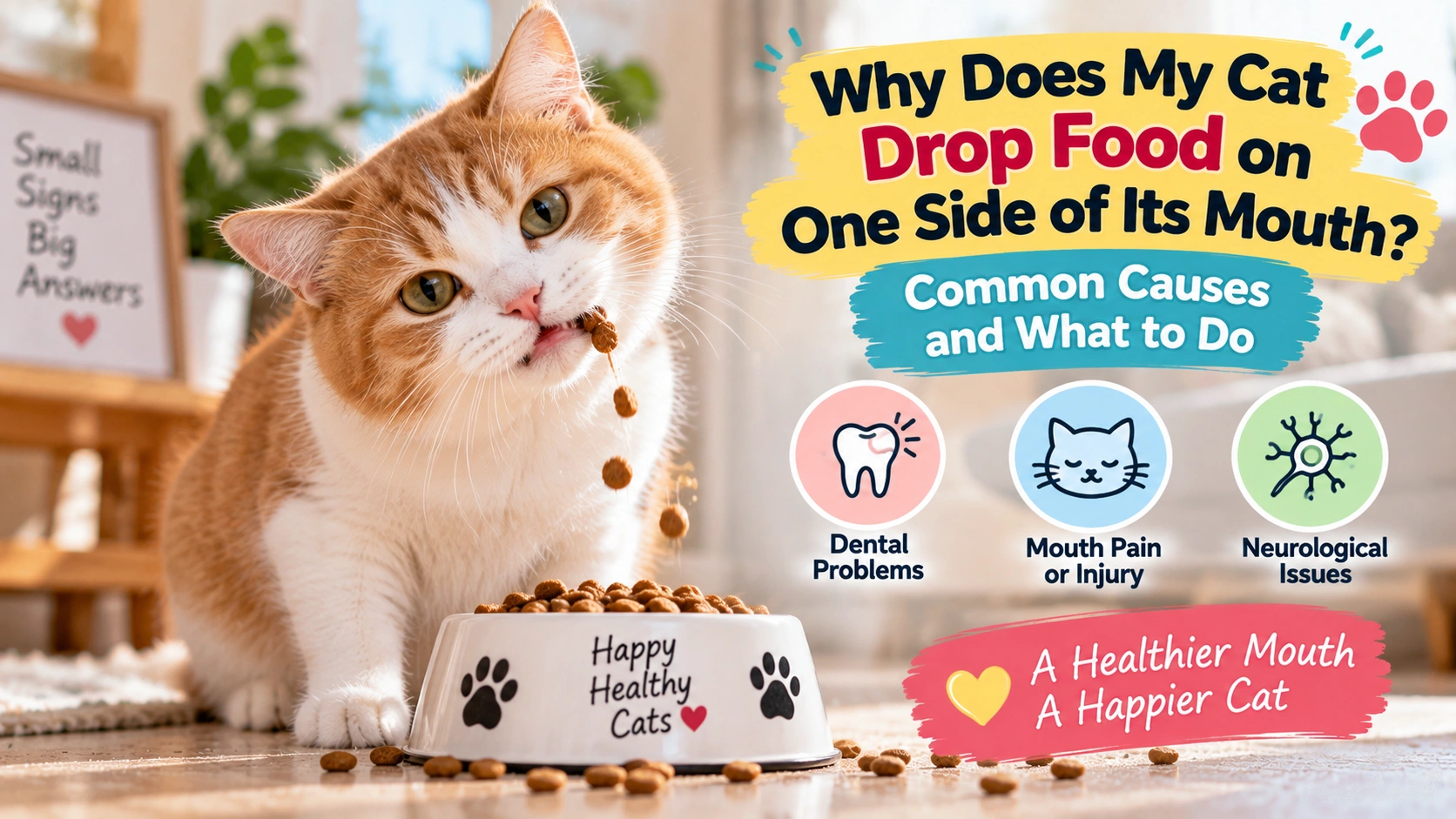
Drooling, gagging, coughing when drinking, or food falling from the mouth may indicate difficulty controlling the tongue or swallowing. These signs increase concern for oral, jaw, throat, or neurologic disease.
What to Record
Note whether the tongue protrudes continuously or only during sleep, whether the cat can eat and drink, and whether drooling, odor, trauma, panting, or facial asymmetry is present. A short video can help if the change is intermittent.
A Practical Decision Guide
For cat tongue suddenly hanging out, start by deciding whether the change is truly new and whether the cat can still perform basic functions normally. Breathing, walking, eating, drinking, urinating, defecating, grooming, and responding to the environment are more useful than one isolated sign. A cat that becomes weak, painful, unable to urinate, unable to swallow, or neurologically abnormal has moved beyond routine home monitoring.
Next consider speed. A problem that develops over minutes or hours generally deserves more urgency than a stable finding that has looked the same for months. Finally, look for combinations of signs. Pain plus food refusal, weakness plus pale gums, eye change plus vision loss, or swelling plus breathing difficulty are more concerning than a single mild feature.
What to Record Before the Appointment
Write down when the problem began, whether onset was sudden or gradual, and whether it is constant or intermittent. Record appetite, water intake, urination, stool, grooming, sleep, breathing, movement, and behavior. Include recent trauma, falls, fights, medication changes, toxin exposure, weight loss, vomiting, diarrhea, or outdoor access when relevant.
A short photo or video can be useful if the sign comes and goes, but do not provoke pain, force movement, manipulate an injured area, or delay urgent care just to document the problem.
Common Mistakes Owners Make
- Waiting for a dramatic symptom before calling.
- Using leftover medication from another illness.
- Giving human pain medicine.
- Repeatedly touching or testing a painful body part.
- Assuming normal eating means the cat is not in pain.
- Stopping treatment as soon as one visible sign improves.
How to Keep the Cat Comfortable While Waiting
Use a quiet indoor room, minimize unnecessary handling, and keep food, water, and the litter box easy to reach. Prevent access to stairs or high furniture when movement is abnormal. If trauma is suspected, restrict activity. Do not force food, water, exercise, or handling when the cat is distressed.
What Follow-Up Should Focus On
After treatment begins, improvement should involve the whole cat rather than only the visible sign. Appetite, grooming, mobility, litter-box habits, breathing, sleep, and social behavior should move back toward the cat’s normal baseline. Contact the clinic if the original problem returns, new signs appear, or the cat worsens after initially improving.
When to Recheck Even After Initial Improvement
A cat can look better for a few hours while the underlying problem remains. Recheck is appropriate when the sign returns, appetite falls, the cat hides more, breathing changes, mobility worsens, or new pain appears. Follow any scheduled veterinary recheck even if the visible sign seems smaller or less dramatic.
Do not stop prescribed medication early, change the dose, or add supplements without discussing it with the veterinarian. If a new symptom appears after treatment begins, report both the new sign and the timing relative to medication, feeding, or activity changes.
What If the Cat Has Recently Lost Teeth?
Cats missing front teeth may allow the tongue tip to protrude more easily because there is less physical support at the front of the mouth. This can be harmless if it is long-standing and the cat eats, grooms, and swallows normally. A sudden change after dental work, however, should still be discussed with the veterinarian if it is paired with swelling, drooling, pain, or food refusal.
Why Oral Masses Are Part of the Differential
Growths in the mouth can alter tongue position or make normal closure uncomfortable. Persistent drooling, foul odor, bleeding, weight loss, or a new facial asymmetry increases concern and may lead to oral imaging or biopsy.
Why Breathing Comes Before the Mouth Examination
If the cat is panting, breathing with the mouth open, or has a blue-gray tongue, do not spend time inspecting teeth or trying to photograph the tongue. Respiratory stabilization takes priority because abnormal oxygenation can become life-threatening quickly.
Final Safety Check
Before continuing home observation, confirm that the cat is comfortable, breathing normally, responsive, and able to eat, drink, move, urinate, and defecate. A worsening change in any of these basic functions is more important than one isolated symptom appearing slightly better. When the cause is uncertain or the sign is progressing, veterinary reassessment is safer than prolonged experimentation at home.