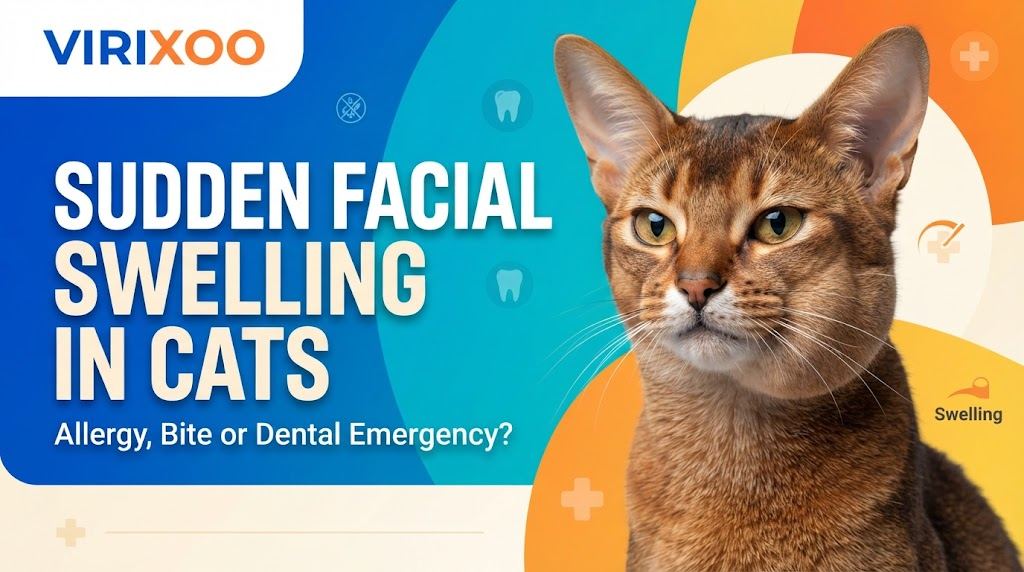
Facial swelling in a cat can develop because of an allergic reaction, insect sting, bite wound, dental disease, trauma, or other inflammatory problem. The first question is always whether the cat is breathing comfortably and whether the swelling is localized or spreading.
Breathing and Swallowing Decide the First Level of Urgency
Facial swelling deserves prompt attention, and breathing difficulty makes it an emergency. A mild localized swelling may come from a bite or dental problem, while rapid swelling with hives, vomiting, or respiratory distress raises concern for an allergic or more severe reaction.
Common Causes
- Dental disease or tooth root infection
- Bite wound or abscess
- Allergic or insect-sting reaction
- Trauma
- Masses or inflammatory disease
How the Location Helps
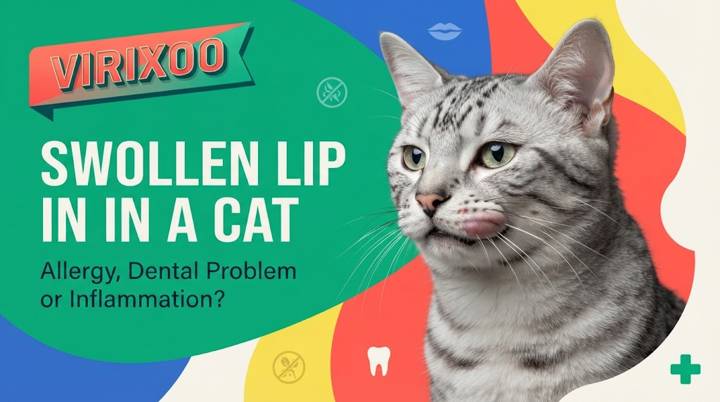
Swelling under the eye often points toward a dental root problem. One-sided cheek swelling may occur with trauma or abscess formation. Lip or muzzle swelling can happen with allergic reactions. The pattern does not prove the diagnosis, but it helps frame the possibilities.
When It Is More Urgent
| Finding | Urgency |
|---|---|
| Open-mouth breathing, noisy breathing, blue-gray gums | Emergency |
| Rapidly expanding swelling | Urgent care |
| Fever, pus, or obvious pain | Prompt evaluation |
| Eye partly closed from swelling | Prompt evaluation |
| Inability to eat or marked drooling | Prompt to urgent care |
What You Can Do Safely
Keep the cat calm and indoors. Note whether the swelling is warm, painful, firm, or soft, and whether it is one-sided. If a sting or bite is suspected, mention when the swelling started and how fast it grew.
What Not to Do
Do not squeeze the swelling, do not start leftover antibiotics, and do not give human antihistamines or pain medicine unless a veterinarian specifically instructs you to do so.
What the Vet May Evaluate
The veterinarian may examine the teeth, mouth, skin, lymph nodes, and eyes, and may recommend dental imaging, needle sampling, or treatment for infection or allergic reaction depending on findings.
Airway Signs Come First; the Cause Comes Next
Sudden facial swelling can have several causes, but it should be judged first by the cat’s breathing, comfort, and ability to eat. Airway signs are emergencies; localized swelling without respiratory involvement still deserves prompt evaluation.
Location can narrow the possibilities, but breathing comes first
Swelling below an eye or along the jaw can occur with dental disease; a warm painful lump can fit an abscess; sudden diffuse swelling after a sting or exposure can fit an allergic reaction. Those clues are useful only after you have checked whether the cat is breathing and swallowing normally.
Do not give a human antihistamine or pain reliever on your own
Drug choice and dose depend on the cat, the product, and the suspected cause. Some human products contain ingredients that are unsafe for cats. If an allergic reaction is possible, call a veterinary clinic for advice rather than trying a household medication first.
Do not squeeze a swollen area or attempt to drain it. Photograph the swelling, note how fast it developed, and look for wounds, drooling, mouth pain, eye involvement, vomiting, or hives. Rapidly increasing swelling around the face or throat, noisy breathing, open-mouth breathing, collapse, or difficulty swallowing requires emergency care.
Related Virixoo Guides
Read why a cat’s whisker pad may suddenly swell. Read why a cat’s nose may suddenly swell. Read what to do about a broken or chipped tooth in cats.