Quick Answer
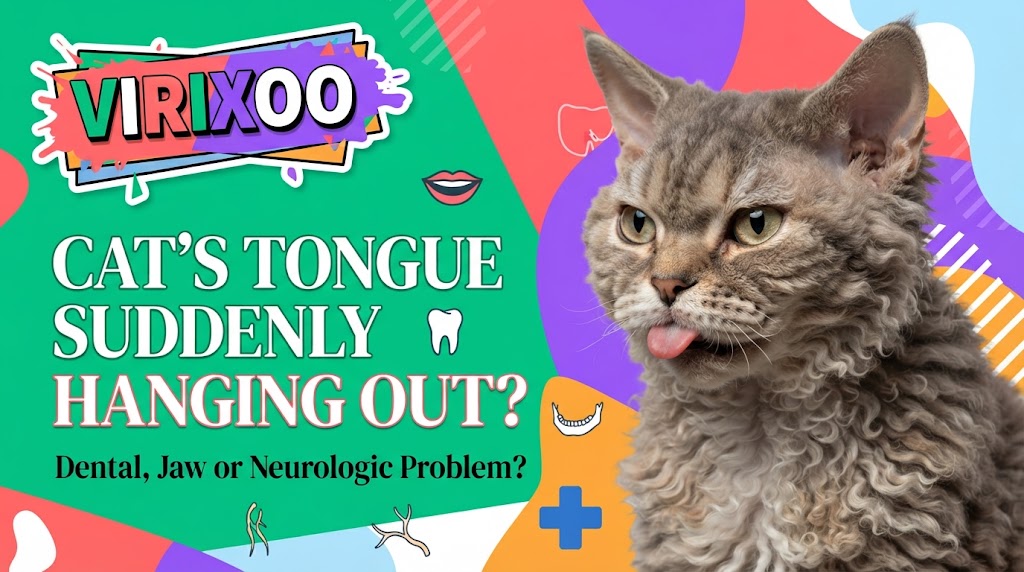
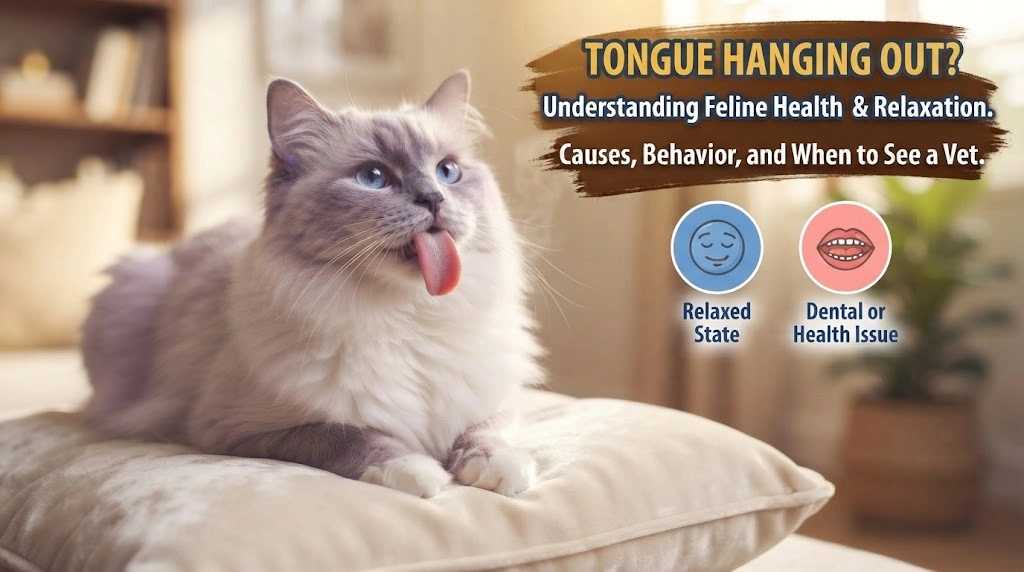
An occasional brief “blep” can be normal, especially when a relaxed cat forgets to retract the tongue. A tongue that suddenly remains out, hangs to one side, or appears with drooling, jaw changes, eating difficulty, panting, or neurologic signs is different and deserves attention.
When a Blep Is Probably Harmless
Some cats briefly leave the tongue tip visible after grooming, sleeping, or sniffing. The tongue retracts normally when the cat becomes alert, eating and drinking remain normal, and there is no drooling or distress. A lifelong quirky habit is less concerning than a new persistent change.
Dental and Oral Pain
Missing teeth, severe dental disease, oral ulcers, masses, or tongue injuries can alter how the tongue sits in the mouth. Look for bad breath, drooling, dropping food, pawing at the mouth, or reluctance to chew. Do not pull on the tongue or probe the mouth deeply.
Jaw Problems
Jaw fracture, dislocation, or severe pain can prevent normal mouth closure and tongue control. A cat that cannot close its mouth, has facial asymmetry, or developed the problem after trauma needs urgent veterinary care.
Neurologic Causes
Nerves and muscles coordinate tongue movement and swallowing. Neurologic disease can cause weakness or asymmetry, sometimes with head tilt, facial weakness, abnormal gait, or difficulty swallowing. These combinations should be evaluated promptly.
Panting and Heat Are Different
A cat may extend the tongue during open-mouth breathing. Unlike dogs, persistent panting in cats is not routine. If the tongue is out because the cat is breathing with the mouth open, especially at rest, treat this as a respiratory warning sign rather than a harmless blep.
What to Observe
Note whether the tongue retracts when the cat eats or becomes alert, whether it stays centered or deviates to one side, and whether swallowing, drinking, grooming, or vocalization has changed. A short video can be useful if the sign is intermittent.
When It Is Urgent
Seek urgent care for tongue protrusion with open-mouth breathing, blue or very pale tissues, inability to swallow, inability to close the jaw, major trauma, collapse, seizures, or rapidly developing facial swelling.
Why Dehydration Is Not a Sufficient Explanation
A dry mouth can change how oral tissues feel, but dehydration alone should not be used to explain a tongue that suddenly cannot retract. Persistent protrusion is more important as a mechanical, oral, respiratory, or neurologic sign. Hydration status should be assessed as part of the whole examination.
Check Eating and Drinking Function
Watch whether the cat can lap water normally, pick up food, move it to the back of the mouth, and swallow without coughing or gagging. Functional difficulty is more concerning than appearance alone. Do not offer large meals to a cat that seems unable to swallow safely.
Why Photos From Before the Change Help
Some cats naturally show a small tongue tip because of facial anatomy or missing teeth. Older photographs can establish whether the appearance is truly new. A new asymmetric tongue position or progressive inability to retract it deserves more attention than a lifelong harmless blep.
Bottom Line
A fleeting blep in a comfortable cat can be normal. A persistent new tongue position is a functional change and should be interpreted with breathing, jaw movement, eating, swallowing, and neurologic signs.