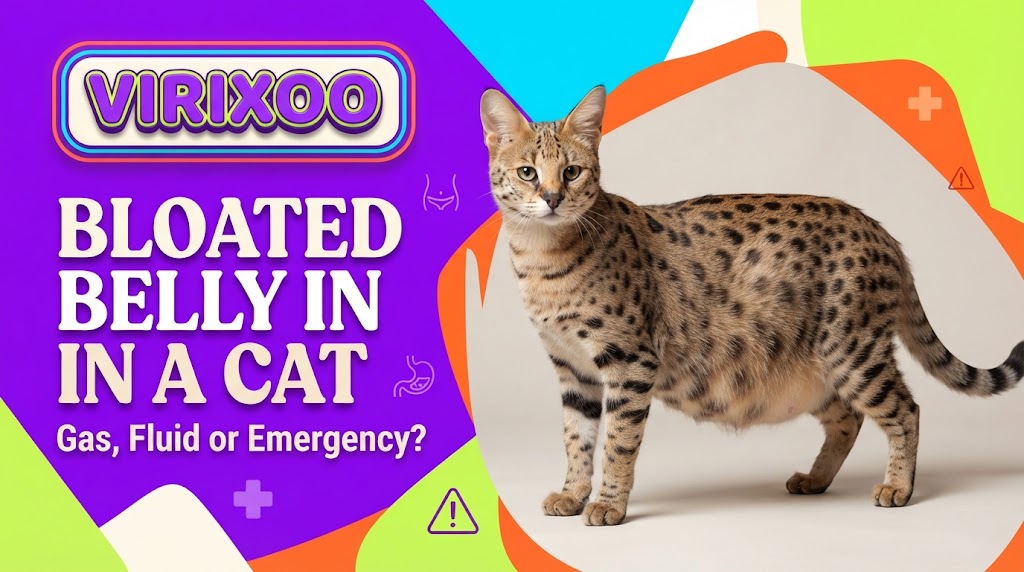
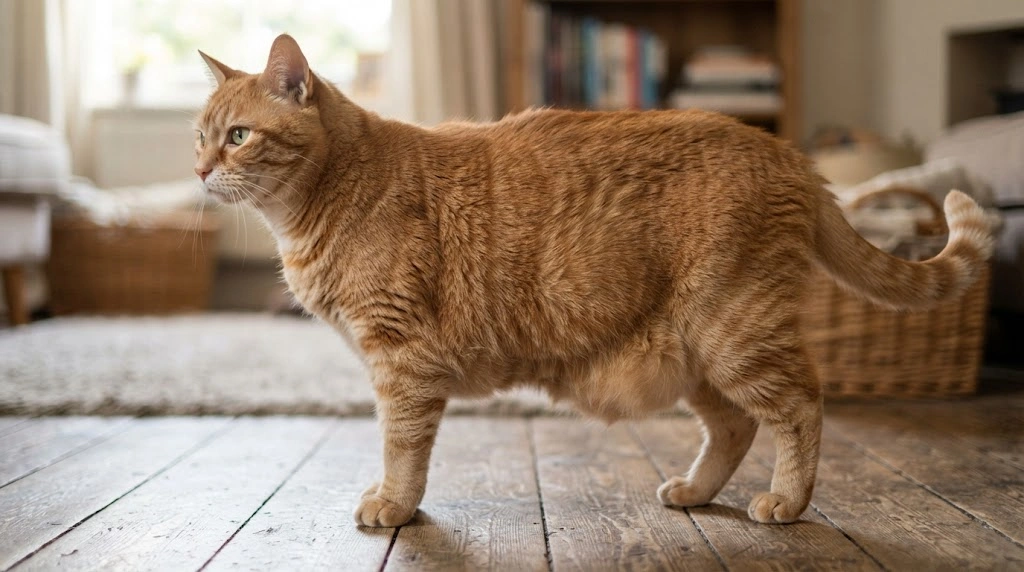
A soft flap of skin and fat hanging along the lower abdomen is often a normal feline primordial pouch. It is common in healthy cats of many ages and body types. The important question is whether the lower belly has always looked this way or whether the abdomen has recently changed in size, firmness, symmetry, or comfort. A stable pouch is very different from new abdominal distension.
What the Primordial Pouch Looks Like
The primordial pouch sits low along the abdomen, often most visible toward the rear legs. It is loose and mobile and may sway slightly when a cat walks or runs. It can remain visible even in cats at an ideal body weight. The pouch itself is not proof of obesity and should not be used as the only way to judge body condition.
Why Body Condition Matters More Than the Pouch
Veterinarians assess body condition by looking and feeling for overall fat distribution, including the ribs, waist, spine, and abdominal contour. An overweight cat usually has excess fat in several regions, not only a low abdominal flap. Cornell’s feline nutrition guidance emphasizes body condition scoring rather than visual judgment alone.
If the cat’s ribs have become harder to feel, the waist has disappeared, and weight on a scale is steadily rising, excess body fat is more plausible. If the ribs and waist remain appropriate and the lower flap is longstanding, the primordial pouch may simply be normal anatomy.
When a New Low Belly Is Not Just a Primordial Pouch
A sudden change deserves more attention. Fluid, organ enlargement, a mass, pregnancy, constipation, or other abdominal disease can alter the belly’s shape. These conditions usually create true abdominal enlargement rather than only loose skin. The abdomen may look rounder, feel firmer, become asymmetric, or enlarge over days to weeks.
Weight Loss With a Bigger-Looking Abdomen
A cat that is losing muscle or body weight while the belly looks larger needs veterinary assessment. That combination can occur with several systemic diseases and should not be explained away as normal aging. Weighing the cat on the same scale every few weeks can reveal change that is difficult to notice by sight.
Pain Changes the Situation
A normal primordial pouch is not painful. If the cat flinches, cries, guards the abdomen, resists being picked up, walks hunched, or stops jumping, do not repeatedly palpate the belly at home. Abdominal pain can accompany gastrointestinal, urinary, reproductive, or other internal disease and deserves prompt evaluation.
Breathing and Appetite Are Important Clues
Significant abdominal enlargement can sometimes restrict comfortable movement or breathing. Seek urgent care if the belly becomes rapidly distended and the cat is breathing with effort, open-mouth breathing, collapsing, or extremely weak. Reduced appetite, repeated vomiting, or inability to pass urine or stool also increases urgency.
How to Check the Change Objectively
Use side-view and top-view photographs taken in the same standing posture. Track body weight rather than relying only on appearance. Note whether the low belly is soft and mobile or whether the entire abdomen is becoming round and tense. Do not squeeze or press deeply to decide whether “fluid is inside.” That cannot be determined reliably at home.
Could Spaying Cause a Hanging Belly?
Spaying does not directly create a pathological abdominal pouch. Body weight can change after neutering if calorie intake is not adjusted, and some cats may become more visibly rounded. The primordial pouch itself is a normal anatomical feature and can be present in intact or neutered cats.
What the Veterinarian May Check
The exam may include body-condition scoring, muscle-condition assessment, abdominal palpation, and weight comparison with previous visits. If true abdominal enlargement is suspected, blood tests, urinalysis, radiographs, or ultrasound may be recommended. These tests help distinguish fat and normal skin from fluid, organ enlargement, intestinal disease, pregnancy, or a mass.
When Monitoring Is Reasonable
If the pouch has been present for years, is soft and painless, the cat’s weight is stable, body condition is appropriate, and there are no other signs of illness, it is usually reasonable to continue routine monitoring. Mention it at the next wellness visit if you are unsure.
The Primordial Pouch Can Become More Noticeable With Age
As a cat’s body composition changes, a normal pouch may look more prominent even if the cat is not gaining fat. Loss of muscle over the back and hindquarters can make the lower abdomen appear relatively larger. This is another reason to assess muscle condition and body weight together rather than judging the pouch alone.
Pregnancy Has a Different Pattern
In an intact female cat, pregnancy can enlarge the abdomen gradually. Other clues may include nipple enlargement and behavioral changes, but appearance is not a reliable pregnancy test. Veterinary examination or imaging may be needed, especially if the mating history is uncertain or if the abdomen is painful.
Fluid in the Abdomen Is Not the Same as Fat
Abdominal fluid can make the belly look round or pendulous while the rest of the body becomes thinner. Causes range from heart or liver disease to low blood protein, cancer, inflammation, or bleeding. A fluid-filled abdomen may feel different from soft body fat, but owners should not try to diagnose fluid by tapping or pressing the belly. Ultrasound and other tests are more reliable.
Why Sudden Enlargement Matters More Than a Longstanding Shape
A body-shape feature present for years is less concerning than one that changes noticeably over days or weeks. If the abdomen becomes larger while appetite falls, breathing becomes harder, or the cat appears uncomfortable, contact a veterinarian promptly. Rapid change is useful clinical information even before the cause is known.
How to Photograph Body Condition Usefully
Take one photograph from directly above and one from the side while the cat is standing naturally. Repeat this under similar conditions every few weeks if you are monitoring body shape. Avoid comparing a curled sleeping cat with a stretched standing cat because posture can dramatically change how the abdomen looks.
Why a Bigger Abdomen Can Be Misread as Weight Gain
When body shape changes gradually, it is easy to assume the cat has simply become heavier. But abdominal distension and general weight gain are not the same process. With ordinary fat gain, the ribs, waist, back, and limbs tend to change along with the abdomen. With fluid accumulation, organ enlargement, pregnancy, or a mass, the abdomen can become disproportionately large while the rest of the cat remains the same size or even becomes thinner.
A scale helps separate these patterns but does not answer every question. A cat can gain abdominal fluid while losing muscle, producing little net change in body weight. That is why veterinarians combine weight with body-condition scoring, muscle-condition scoring, palpation, and sometimes imaging. Ultrasound is particularly useful when the abdomen is enlarged but the reason is unclear.
Owners should avoid pressing deeply or repeatedly “checking for fluid.” Instead, track posture, comfort, appetite, breathing, stool, urine, and the speed of enlargement. A soft lifelong primordial pouch that sways during walking is a very different finding from a tense abdomen that has expanded in two weeks.
Bottom Line
A low, loose, longstanding abdominal pouch can be normal. A newly enlarging, firm, painful, asymmetric, or tense abdomen is not the same thing. Use weight, body condition, and changes over time—not the presence of a pouch alone—to decide whether the belly needs veterinary assessment.