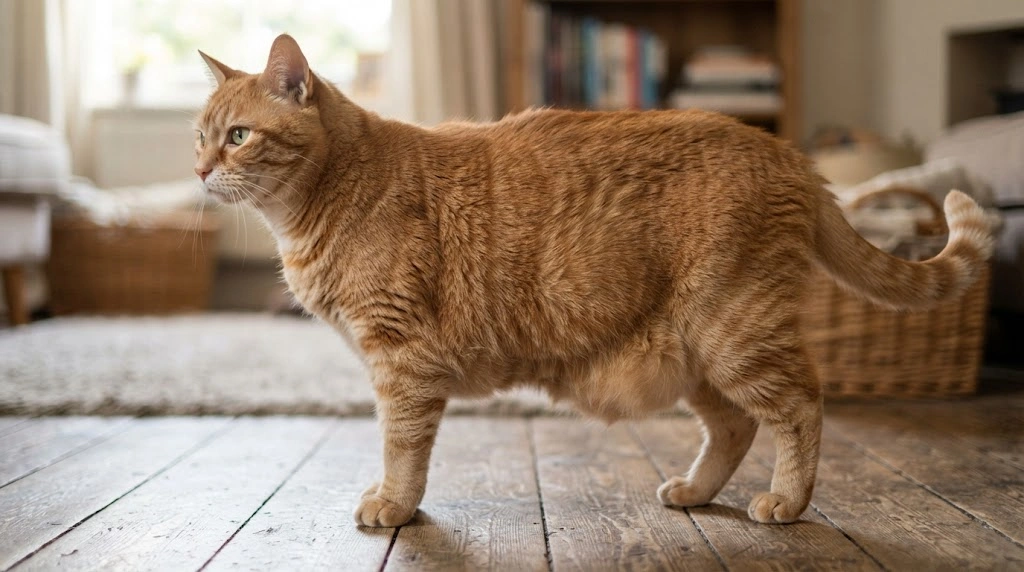
An enlarged abdomen in a cat can result from gas, constipation, pregnancy, obesity, fluid, organ enlargement, masses, or other disease. The most important questions are how quickly the belly changed and how the cat feels overall.
Quick Answer
If the abdomen suddenly becomes larger and the cat is painful, weak, breathing abnormally, vomiting repeatedly, or collapsing, seek urgent veterinary care. A gradually enlarged belly in a comfortable cat may be less urgent but still deserves evaluation if unexplained.
Why Speed Matters
Rapid enlargement over hours is more concerning than a slow change over months. Acute distension can reflect gas, bleeding, fluid accumulation, urinary problems, or other serious conditions.
Fluid in the Abdomen
Fluid can accumulate with heart disease, liver disease, tumors, inflammation, bleeding, or other conditions. The abdomen may look rounded or pendulous, and breathing can become harder if the volume is large.
Organ Enlargement and Masses
An enlarged liver, spleen, kidney, uterus, or abdominal mass can change body shape. These causes usually require imaging to identify.
Constipation and Gastrointestinal Causes
Constipation can create abdominal fullness and straining, but owners may confuse straining to defecate with urinary obstruction. A male cat repeatedly straining in the litter box without producing urine is an emergency.
Weight Gain vs. Distension
Obesity develops gradually and tends to affect the whole body. A suddenly rounded belly or a change that seems disproportionate to the rest of the cat deserves closer attention.
Red Flags
| Finding | Concern |
|---|---|
| Rapid enlargement | Possible acute abdominal problem |
| Breathing difficulty | Urgent |
| Pale gums | Possible blood loss or poor circulation |
| Repeated vomiting | Possible obstruction or severe illness |
| Collapse | Emergency |
What Not to Do
- Do not press hard on the abdomen.
- Do not give laxatives without veterinary advice.
- Do not assume straining is constipation until urination is confirmed.
- Do not wait if the cat is weak or breathing abnormally.
What the Veterinarian May Do
The veterinarian may perform abdominal palpation, X-rays, ultrasound, blood tests, urine testing, or fluid sampling. The exact plan depends on whether the abdomen feels fluid-filled, firm, painful, or associated with other signs.
Bottom Line
A bloated belly is not a diagnosis. Rapid change, pain, weakness, breathing difficulty, pale gums, or repeated vomiting make the situation more urgent. Gradual unexplained enlargement still deserves veterinary assessment.
Kittens With Potbellies
Young kittens may develop a round abdomen with parasites, gas, or poor nutrition. A potbellied kitten that also has diarrhea, vomiting, poor growth, or lethargy needs veterinary assessment rather than being dismissed as simply well-fed.
Pregnancy and Uterine Disease
Pregnancy can enlarge the abdomen gradually, but uterine infection can also cause abdominal enlargement and systemic illness in unspayed females. Lethargy, fever, discharge, vomiting, or excessive thirst deserve prompt care.
What to Record Before the Appointment
For bloated belly in a cat, write down when the sign first appeared, whether onset was sudden or gradual, and whether it is getting better, worse, or staying the same. Record appetite, water intake, urination, stool, grooming, sleep, breathing, activity, and behavior. Include recent trauma, fights, outdoor access, medication changes, toxin exposure, vomiting, diarrhea, or weight loss when relevant.
If the problem is intermittent, a short natural photo or video can be useful. Do not provoke pain, force movement, manipulate an injured area, or delay urgent care just to document the sign.
How to Decide Whether Monitoring Is Still Reasonable
Monitoring is only reasonable when the cat is comfortable, the sign is mild, there is a plausible non-urgent explanation, and no red flags are present. If the cat becomes weaker, stops eating, breathes abnormally, develops severe pain, cannot urinate, collapses, or the sign rapidly worsens, the situation has changed and needs prompt veterinary reassessment.
Why a Distended Abdomen Can Affect Breathing
A large volume of fluid, gas, or an enlarged organ can push against the diaphragm and make breathing harder. Cats with abdominal distension and increased breathing effort should not be handled extensively at home.
Urinary Obstruction Can Be Confused With Constipation
Owners sometimes see a cat repeatedly entering the litter box and assume constipation. A male cat that strains but produces little or no urine may have a life-threatening urinary obstruction. Confirm whether urine is actually being produced and seek emergency care if it is not.
Fluid Accumulation
Abdominal fluid can occur with heart disease, liver disease, cancer, inflammation, bleeding, or other conditions. The abdomen may feel heavy or pendulous, but owners should not press deeply to test for fluid.
Why Weight Loss With a Bigger Belly Is Important
A cat can lose muscle and body fat while the abdomen becomes larger from fluid or organ enlargement. This combination is very different from simple obesity and deserves evaluation.
Female Cats and Reproductive Disease
Pregnancy is one explanation for gradual enlargement, but unspayed females can also develop uterine disease. Lethargy, fever, vomiting, discharge, or increased thirst with abdominal enlargement should be taken seriously.
What Monitoring Should Focus On
Track appetite, stool, urination, vomiting, breathing, and whether the abdomen is changing quickly. Rapid progression or loss of normal function should trigger prompt care.
A Practical Decision Guide
When evaluating bloated belly in a cat, start with the cat’s overall function. A cat that can breathe comfortably, walk normally, eat, drink, urinate, and respond to the environment is different from one that is weak, painful, hiding, confused, or unable to perform a normal function. Next consider speed: a change that developed over minutes or hours generally deserves more urgency than a stable finding that has been unchanged for months.
Combinations of signs matter. Pain plus food refusal, weakness plus pale gums, swelling plus breathing difficulty, or neurologic change plus collapse are more concerning than one mild isolated feature. If you are uncertain, call the veterinary clinic and describe the cat’s current condition rather than only naming the symptom.
How to Keep the Cat Comfortable While Waiting
Use a quiet indoor room, minimize unnecessary handling, and keep food, water, and the litter box easy to reach. Prevent access to stairs or high furniture if mobility is abnormal. For suspected trauma, reduce activity. Do not force food, water, exercise, or handling when the cat is distressed.
What Follow-Up Should Focus On
After treatment begins, track whether the cat is returning toward its normal baseline. Improvement should include comfort, appetite, grooming, movement, and normal litter-box habits—not just a smaller swelling or less visible lesion. Contact the clinic if the original problem returns, new signs appear, or the cat worsens after initially improving.
Why a Cat With a Big Belly Can Still Be Losing Weight
Muscle loss can occur at the same time as abdominal enlargement. A cat may look round through the middle but have a thinner spine, hips, or shoulders. This pattern suggests more than simple weight gain and should be reported.
When Breathing Rate Becomes Important
A large volume of abdominal fluid can restrict movement of the diaphragm. If the cat is breathing faster than normal at rest, using the abdomen strongly to breathe, or open-mouth breathing, seek urgent care rather than continuing to monitor belly size.
Why Home “Gas Remedies” Are Risky
Without knowing whether the abdomen contains gas, fluid, stool, urine, blood, or enlarged organs, treating presumed gas can delay care. Cats with significant distension should be evaluated based on the whole clinical picture.
When to Recheck Even After Initial Improvement
A cat can look better for a few hours while the underlying problem is still present. Recheck is appropriate when the sign returns, appetite falls, the cat hides more, breathing changes, mobility worsens, or new pain appears. Follow any scheduled veterinary recheck even if the visible sign seems smaller or less dramatic.
Keep treatment consistent and do not stop prescribed medication early unless the veterinarian tells you to. If a new symptom appears after treatment begins, report both the symptom and the timing relative to medication or feeding changes.
Why Abdominal Shape Alone Is Misleading
Long-haired cats, posture, recent meals, and body condition can all change how the abdomen looks in photographs. The most useful information is whether the shape changed from the cat’s normal baseline and whether basic functions such as eating, urinating, defecating, breathing, and moving remain normal.
A cat with a gradually enlarged abdomen and normal behavior still deserves assessment if the cause is unexplained.
Continue monitoring the cat’s overall comfort, appetite, breathing, mobility, and litter-box habits while following veterinary advice. A worsening change in any basic function is more important than one isolated symptom appearing slightly better.
Why a Comfortable Cat Can Still Need Evaluation
Some causes of abdominal enlargement progress slowly and do not cause obvious pain at first. A cat may still eat and move normally while fluid, organ enlargement, or a mass develops. If the belly is clearly changing from baseline, veterinary examination is appropriate even without dramatic symptoms.
Early evaluation can identify a manageable problem before breathing, appetite, or mobility becomes affected.