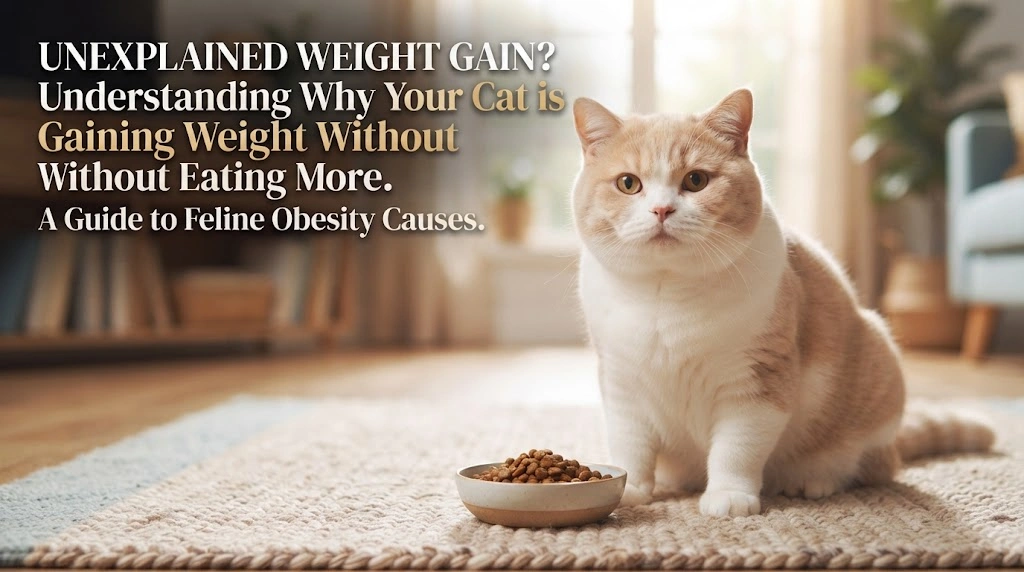
If your cat is gaining weight even though you have not intentionally increased food, first confirm whether the change is true body-weight gain and whether the extra size is distributed like fat. Hidden calories, lower activity, metabolic changes after neutering, treats, shared food, and free-feeding are common explanations. A suddenly larger or tense abdomen, however, may not be fat at all.
Start With a Scale, Not an Impression
Long coats, a primordial pouch, and posture can make cats look heavier or lighter from day to day. Weigh the cat on the same scale under similar conditions and record the number. Also look at body condition. Cornell describes ideal body condition as having ribs that are palpable with a light fat covering and a visible waist behind the ribs.
Hidden Calories Add Up Easily
Many owners accurately measure the main meal but underestimate treats, table food, dental snacks, food stolen from another pet, or extra scoops given by another family member. Dry food is calorie-dense, and free-feeding makes exact intake difficult to track.
For one week, record everything the cat actually consumes. Include treats, toppers, supplements with calories, and food obtained from other bowls. This simple audit often reveals an explanation that was not obvious.
Activity Can Fall Without You Noticing
A cat may eat the same amount but burn fewer calories after aging, arthritis, illness, indoor confinement, seasonal change, or loss of a playmate. Subtle mobility pain can reduce climbing and play before obvious limping appears. If weight gain occurs with less jumping, slower rising, or reluctance to use stairs, mention mobility to the veterinarian.
Neutering Can Change Energy Needs
After spaying or neutering, energy requirements can decrease in some cats. If the same pre-neuter portions continue indefinitely, gradual weight gain may follow. This does not mean neutering “causes obesity” by itself; calorie intake still needs to match the cat’s current energy needs.
When the Belly Is Bigger but the Cat Is Not Truly Heavier
Abdominal enlargement can result from pregnancy, fluid, organ enlargement, constipation, a mass, or other disease. Some of these conditions can occur with little change in total body weight because muscle or fat is being lost elsewhere. A round, tense, asymmetric, or rapidly enlarging abdomen should not be treated as routine obesity.
Could Medication Be Contributing?
Certain medications can increase appetite or alter activity and body composition. If weight change began after starting a prescription, tell the veterinarian rather than stopping medication on your own. The drug may be essential, and the safer solution may be diet adjustment or a different treatment plan.
Why Crash Dieting Is Dangerous
Cats should not be put on severe calorie restriction without veterinary guidance. Cornell cautions that abrupt starvation can predispose overweight cats to hepatic lipidosis, a serious liver disorder. Safe feline weight loss is gradual and planned around ideal body weight, diet composition, and health status.
How to Monitor Body Condition at Home
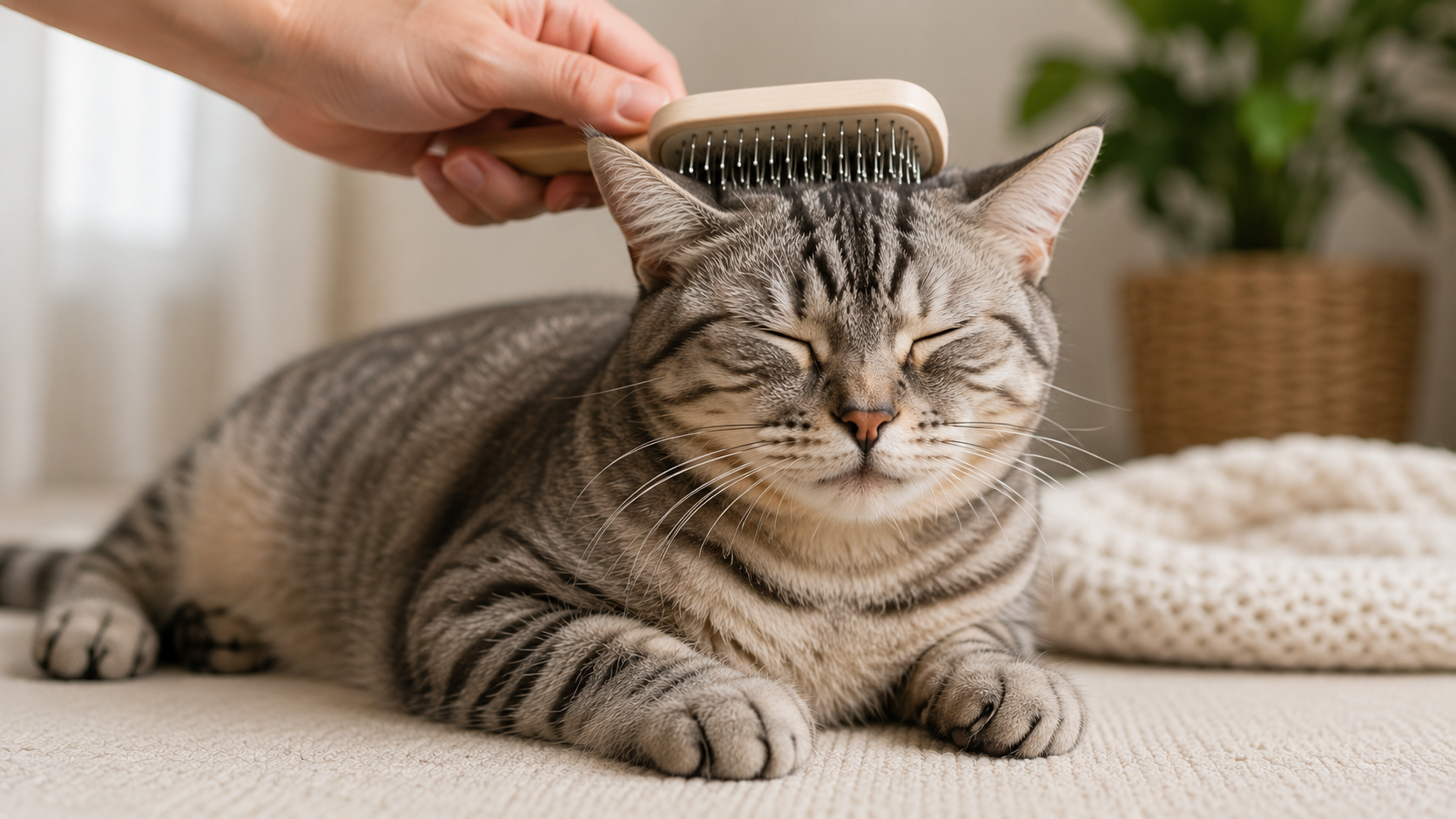
Use monthly weight checks and photographs from above and the side. You should be able to feel ribs without pressing through a thick fat layer. The waist should not disappear progressively. Keep the same measurement routine so small changes are meaningful.
What the Veterinarian May Check
The veterinarian can confirm body condition, muscle condition, ideal weight, and daily calorie needs. If the pattern is unusual, blood tests, urinalysis, or imaging may be recommended to investigate illness or abdominal enlargement. The workup is particularly important when weight gain is rapid, the abdomen is disproportionate, or the cat has breathing, appetite, urinary, or mobility changes.
When to Seek Care Promptly
Rapid abdominal expansion, difficulty breathing, collapse, marked lethargy, repeated vomiting, inability to urinate or defecate, or a painful tense abdomen require prompt or emergency evaluation. Those are not ordinary obesity signs.
Why Portion Size Can Drift Without Anyone Noticing
Household measuring cups are imprecise, and “one scoop” can gradually become larger over time. A kitchen gram scale provides more consistent portions, especially for calorie-dense dry food. If several people feed the cat, use a daily feeding chart so treats and meals are not accidentally doubled.
Free-Feeding Makes Intake Hard to Measure
When food remains available all day, owners may not know how much the cat actually eats. This becomes even harder in multi-cat homes. Scheduled meals or measured daily portions can make intake visible and help identify whether one cat is stealing food from another.
Why Muscle Loss Can Hide Under Weight Gain
A cat can gain fat while simultaneously losing muscle, particularly with aging or inactivity. The scale may rise while physical function worsens. That is why body-condition and muscle-condition assessment should be part of a weight-management visit rather than focusing on body weight alone.
Joint Pain Can Create a Feedback Loop
Weight gain can make movement harder, while joint pain can further reduce activity. The result is a cycle of less movement and continued fat accumulation. If your cat no longer jumps to favorite places, spends more time on the floor, or hesitates at stairs, tell the veterinarian. Addressing mobility may be part of successful weight management.
A Good Weight-Loss Plan Is Individualized
The veterinarian may calculate a target calorie range based on ideal rather than current weight, then adjust it according to progress. Diet composition, meal format, concurrent disease, and household routine all matter. The goal is slow loss while preserving muscle and keeping the cat willing to eat the prescribed diet.
How to Build a Safe Weight-Control Plan
Once true excess body fat is confirmed, the next step is not simply to cut food in half. Cats need adequate protein and essential nutrients even while losing weight. A veterinarian can estimate ideal body weight, calculate a starting calorie target, and select a complete diet that allows controlled calorie reduction without nutrient deficiency.
Progress should be checked at planned intervals. If the cat is losing too quickly, calories may need to increase. If weight is not changing despite accurate measurement, the plan can be adjusted. Activity can be encouraged with short play sessions, food puzzles, climbing opportunities, and environmental enrichment that match the cat’s mobility level. Painful cats should not be pushed into strenuous exercise.
In multi-cat homes, feeding management is often the hardest part. Separate meals, microchip feeders, or supervised feeding can prevent food stealing. Treat calories should be included in the daily total. The goal is sustainable change that preserves muscle, avoids hunger extremes, and fits the household routine.
Bottom Line
Most gradual feline weight gain reflects a mismatch between calories consumed and calories used, even when the main meal has not changed. Confirm the trend objectively, audit hidden calories, assess activity, and use body condition rather than appearance alone. Sudden or abnormal abdominal enlargement needs a different medical evaluation.