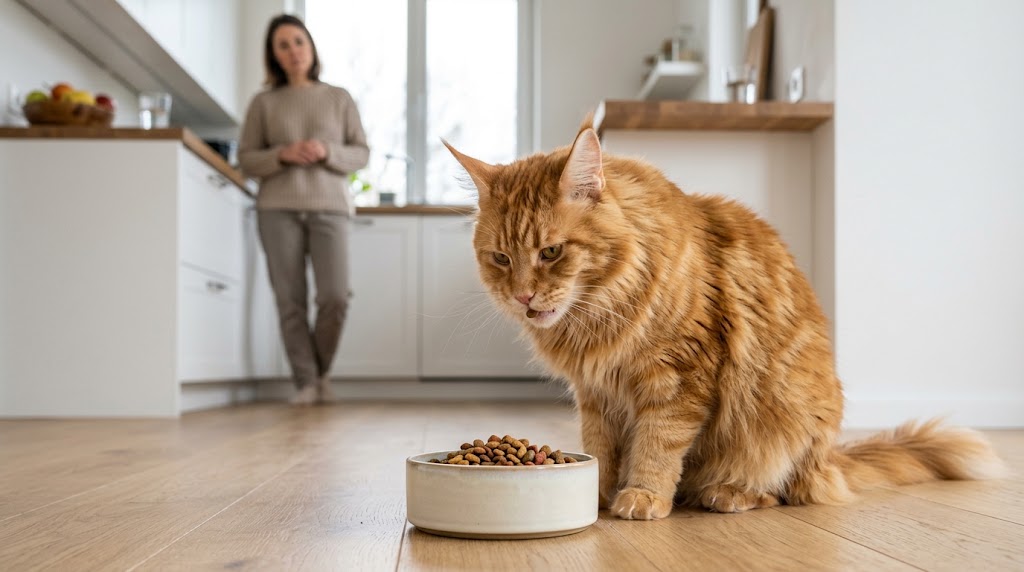
A cat that still eats but suddenly takes much longer to finish a familiar meal may be showing an early sign of pain or illness. Eating speed can change because of dental disease, a painful tooth, mouth inflammation, nausea, swallowing difficulty, weakness, congestion, stress, or a change in the food itself. The distinction that matters most is whether your cat is calmly eating more slowly or wants to eat but seems physically uncomfortable doing it.
Quick Answer
Compare your cat with its normal pattern. If meal time suddenly doubles, the cat pauses after bites, chews on one side, drops food, prefers soft food, drools, loses weight, or walks away despite appearing hungry, arrange a veterinary examination. Seek prompt care if the cat cannot swallow normally, stops eating altogether, repeatedly vomits, becomes weak, or has breathing difficulty.
Start With What Changed at the Bowl
Watch one normal meal without hovering or handling the mouth. Is the cat taking smaller bites, chewing longer, licking gravy but leaving chunks, moving food to one side, or stopping after each mouthful? Does it seem interested in food but hesitant to bite? These details can point more strongly toward oral pain than a simple drop in appetite.
If the cat is simply less hungry and leaves the bowl, the issue may be broader appetite loss. Use Why Is My Cat Not Eating? if total intake is falling substantially.
Dental Disease Is a Common Reason for Slower Eating
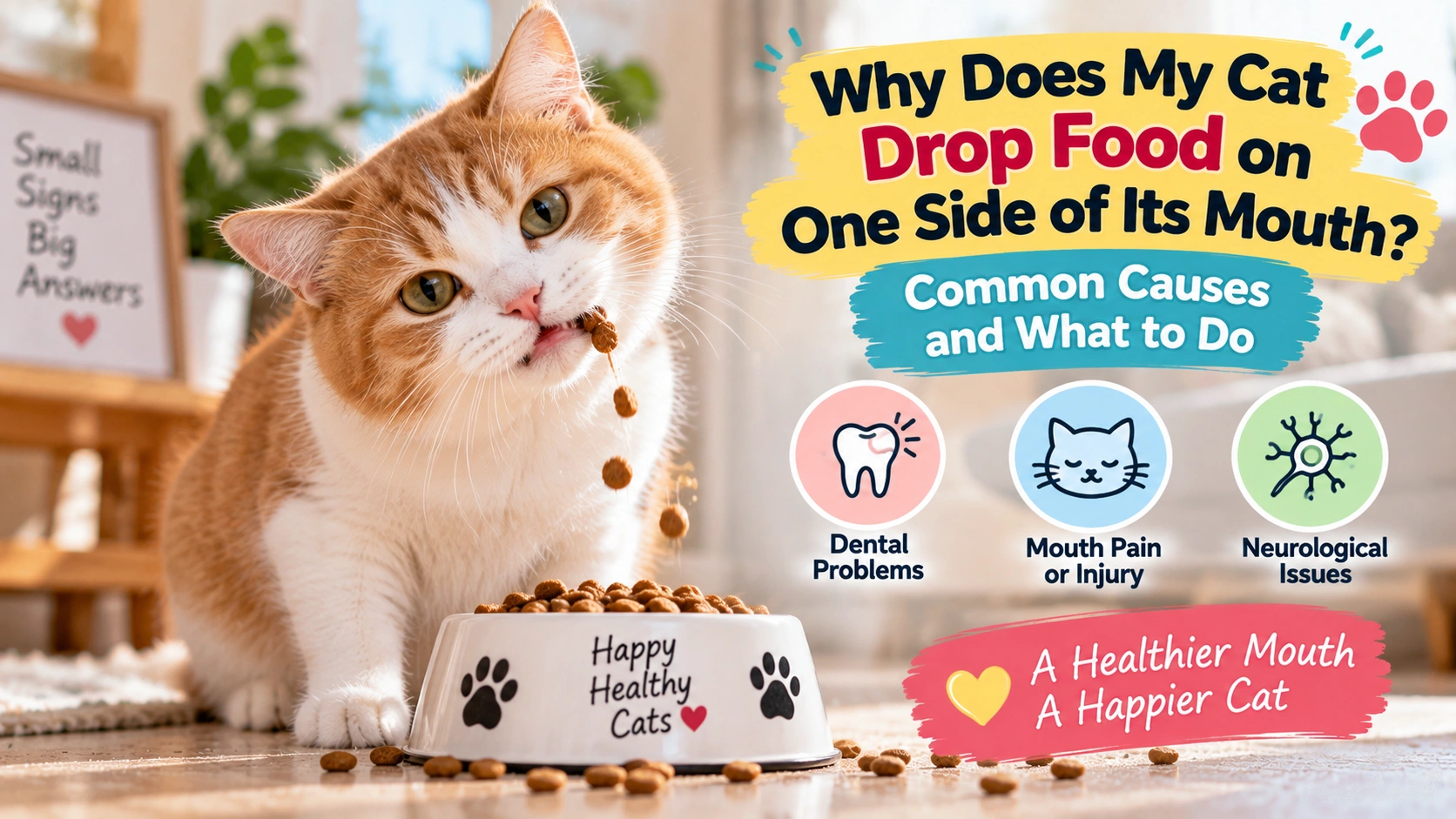
Gingivitis, periodontal disease, tooth resorption, fractured teeth, and other oral disorders can make biting or chewing painful. Cats often compensate rather than stop eating. They may turn the head while chewing, use one side of the mouth, swallow kibble with little chewing, or develop a preference for softer food.
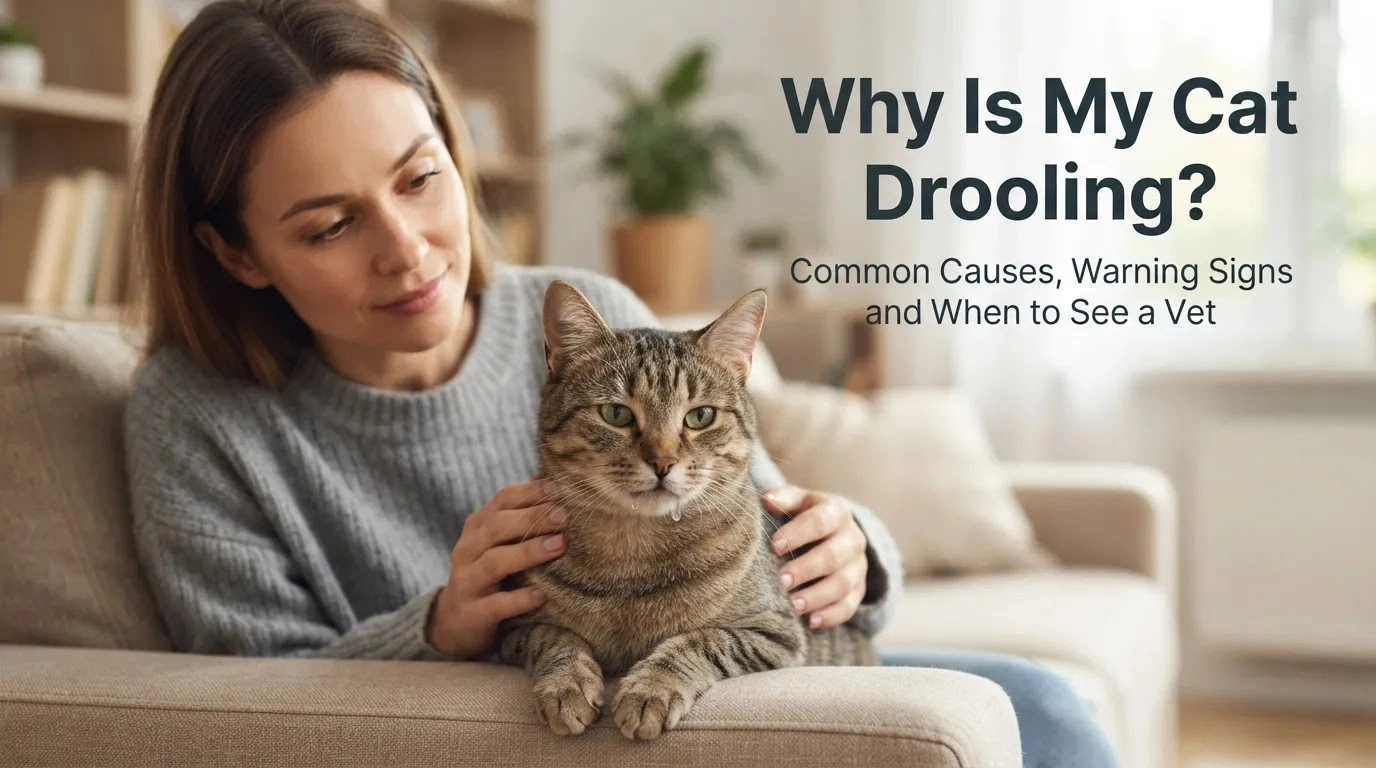
Persistent bad breath, drooling, red gums, pawing at the face, or food falling from the mouth strengthens concern for dental pain. See Why Does My Cat Have Bad Breath? for related oral warning signs.
A Broken or Painful Tooth Can Change Only One Part of the Meal
A cat with one painful tooth may start normally, then slow down after the first few bites when pressure reaches that area. The cat may tilt the head or chew on the opposite side. A visibly chipped tooth should not be probed at home. The guide on Broken or Chipped Tooth in Cats explains why even a cat that continues eating can still have significant dental pain.
Mouth Ulcers and Stomatitis
Inflammation or ulcers can make opening the mouth, moving food backward, and swallowing painful. A cat may approach food eagerly and then retreat after trying to bite. Drooling, foul odor, blood-tinged saliva, or crying when yawning are important clues.
Nausea Can Slow Eating Without Stopping It
A mildly nauseated cat may eat a few bites, pause, lick the lips, swallow repeatedly, and return later. Vomiting is not required for nausea to be present. Digestive disease, pancreatitis, kidney disease, medication effects, and many other conditions can cause this pattern.
The more useful measurement is daily intake, not just speed. A cat that takes all day to eat half its normal calories is not maintaining normal intake simply because some food disappears.
Swallowing Difficulty Changes the Urgency
If the cat chews normally but hesitates at the moment of swallowing, repeatedly gulps, coughs with water, gags, or has food or liquid come back from the mouth or nose, swallowing difficulty should be considered. Cats with dysphagia can be at risk of aspiration.
Do not repeatedly offer large amounts of food or water to test a cat that appears unable to swallow. Veterinary examination is safer.
Congestion and Reduced Smell
Cats use smell heavily when eating. Nasal congestion can make them approach food more slowly or lose interest after sniffing. Sneezing and nasal discharge may be present. However, labored breathing, open-mouth breathing, or a cat that cannot comfortably breathe while eating deserves prompt care rather than home feeding tricks.
Could the Food or Bowl Be the Cause?
Before assuming illness, confirm that the recipe, texture, temperature, and bowl have not changed. Stale dry food, a new kibble size, refrigerated wet food served very cold, a deep narrow bowl, or competition from another pet can slow meals. A healthy cat usually adapts without pain signs, weight loss, or a progressive decline in intake.
What to Track for 24 Hours
- How long a typical meal now takes.
- Approximate total food eaten over the full day.
- Whether hard and soft food are handled differently.
- Head tilting, one-sided chewing, food dropping, drooling, or odor.
- Lip smacking, repeated swallowing, vomiting, or diarrhea.
- Weight change if you have a reliable scale.
- Whether the cat remains social, active, and normally hydrated.
When Slower Eating Needs Veterinary Care
| Pattern | Response |
|---|---|
| Slightly slower after a harmless food or routine change, normal intake and behavior | Observe and restore the familiar setup |
| Persistent slower meals with oral clues or reduced intake | Book a veterinary examination |
| Food refusal, repeated vomiting, marked pain, drooling, weight loss | Prompt veterinary care |
| Cannot swallow, choking, severe weakness, breathing difficulty | Emergency care |
What the Veterinarian May Check
The veterinarian may examine the mouth, teeth, tongue, jaw, throat, hydration, body weight, and abdomen. Dental disease often requires a complete examination and dental radiographs under anesthesia to identify problems below the gum line. Blood tests may be recommended when oral disease does not fully explain the change or when systemic illness is suspected.
Do Not “Wait Out” a Cat That Is Barely Eating
Cats can become seriously ill when food intake remains inadequate. Do not assume hunger will eventually force a painful or nauseated cat to eat. If daily intake is clearly falling, contact a veterinarian rather than repeatedly changing flavors for several days without investigating why eating changed.
Bottom Line
Eating more slowly is useful information because it can appear before complete appetite loss. Watch how the cat chews, swallows, and handles different textures. Dental pain is common, but nausea, throat problems, weakness, congestion, and environmental changes can also alter meal speed. A sudden persistent change deserves attention, especially when total intake, weight, or comfort is affected.