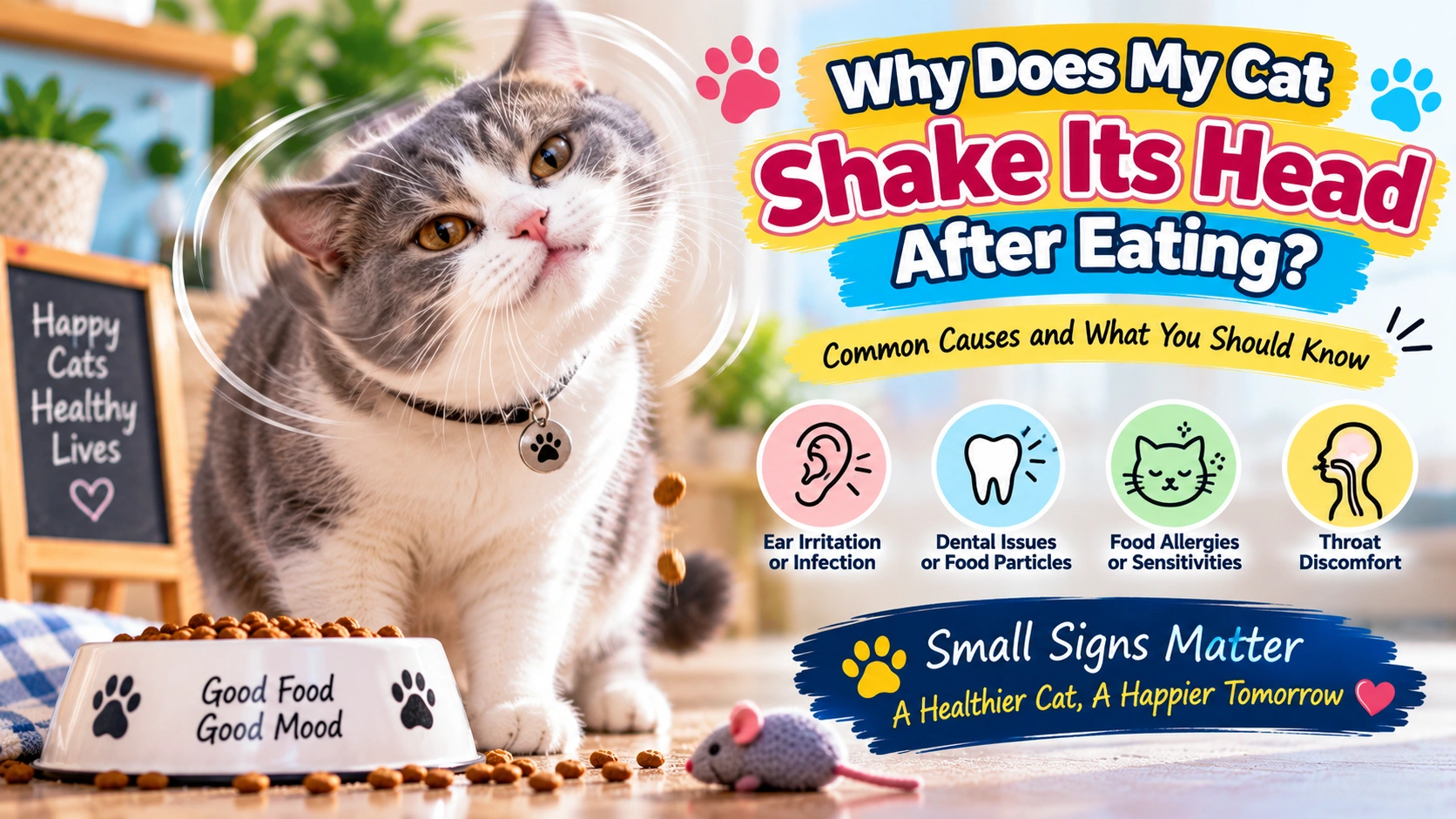
A cat that repeatedly shakes its head after eating may have an ear problem, but the timing around meals can also point toward pain triggered by chewing or jaw movement. Ear inflammation, mites, debris, middle-ear disease, dental pain, oral disease, and simple food residue around the face can all create different versions of the same behavior.
Quick Answer
If the head shake is brief and happens only after messy food, with no scratching, odor, discharge, pain, or chewing change, wipe the outside of the face gently and observe. Repeated head shaking after most meals deserves veterinary evaluation, especially if one ear is involved, the cat scratches the ear, smells bad, has discharge, chews on one side, drops food, or resists opening the mouth. Head tilt, falling, rapid eye movements, severe pain, or neurologic signs need prompt care.
Ear Irritation Is the Most Direct Explanation
External ear inflammation commonly causes head shaking and scratching. Ear mites, bacteria, yeast, allergies, foreign material, and inflammatory disease can irritate the canal. An affected ear may smell unusual, look red, contain dark debris or discharge, or be painful when the cat scratches near it.
Do not insert cotton swabs or home remedies into a painful ear. Merck specifically advises against irritating products such as peroxide or vinegar in inflamed ear canals.
Why Would an Ear Problem Show Up After Eating?
Chewing moves the jaw close to the ear structures. Inflammation deeper in the ear can sometimes make opening the mouth or chewing uncomfortable. A cat may therefore shake the head after several bites even if it does not shake constantly at rest.
Middle-ear disease can also cause head shaking, pain, reduced hearing, head tilt, or balance problems. This is one reason persistent meal-related head shaking should not automatically be blamed on food texture.
Dental Pain Can Mimic an Ear Problem
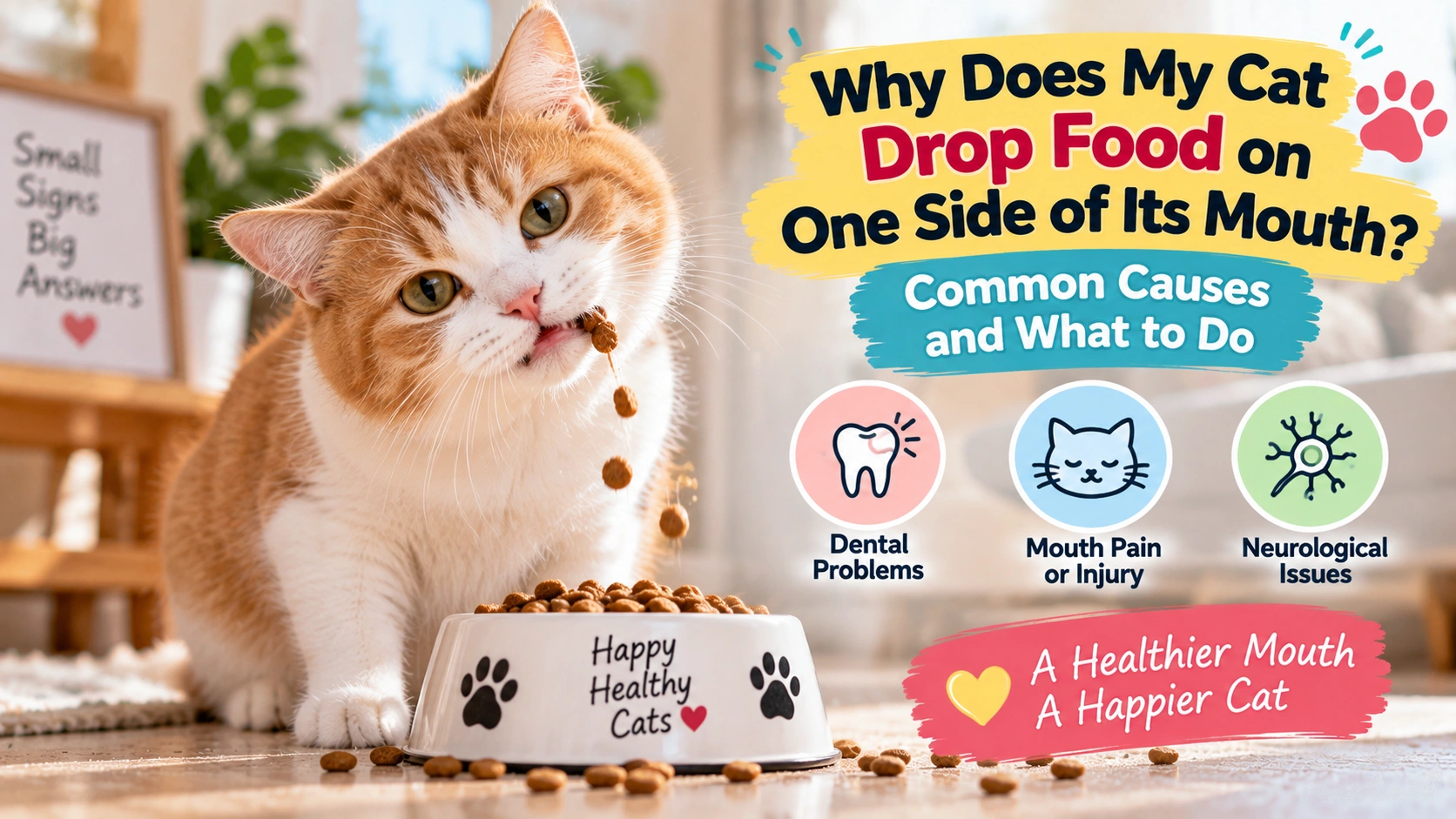
Painful teeth, tooth resorption, periodontal disease, and inflammation in the mouth can cause a cat to move or shake the head while chewing. The cat may tilt the head, chew on one side, stop eating hard food, drool, or develop bad breath.
Use Why Does My Cat Have Bad Breath? if oral odor and gum changes are prominent. A cat that drops kibble or chews only on one side needs a focused oral and dental examination.
Food on the Whiskers or Ear Flap
Wet food or gravy on the whiskers, cheek, or outer ear can trigger a quick shake after a meal. This should be brief and should not come with scratching, pain, odor, or discharge. A shallow wide dish may reduce messy contact for some cats.
Ear Flap Swelling Changes the Picture
Repeated vigorous head shaking can rupture small blood vessels in the ear flap and create an aural hematoma. The pinna becomes thick, puffy, or fluid-filled. If the ear flap is swelling, see Cat’s Ear Flap Suddenly Swollen and arrange veterinary care so both the swelling and the underlying irritation can be addressed.
Head Tilt or Balance Problems Are Not Simple Head Shaking
A persistent head tilt, falling, circling, nausea, or rapid involuntary eye movements suggests vestibular or deeper ear involvement rather than uncomplicated external irritation. The Virixoo guide Cat’s Head Tilted to One Side covers those red flags.
What to Watch During One Meal
- Does the shaking begin before chewing, during chewing, or after the meal?
- Is one ear scratched more than the other?
- Is there odor, redness, wax, dark debris, or discharge?
- Does the cat chew on one side or drop food?
- Does the jaw open normally?
- Is there drooling or bad breath?
- Does the cat tilt the head even when not eating?
What Not to Do
- Do not put peroxide, vinegar, oil, or leftover ear medication into the ear.
- Do not use cotton swabs deep in the canal.
- Do not repeatedly squeeze the ear base to see whether it hurts.
- Do not force the mouth open if jaw movement seems painful.
How Urgent Is It?
| Pattern | Response |
|---|---|
| One quick shake after messy food, no other signs | Clean the outer face gently and monitor |
| Repeated meal-related shaking without severe pain | Schedule an ear and oral examination |
| Ear discharge, marked pain, swelling, food refusal | Prompt veterinary care |
| Head tilt, repeated falling, severe neurologic signs, collapse | Urgent or emergency assessment |
What the Veterinarian May Check
The veterinarian may examine the ear canal with an otoscope, collect samples for mites, bacteria, or yeast, assess the eardrum, and examine the teeth and jaw. Sedation can be needed for a painful or obstructed ear. Persistent one-sided signs may require imaging or additional testing, especially if middle-ear disease or a mass is suspected.
Bottom Line
Head shaking after eating is a timing clue, not a diagnosis. Ear irritation remains common, but chewing can also reveal middle-ear, jaw, or dental pain. A brief shake after messy food can be harmless; a repeated pattern with ear or mouth signs should be evaluated before it progresses to chronic pain or an ear-flap hematoma.