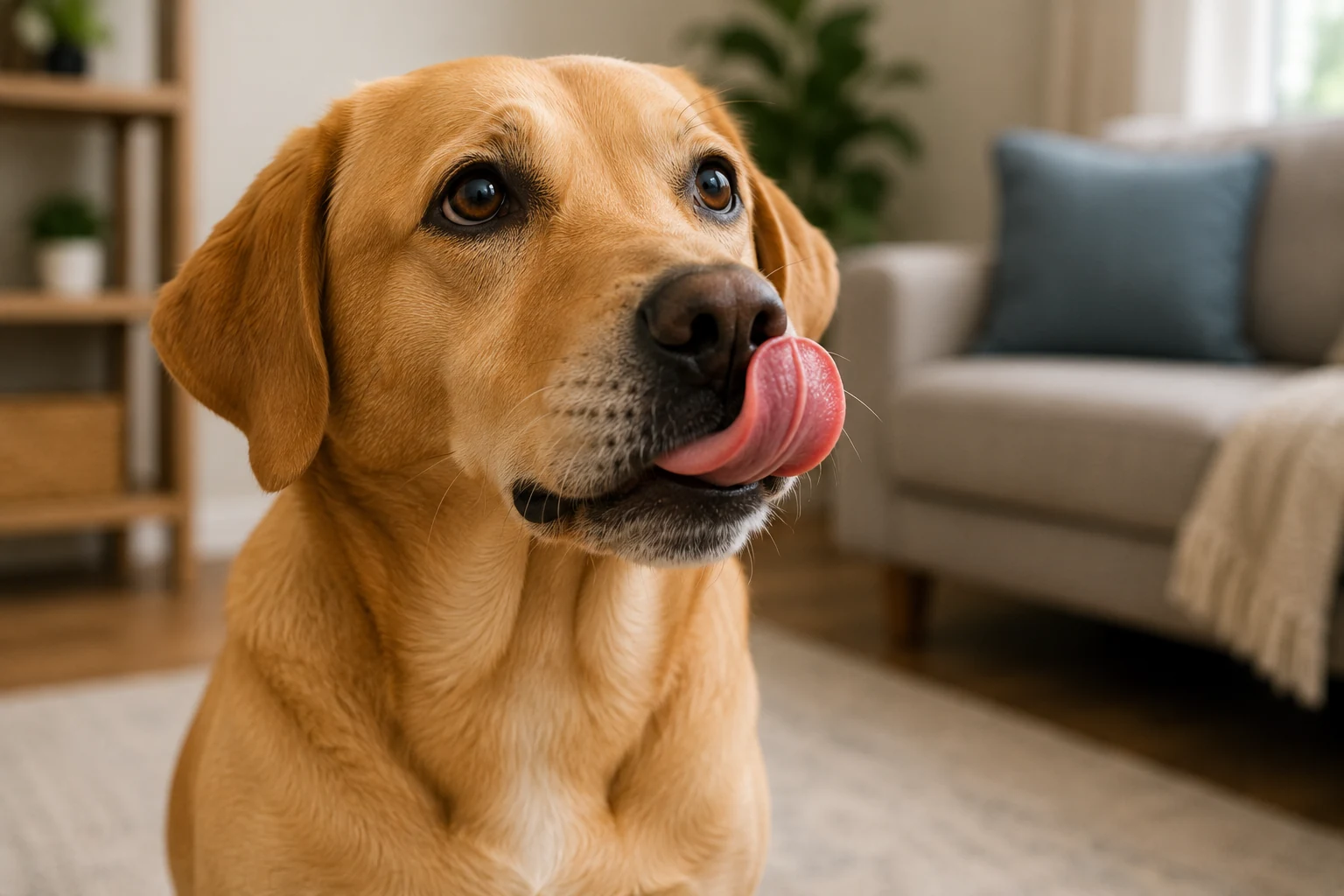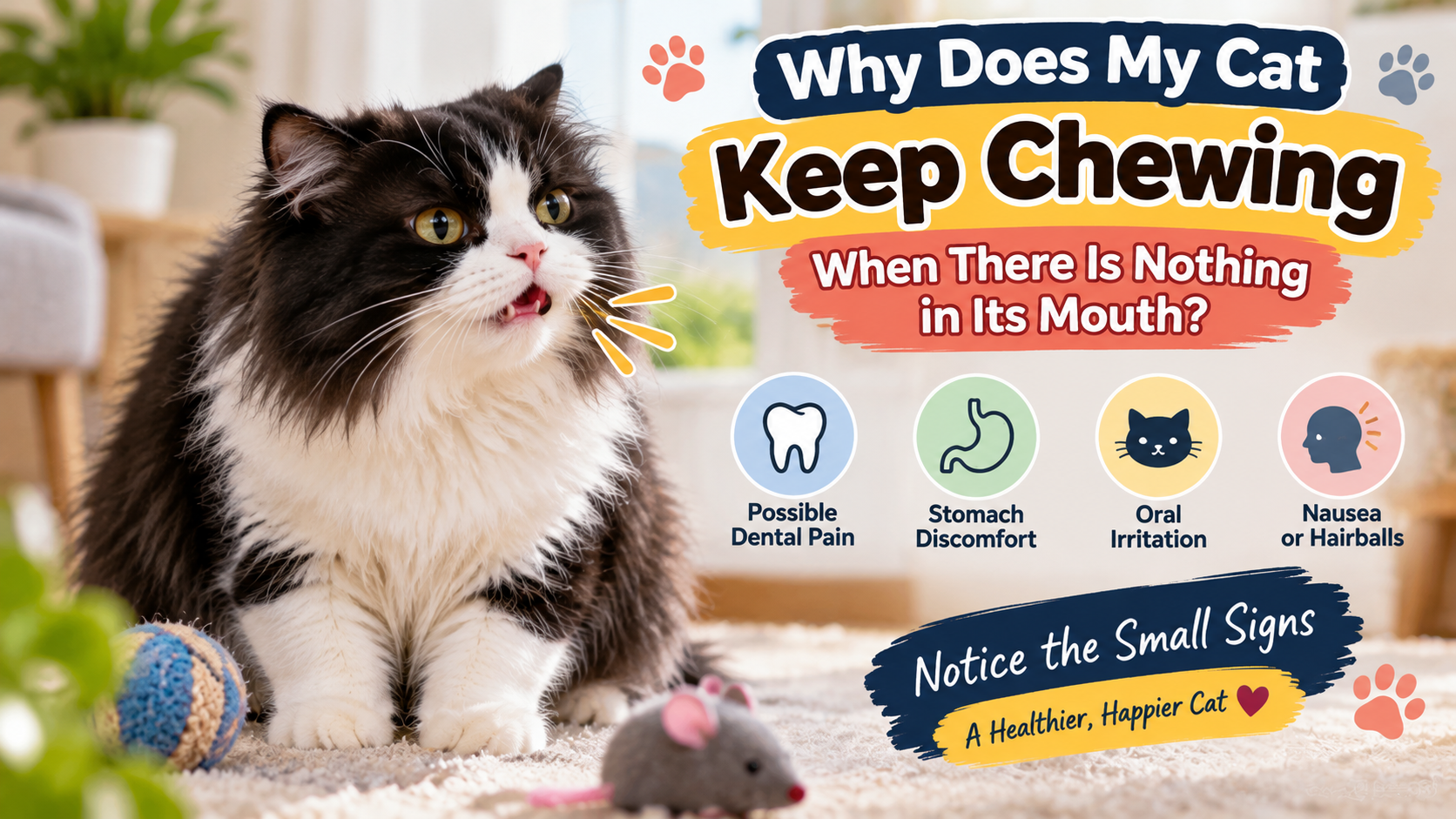
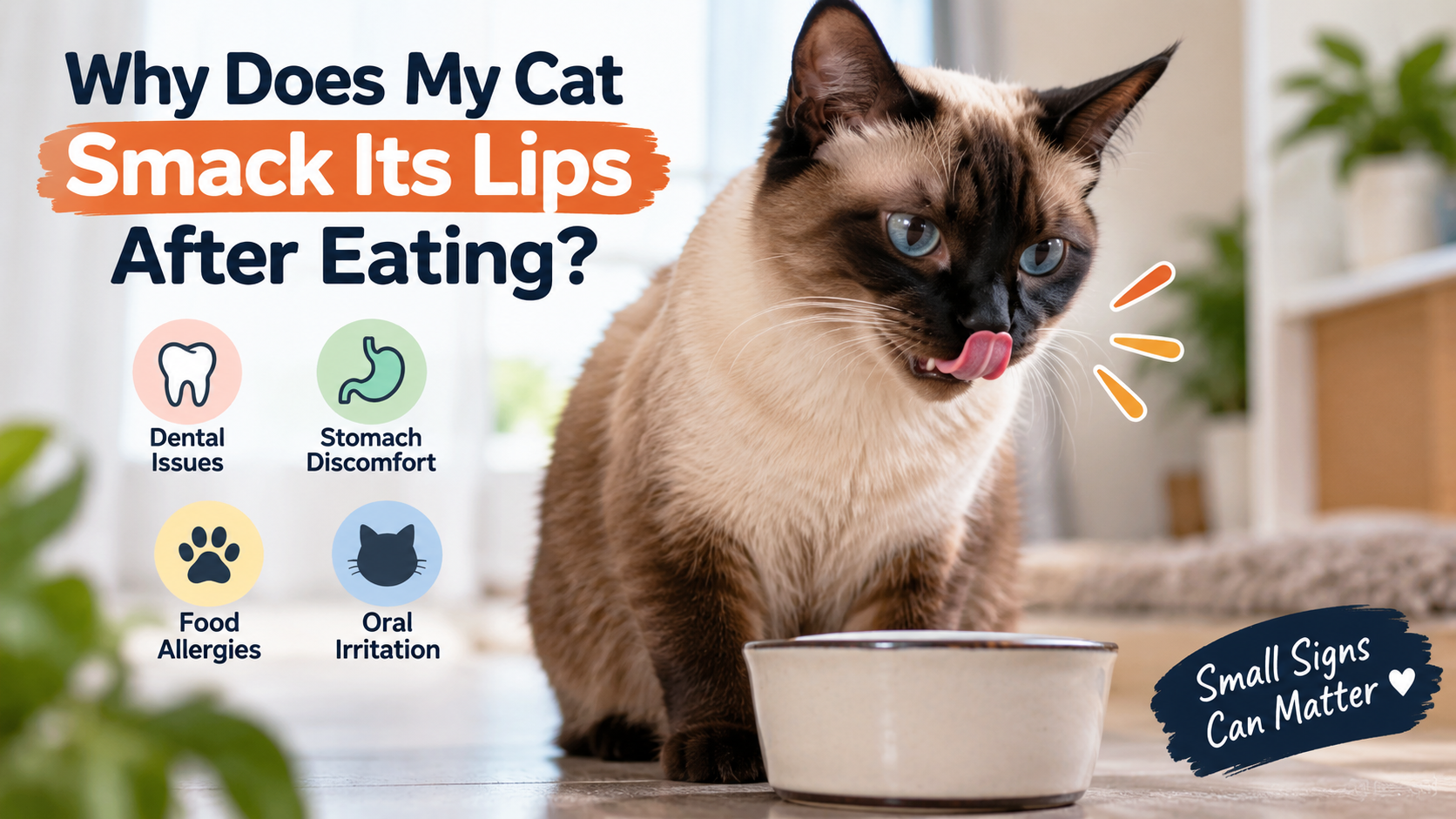
A few lip licks after eating can be normal grooming, but repeated lip smacking that is new, prolonged, or accompanied by other signs deserves attention. Cats may make these movements to clear food or saliva, but the same behavior can appear with dental pain, mouth irritation, nausea, excess saliva, a foreign object, or difficulty swallowing.
Quick Answer
If your cat smacks its lips for a few seconds after a normal meal and then behaves normally, simple cleanup is likely. If the behavior continues, happens after every bite, appears at times unrelated to food, or comes with drooling, bad breath, pawing at the mouth, vomiting, reduced appetite, food dropping, or repeated swallowing, arrange veterinary evaluation. Breathing difficulty, severe facial swelling, toxin exposure, or inability to swallow is urgent.
Normal Post-Meal Cleanup
Cats routinely lick around the lips and whisker pads after eating. This is usually brief, symmetrical, and followed by normal grooming or rest. The cat remains interested in food, chews comfortably, and does not drool or act distressed.
The key change is frequency. A cat that suddenly pauses to smack its lips repeatedly after each mouthful is showing a different pattern from one or two normal licks at the end of a meal.
Dental Pain Can Create Repetitive Mouth Movements
Tooth resorption, gingivitis, periodontitis, fractured teeth, and stomatitis can make chewing painful. A cat may shift food to one side, stop between bites, lick or smack the lips, or swallow kibble with minimal chewing. Bad breath and drooling add support for an oral cause but are not required.
If odor is prominent, see Why Does My Cat Have Bad Breath?. If food itself begins falling from the mouth, that pattern is more specific than lip smacking alone.
Mouth Ulcers or Irritation
Ulcers on the tongue, gums, lips, or back of the mouth can sting after food touches them. Cats may approach the bowl, take a bite, then pull away and make repeated licking motions. Chemical irritation, plant material, trauma, severe dental inflammation, and some systemic diseases can all contribute to oral lesions.
Do not apply human mouth gels or antiseptics. The related Virixoo guide Mouth Ulcers in Cats explains warning signs that make oral sores more urgent.
Nausea Often Looks Subtle in Cats
A nauseated cat may lick or smack the lips, swallow repeatedly, drool, turn away from food, or sit quietly without vomiting. If lip smacking begins several minutes after eating and is followed by retching, vomiting, or a sudden refusal to continue the meal, nausea becomes more likely.
Because nausea has many possible causes, repeatedly switching foods without evaluating a persistent pattern can delay diagnosis.
Food Texture and Pieces Caught Around the Teeth
Occasionally a sticky food, fibrous meat, or a crumb near a tooth can trigger brief mouth movements. The behavior should resolve quickly. Recurrent episodes after the same type of food may justify checking the texture and bowl, but do not insert fingers deep into the mouth to search for debris.
Foreign Material Needs Caution
String, thread, grass, bone fragments, and other objects can become trapped under the tongue or between teeth. Sudden lip smacking plus drooling, gagging, pawing at the mouth, or refusal to eat should raise concern. Never pull visible string from a cat’s mouth.
Repeated Swallowing Can Be Part of the Same Pattern
If lip smacking is followed by repeated gulping when no food is present, the cat may be managing extra saliva or experiencing throat discomfort or nausea. See Why Is My Cat Drooling? when excess saliva is part of the pattern.
What to Observe During the Next Meal
- Does the smacking occur after the final bite or after every bite?
- Does the cat chew on one side?
- Is food dropped or swallowed whole?
- Is there drooling, foul odor, blood, or facial swelling?
- Does the cat return to the bowl willingly?
- Is vomiting, gagging, or repeated swallowing present?
- Does soft food cause less discomfort than kibble?
When to Call the Veterinarian
| Finding | Suggested action |
|---|---|
| Brief lip licking only after meals, normal eating and behavior | Usually monitor |
| New repetitive smacking after meals for more than a day or two | Arrange an examination |
| Drooling, bad breath, one-sided chewing, food dropping, vomiting | Prompt veterinary assessment |
| Cannot swallow, rapid facial swelling, breathing trouble, known toxin exposure | Emergency care |
What Not to Do
- Do not use human mouthwash, toothpaste, antacids, or nausea medicine.
- Do not repeatedly force the mouth open.
- Do not pull on string or thread.
- Do not assume the behavior is “just grooming” if eating or appetite also changes.
What the Veterinarian May Check
The veterinarian may examine the gums, teeth, tongue, jaw, throat, hydration, and abdomen. A complete dental assessment can require anesthesia and dental radiographs because painful disease may exist below the gum line. Blood tests or imaging may be recommended if nausea or systemic illness is suspected.
Bottom Line
Post-meal lip smacking is often harmless when it is brief and the cat eats comfortably. A new repetitive pattern is different. Oral pain, nausea, excess saliva, foreign material, and swallowing problems are all possibilities, so judge the sign by what happens to chewing, swallowing, appetite, and overall behavior rather than by the mouth movement alone.