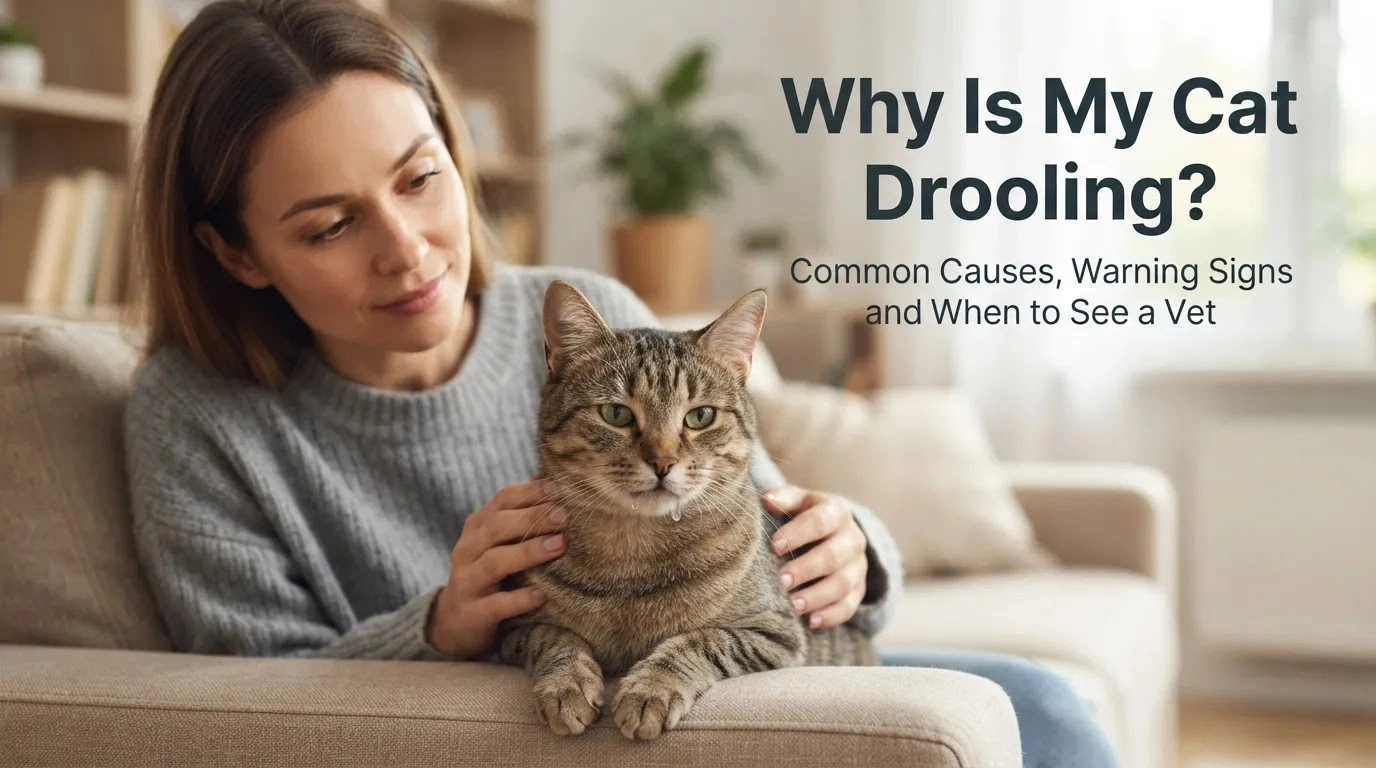
A tiny amount of saliva during intense purring or kneading can occur in some relaxed cats, but new or heavy drooling deserves attention. Saliva may increase because the mouth hurts, the cat feels nauseated, something tastes irritating, swallowing is difficult, or a toxin or foreign material is involved. The useful question is not simply whether saliva is present, but whether this is normal for your cat and what else changed at the same time.
Quick Answer
If drooling is new, first keep your cat away from plants, cleaners, medications, strings and other possible hazards. Look only at the lips and front of the mouth if your cat allows it; do not force the jaw open. Note appetite, swallowing, vomiting, pawing at the mouth, odor, breathing and alertness. Heavy sudden drooling, suspected poisoning, difficulty breathing or swallowing, collapse, or a string or object caught in the mouth needs prompt veterinary help.
Why Cats May Drool
Relaxation and purring
A few cats salivate when they are deeply relaxed, purring, kneading or receiving affection. This tends to be a long-standing, predictable pattern: the cat is comfortable, the amount is small, and it stops when the relaxing interaction ends. A cat that has never drooled before should not automatically be placed in this category.
Dental and oral pain
Gingivitis, periodontal disease, tooth resorption, mouth ulcers, trauma and other painful oral problems can increase saliva. Bad breath, red gums, dropping food, chewing on one side, approaching food and backing away, or pawing at the face make an oral examination especially important.
Nausea or digestive upset
Cats may drool when nauseated, sometimes before vomiting. Lip licking, repeated swallowing, hiding, reduced appetite, restlessness or vomiting can appear with the saliva. Because many illnesses can cause nausea, repeated episodes should be evaluated rather than treated with a random stomach remedy.
Irritants, toxins or unpleasant tastes
Household cleaners, some plants, topical products, medications and other substances can irritate the mouth or cause poisoning. A cat may foam or drool after tasting something intensely bitter, but you should not assume a large amount of saliva is harmless when exposure is uncertain.
Foreign material or swallowing difficulty
String, thread, bone fragments, plant material or another object can become caught in the mouth or throat. Repeated gagging, difficulty swallowing, sudden pawing at the mouth or an object visible under the tongue is concerning. Never pull on string that disappears into the mouth because it may be anchored farther inside.
The Pattern Gives Better Clues Than the Saliva Alone
Compare the episode with your cat's normal behavior. Timing, duration and accompanying signs help decide how quickly to seek care.
| Pattern | What It Suggests | Next Step |
|---|---|---|
| Only while purring; lifelong habit | Relaxation may contribute | Monitor if the cat is otherwise completely normal |
| Drooling plus bad breath or food dropping | Oral pain becomes more likely | Arrange a veterinary dental/oral examination |
| Drooling plus vomiting or appetite loss | Nausea or illness may be present | Call your veterinarian if persistent or significant |
| Sudden foaming after possible exposure | Irritant or toxin is possible | Identify the substance and seek professional advice |
| Drooling with breathing or swallowing difficulty | Potential emergency | Seek urgent veterinary care |
Safe Steps You Can Take Right Now
Your goal at home is to prevent further exposure and collect useful information, not to diagnose the cause.
- Remove access to chemicals, plants, medication, string, dental floss and small objects.
- Offer fresh water if your cat can swallow normally, but do not force food or fluids.
- Take a clear photo or video of the drooling and any unusual mouth movements.
- Check the packaging of any product the cat may have contacted and keep it available for the veterinarian.
- Keep the cat quiet and indoors while you decide whether veterinary assessment is needed.
What to Track Before the Vet Visit
Details that seem minor can help distinguish mouth disease from nausea, exposure or a swallowing problem.
- When the drooling started and how long each episode lasts.
- Whether it occurs around meals, purring, travel, medication or grooming products.
- Appetite, vomiting, stool, drinking and energy changes.
- Bad breath, gum redness, food dropping or chewing changes.
- Possible access to lilies, chemicals, human medication, strings or other hazards.
What Not to Do
Do not give human pain relievers, antacids, antihistamines or other medicines unless a veterinarian has specifically prescribed them for this cat. Do not induce vomiting unless a veterinary professional tells you to do so. Avoid prying open a painful mouth, and never pull a thread or string that is caught under the tongue or extends down the throat.
When to Contact a Veterinarian
Contact a veterinarian for new persistent drooling, recurring episodes, mouth odor, reduced appetite, painful chewing, vomiting, weight loss, oral bleeding, facial swelling or obvious discomfort. Cats often hide dental pain, so a cat that still eats can still have significant oral disease.
When It Is an Emergency
Seek urgent care for breathing difficulty, inability to swallow, collapse, severe weakness, seizures, suspected toxin exposure, rapidly increasing facial or throat swelling, or a suspected foreign object. If poisoning may be involved, bring the product label or plant information when possible.
Related Virixoo Guides
For ongoing mouth odor, read Why Does My Cat Have Bad Breath?. If your cat is refusing meals, see Why Is My Cat Not Eating?. For vomiting, use Why Is My Cat Vomiting?.
How a Veterinarian May Narrow Down the Cause
The examination usually starts with the history because timing can separate a relaxation habit from nausea, exposure or oral pain. A veterinarian may inspect the teeth, gums, tongue and tissues under the tongue, assess hydration and abdomen, and look for neurologic or respiratory abnormalities. If the mouth is painful, a complete oral examination may require sedation. Blood tests, imaging or toxin-specific evaluation may be recommended when signs extend beyond the mouth. Bring videos and any possible product or plant information; those details can shorten the path from a broad symptom to a useful diagnosis.
Bottom Line
Drooling is a sign, not a diagnosis. A predictable tiny amount during relaxation may be normal for an individual cat, but sudden or heavy saliva—especially with mouth pain, vomiting, toxin exposure, or swallowing trouble—deserves prompt attention.