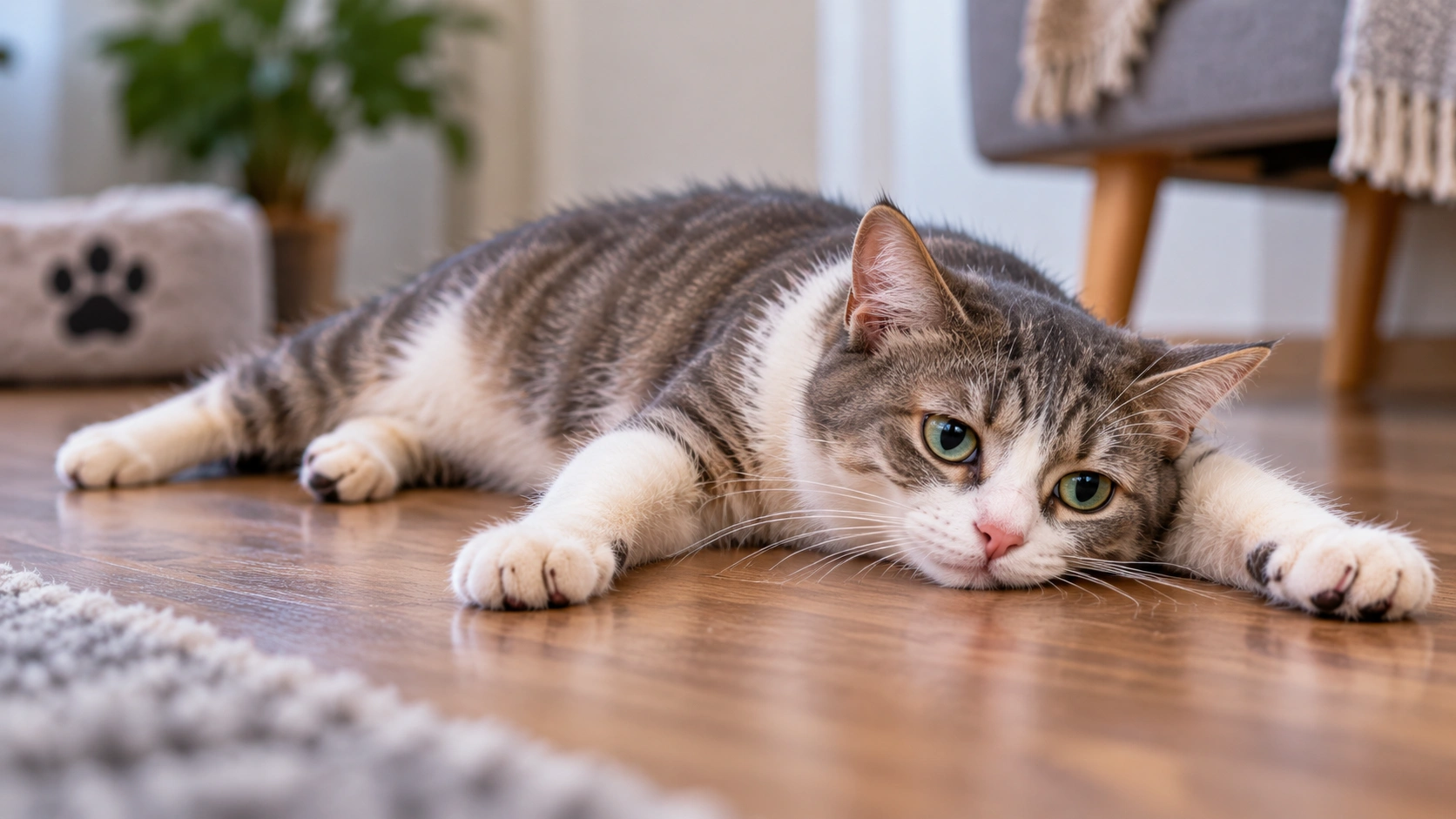

A cat that suddenly stops jumping onto places it normally reaches may be painful, weak, or neurologically impaired. Cats are skilled at hiding discomfort, so reduced jumping can be one of the first visible signs of joint disease, back pain, muscle injury, paw pain, or systemic illness.
Quick Answer
If your cat abruptly cannot jump, watch how it walks, climbs, sits, and uses the litter box. Arrange veterinary evaluation if the change persists or the cat appears painful. Seek urgent care if there is sudden hind-leg paralysis, a cold painful paw, severe trauma, collapse, or inability to stand.
Why Jumping Changes Before Walking
Jumping requires much more force from the hind limbs and spine than ordinary walking. A cat with early arthritis or mild pain may still walk around the house but stop jumping onto counters, beds, or windowsills.
Arthritis
Degenerative joint disease is common in older cats and often goes unnoticed because cats do not always limp. Instead, they may sleep in lower places, use intermediate steps, hesitate before jumping, groom the back less, or become irritable when picked up.
Acute Orthopedic Pain
A sprain, fracture, muscle injury, torn claw, or painful paw can suddenly reduce jumping. Look for limping, swelling, reluctance to bear weight, or licking one limb. Do not repeatedly flex joints to locate pain.
Spinal and Neurologic Problems
Back pain, disc disease, nerve injury, or other neurologic disorders can reduce strength and coordination. Knuckling, dragging a paw, crossing the hind legs, tail weakness, or loss of balance suggests more than simple arthritis.
Systemic Weakness
Anemia, dehydration, heart disease, kidney disease, fever, and other illnesses can reduce overall strength. A cat that stops jumping and also sleeps more, eats less, loses weight, or breathes faster deserves a broader medical evaluation.
How to Observe Movement Safely
Watch the cat move naturally rather than forcing jumps. Note whether it can climb stairs, step into the litter box, stand from rest, and walk without swaying. A short video of normal movement can help the veterinarian.
Home Adjustments
- Add stable steps or ramps to favorite resting areas.
- Use low-entry litter boxes if mobility is reduced.
- Place food and water on the same floor.
- Use non-slip rugs on smooth surfaces.
- Prevent access to high falls while the cause is unknown.
Red Flags
| Finding | Concern |
|---|---|
| Sudden inability to use a hind leg | Urgent orthopedic, neurologic, or vascular problem |
| Cold painful paw | Possible circulation emergency |
| Major trauma | Prompt evaluation |
| Collapse or severe weakness | Emergency |
| Loss of bladder control | Possible neurologic involvement |
Why Human Painkillers Are Dangerous
Do not give ibuprofen, naproxen, acetaminophen, or other human pain medication. Many are highly toxic to cats. Veterinary pain control is selected based on the cat’s diagnosis, kidney function, age, and other medications.
What the Veterinarian May Do
The examination may include joints, paws, spine, muscle mass, reflexes, and neurologic function. X-rays, blood tests, or additional imaging may be recommended depending on whether the pattern looks orthopedic, systemic, or neurologic.
Bottom Line
Stopping jumps is often an early sign of pain or weakness rather than stubbornness. Persistent change deserves veterinary assessment, while sudden paralysis, cold painful limbs, major trauma, or collapse require urgent care.
Why Weight and Muscle Loss Matter
A cat with chronic disease may lose hind-limb muscle and gradually lose jumping ability. Compare the thighs, spine, and shoulders with older photos if available. Muscle loss plus weight loss, poor appetite, or increased thirst warrants a broader medical workup.
Why Litter-Box Entry Can Be a Clue
Difficulty stepping over a high litter-box wall often appears alongside reduced jumping. A lower-entry box can improve comfort while the cause is being investigated and treated.
How Pain Changes Behavior
Painful cats may stop seeking high resting places, become less social, resist being picked up, or sleep in unusual locations. These changes can be more useful than waiting for an obvious limp.
A Practical Decision Guide
For cat suddenly cannot jump, start by deciding whether the change is truly new and whether the cat can still perform basic functions normally. Breathing, walking, eating, drinking, urinating, defecating, grooming, and responding to the environment are more useful than one isolated sign. A cat that becomes weak, painful, unable to urinate, unable to swallow, or neurologically abnormal has moved beyond routine home monitoring.
Next consider speed. A problem that develops over minutes or hours generally deserves more urgency than a stable finding that has looked the same for months. Finally, look for combinations of signs. Pain plus food refusal, weakness plus pale gums, eye change plus vision loss, or swelling plus breathing difficulty are more concerning than a single mild feature.
What to Record Before the Appointment
Write down when the problem began, whether onset was sudden or gradual, and whether it is constant or intermittent. Record appetite, water intake, urination, stool, grooming, sleep, breathing, movement, and behavior. Include recent trauma, falls, fights, medication changes, toxin exposure, weight loss, vomiting, diarrhea, or outdoor access when relevant.
A short photo or video can be useful if the sign comes and goes, but do not provoke pain, force movement, manipulate an injured area, or delay urgent care just to document the problem.
Common Mistakes Owners Make
- Waiting for a dramatic symptom before calling.
- Using leftover medication from another illness.
- Giving human pain medicine.
- Repeatedly touching or testing a painful body part.
- Assuming normal eating means the cat is not in pain.
- Stopping treatment as soon as one visible sign improves.
How to Keep the Cat Comfortable While Waiting
Use a quiet indoor room, minimize unnecessary handling, and keep food, water, and the litter box easy to reach. Prevent access to stairs or high furniture when movement is abnormal. If trauma is suspected, restrict activity. Do not force food, water, exercise, or handling when the cat is distressed.
What Follow-Up Should Focus On
After treatment begins, improvement should involve the whole cat rather than only the visible sign. Appetite, grooming, mobility, litter-box habits, breathing, sleep, and social behavior should move back toward the cat’s normal baseline. Contact the clinic if the original problem returns, new signs appear, or the cat worsens after initially improving.
When to Recheck Even After Initial Improvement
A cat can look better for a few hours while the underlying problem remains. Recheck is appropriate when the sign returns, appetite falls, the cat hides more, breathing changes, mobility worsens, or new pain appears. Follow any scheduled veterinary recheck even if the visible sign seems smaller or less dramatic.
Do not stop prescribed medication early, change the dose, or add supplements without discussing it with the veterinarian. If a new symptom appears after treatment begins, report both the new sign and the timing relative to medication, feeding, or activity changes.
Why Cats May Choose Lower Sleeping Places
A cat that once slept on a wardrobe or high shelf may begin choosing the sofa, floor, or a low chair when jumping becomes uncomfortable. Owners sometimes interpret this as a preference change, but a consistent move toward lower resting places can be an early mobility signal.
Why Bilateral Hind-Limb Weakness Is Different From One Sore Leg
One painful paw may cause a limp, while weakness in both hind legs raises concern for spinal, neurologic, metabolic, or circulation problems. If both back legs suddenly fail, especially with cold paws or severe pain, treat it as an emergency rather than an arthritis flare.
Why a Video Is Better Than Forcing a Jump
Record the cat walking, using stairs, or approaching a familiar low surface naturally. Do not repeatedly place the cat on the floor and encourage difficult jumps. A spontaneous video shows gait and hesitation without adding pain or fall risk.
Final Safety Check
Before continuing home observation, confirm that the cat is comfortable, breathing normally, responsive, and able to eat, drink, move, urinate, and defecate. A worsening change in any of these basic functions is more important than one isolated symptom appearing slightly better. When the cause is uncertain or the sign is progressing, veterinary reassessment is safer than prolonged experimentation at home.
Why a Sudden Drop in Activity Should Not Be Dismissed
Some cats compensate for pain by simply doing less. They may still eat and use the litter box but stop playing, climbing, or visiting favorite high places. A sudden reduction in activity can therefore be a meaningful pain signal even when there is no obvious limp.
Track whether the cat can rise smoothly after sleep, whether the hindquarters sway, and whether it pauses before stairs or furniture. These details help separate joint pain, weakness, and neurologic dysfunction.
When to Contact the Clinic Again
Call again if the cat develops new pain, appetite loss, vomiting, breathing changes, weakness, abnormal urination, or neurologic signs, even if the original symptom looks slightly improved. A change in overall function is an important reason to shorten the monitoring period and seek reassessment.