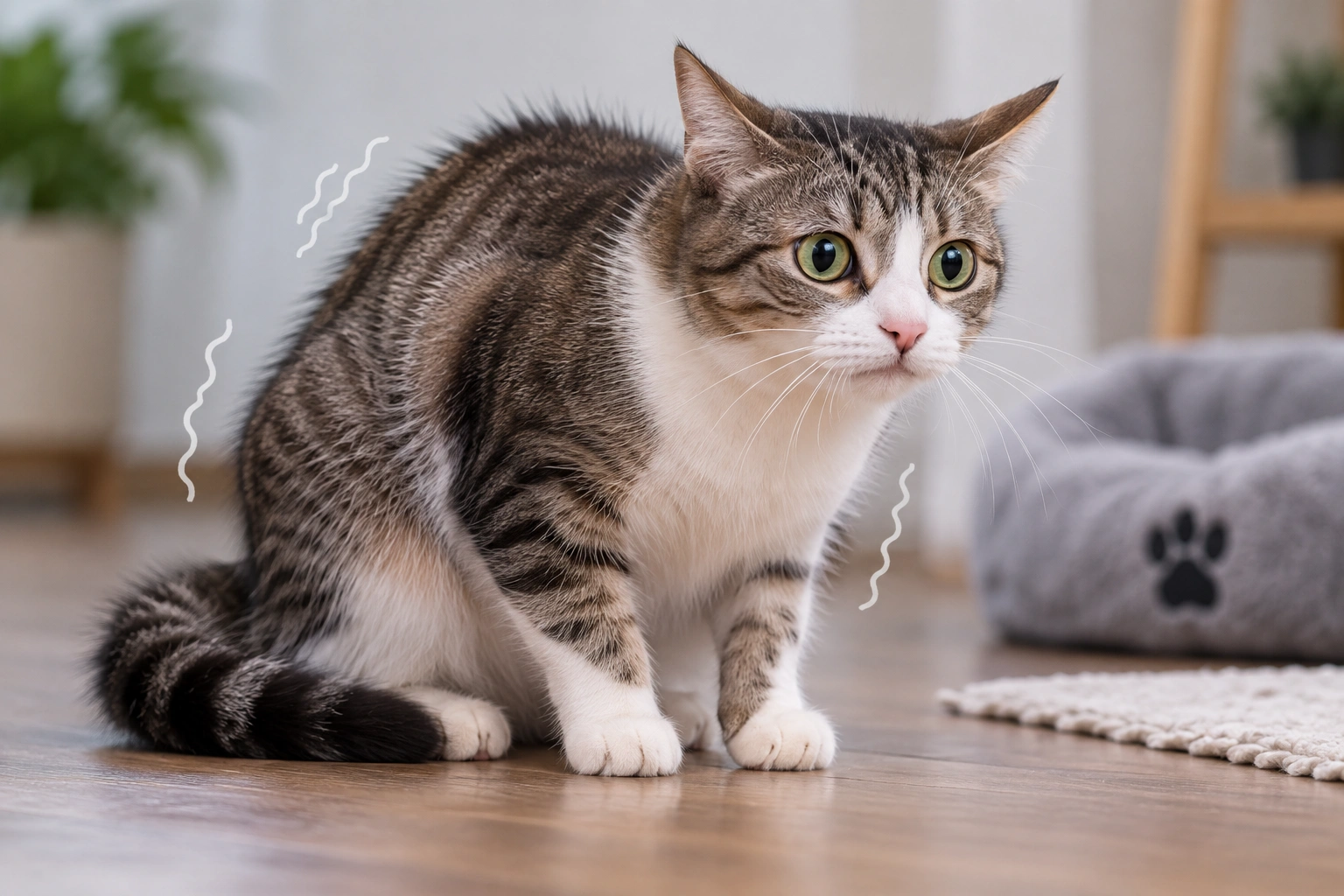
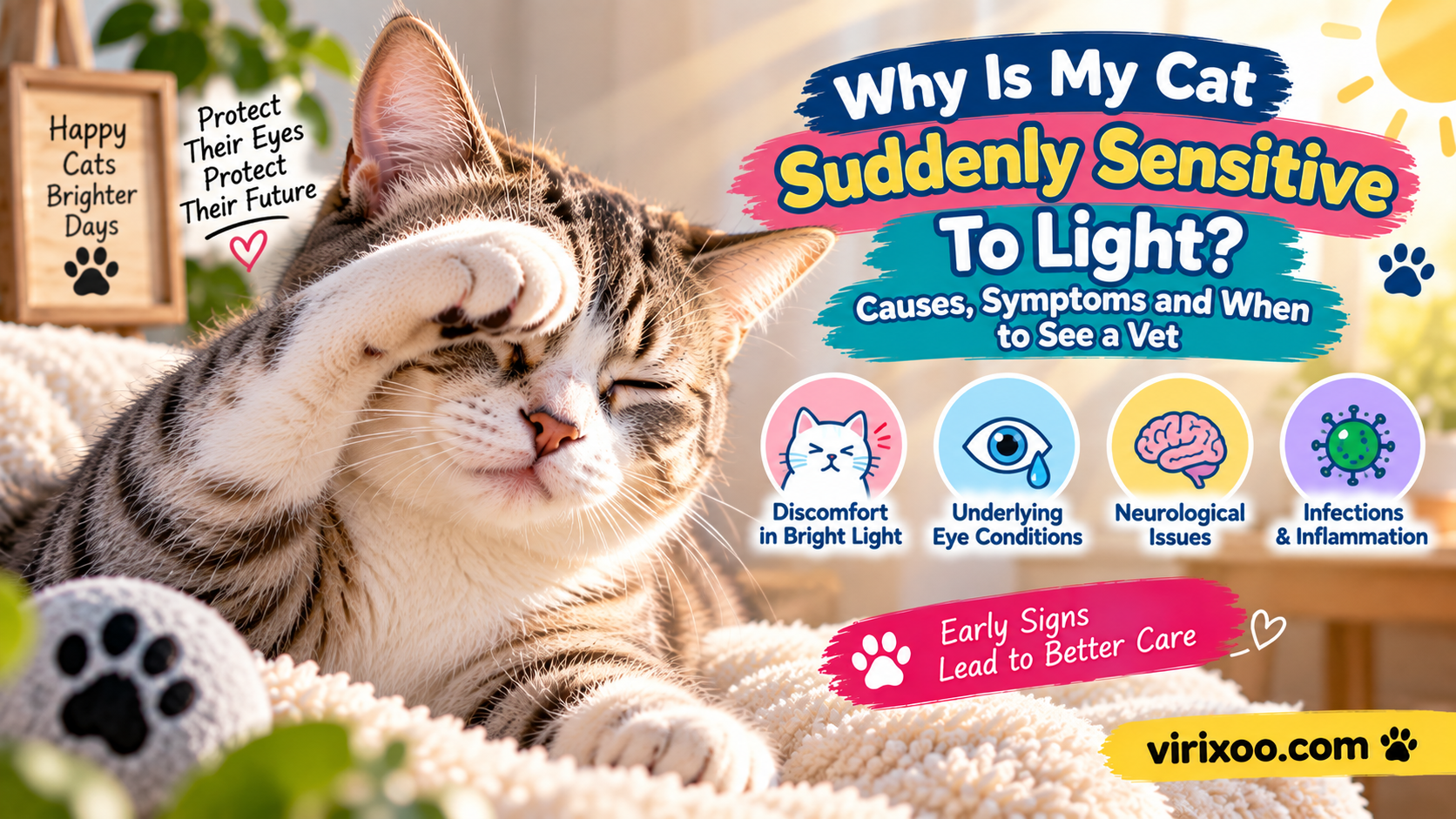
A cat that suddenly squints, turns away from windows, chooses unusually dark rooms, or reacts strongly when lights come on may be experiencing photophobia—abnormal sensitivity to light. Cats naturally prefer some dim, quiet resting places, so the key word is suddenly. A new pattern of light avoidance combined with squinting, tearing, redness, cloudiness, rubbing, or pupil changes is more consistent with discomfort than with a simple preference for shade.
Why Bright Light Can Hurt an Uncomfortable Eye
Bright light triggers pupil constriction and increases visual stimulation. When the cornea or internal eye structures are inflamed, normal light can become unpleasant. A painful cat may keep the eyelids partly closed or move into a darker room. This is why light sensitivity often appears with other eye-pain signs such as squinting and tearing.
Corneal Ulcers and Surface Injury
Corneal ulcers are one important cause of photophobia. A scratch, trapped debris, trauma, chemical irritation, or feline herpesvirus can damage the corneal surface. Cats with corneal ulceration may squint, rub the eyes, have discharge or cloudiness, and appear hypersensitive to bright light. The surface may look nearly normal to an owner, so the absence of a visible scratch does not rule out a painful ulcer.
Uveitis and Inflammation Inside the Eye
Inflammation inside the eye can also make light uncomfortable. Uveitis may cause redness, pain, pupil changes, haziness, and reduced vision. Because it can be associated with local eye disease or broader illness, veterinary assessment may extend beyond the eye if the examination suggests an underlying systemic cause.
Glaucoma and Pressure-Related Pain
Raised intraocular pressure can damage vision and cause pain. Affected eyes may look cloudy, enlarged, or different in pupil size, but early signs are not always obvious. Measuring pressure requires veterinary equipment. Light avoidance paired with an abnormal-looking eye, pupil change, or apparent vision loss should not be managed by simply dimming the house and waiting.
When Neurologic Signs Change the Picture
Light sensitivity alone is often an eye-pain clue, but the situation becomes more concerning if it appears with disorientation, seizures, head pressing, collapse, marked imbalance, abnormal eye movements, unequal pupils, or sudden behavioral change. Those signs can indicate a problem involving the nervous system or vision pathways and should prompt urgent evaluation.
Could Your Cat Just Prefer Dark Places?
Yes. Many cats nap under beds, inside closets, or in covered spaces. Normal preference is usually longstanding and not accompanied by facial tension, eye closure, tearing, rubbing, or a sudden refusal to enter bright areas. A cat that has always slept in a dark closet is different from a cat that begins hiding from daylight on the same day one eye starts squinting.
A Simple Observation Checklist
- Is one eye more closed than the other?
- Do the pupils look the same size?
- Is there redness, cloudiness, discharge, swelling, or a visible scratch?
- Does the cat rub the face or avoid being touched around the head?
- Is vision normal when moving through familiar rooms?
- Are there neurologic signs such as wobbling, seizures, or unusual eye movements?
Observe without forcing the eyelids open or repeatedly shining a flashlight into the eyes. A bright-light test can cause unnecessary pain and is not a reliable home diagnostic.
What to Do Until the Cat Is Seen
Let the cat stay in comfortable, low-glare lighting. Keep it indoors and reduce opportunities to rub the eye against furniture or paws. If the cat is rubbing persistently, contact the clinic about whether an Elizabethan collar is appropriate. Do not use human eye drops, topical anesthetics, or leftover ophthalmic medication.
When to Seek Prompt or Emergency Care
Prompt veterinary assessment is appropriate for new persistent photophobia, particularly with squinting or visible eye change. Seek urgent care if the eye becomes cloudy or enlarged, the pupil is markedly abnormal, there has been trauma or chemical exposure, the cat appears unable to see, or neurologic signs are present. Open-mouth breathing, collapse, or severe systemic illness are emergencies regardless of the eye symptoms.
What the Veterinary Exam May Include
The veterinarian may inspect the cornea and eyelids, stain the cornea for ulceration, measure intraocular pressure, assess pupils and vision, and examine deeper eye structures. If neurologic or systemic disease is suspected, additional testing may be recommended. The goal is to determine whether the light sensitivity originates from the eye itself or is part of a broader problem.
Photophobia Can Be Subtle in Cats
Cats rarely announce that light hurts. Instead, an affected cat may sit with the face turned toward a wall, keep one eye more closed near a bright window, remain under furniture longer than usual, or choose dim hallways during daytime. These small behavioral changes matter most when they are new and occur with other eye signs. Comparing behavior with the cat’s usual daily routine is more useful than judging whether the room seems bright to a person.
Why One-Sided Light Sensitivity Is Especially Informative
If only one eye narrows in brighter light, a local painful eye problem becomes more likely. Bilateral light avoidance can occur with disease affecting both eyes or, less commonly, broader neurologic illness. Either pattern deserves attention when sudden, but noting whether the reaction is symmetric can help the veterinarian prioritize the examination.
Headache-Like Behavior Is Not a Home Diagnosis
Owners sometimes describe a light-sensitive cat as having a migraine. Cats can have neurologic disease, but human headache labels should not be applied from behavior alone. Eye pain is a common and important explanation that must be excluded. If light avoidance occurs with seizures, severe disorientation, circling, collapse, or abnormal eye movements, seek urgent veterinary care rather than trying to treat presumed headache at home.
How to Make Transport Less Uncomfortable
For a cat with a painful eye, use a secure carrier with a light towel draped over part of it to reduce glare while maintaining good airflow. Avoid shining phone flashlights or taking repeated flash photographs. Keep handling calm and minimal. If the cat has a history of severe travel stress, call the clinic before the visit and ask about safe transport planning rather than giving unapproved sedatives.
Observe the Cat in Normal Light, Not Artificial Tests
Useful observations come from everyday behavior: does the cat turn away from a sunny window, blink rapidly when curtains open, or remain normal in dim rooms? Recreating discomfort with phone flashes or strong lamps adds no diagnostic value. Natural behavior is safer and often gives the veterinarian a clearer description of the trigger.
Light Sensitivity With Nasal or Respiratory Signs
Feline respiratory infections can affect the eyes as well as the nose. If photophobia occurs with sneezing, conjunctivitis, nasal discharge, or fever, mention all signs together rather than treating them as separate problems. Feline herpesvirus, for example, can be associated with corneal disease as well as upper respiratory illness.
Why Follow-Up Matters
Some eye diseases improve clinically before the tissue is fully healed. A cat may open the eye more normally even though a corneal lesion persists. If the veterinarian schedules a recheck, keep it even when the cat seems better. Follow-up testing can confirm that healing is complete and that treatment can be safely changed or stopped.
Bottom Line
Sudden light sensitivity is not a diagnosis, but it is a useful clue. In cats it often accompanies painful eye disease, especially corneal injury or inflammation. If the change is new and persistent—or occurs with cloudiness, pupil changes, trauma, vision problems, or neurologic abnormalities—veterinary assessment should not be delayed.