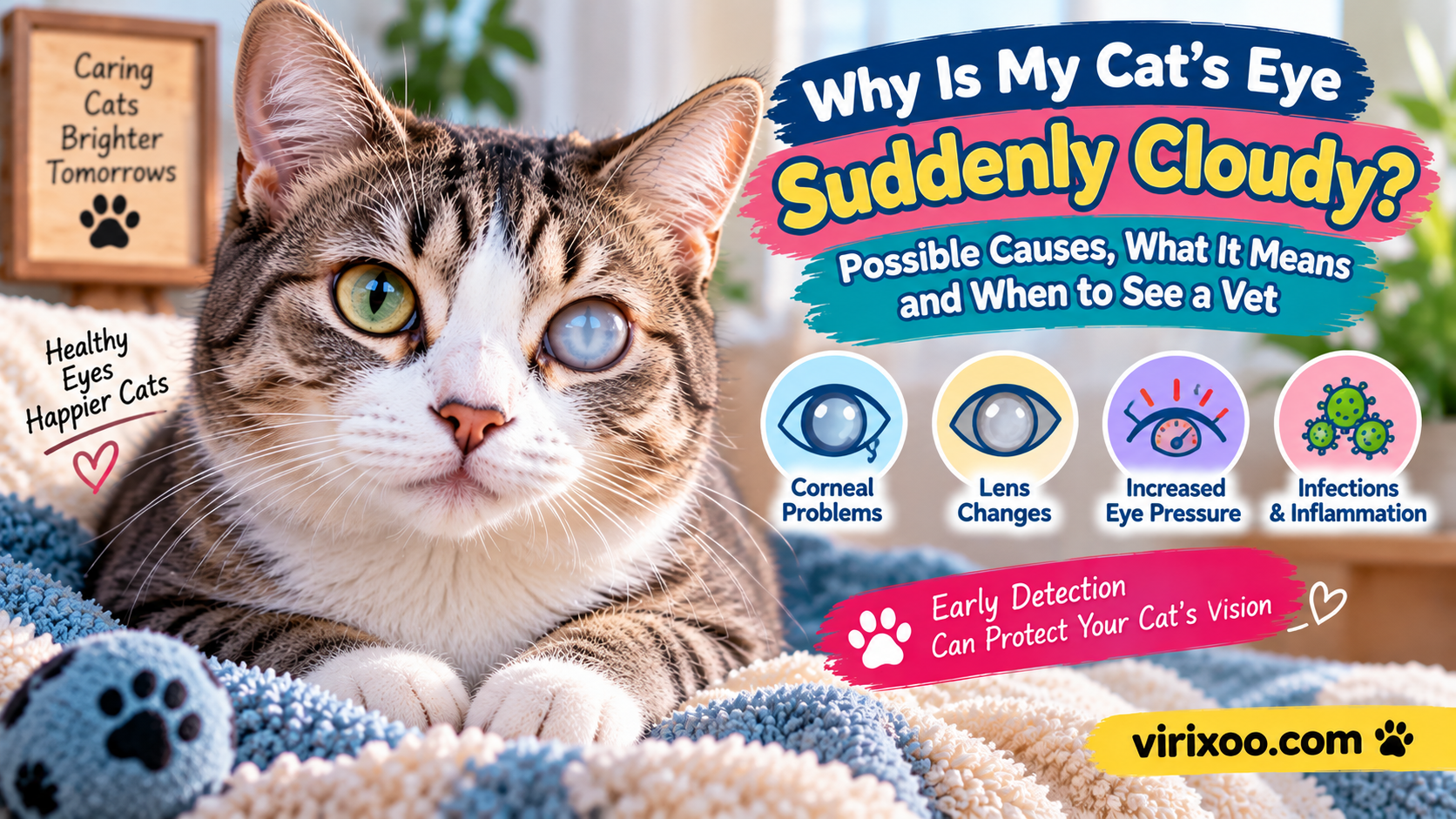
A cat’s eye that suddenly looks cloudy, bluish, milky, gray, or hazy should be examined promptly. Cloudiness is not a diagnosis. It can come from the clear cornea at the front of the eye, the fluid-filled structures behind it, the lens, or changes related to pressure and inflammation. Some causes are painful and can damage vision quickly, so this is not a sign to watch for several days while trying home remedies.
First, Notice Where the Cloudiness Seems to Be
Owners often describe every loss of clarity as a cataract, but cataracts are only one possible cause. A cloudy surface can be caused by corneal swelling or injury. Haze deeper inside the eye can occur with inflammation. A cloudy lens can be a cataract. Increased pressure from glaucoma can also create visible changes. From the outside these can overlap, so location is useful to the veterinarian but not something owners should try to diagnose confidently at home.
Corneal Causes: When the Clear Front Surface Becomes Hazy
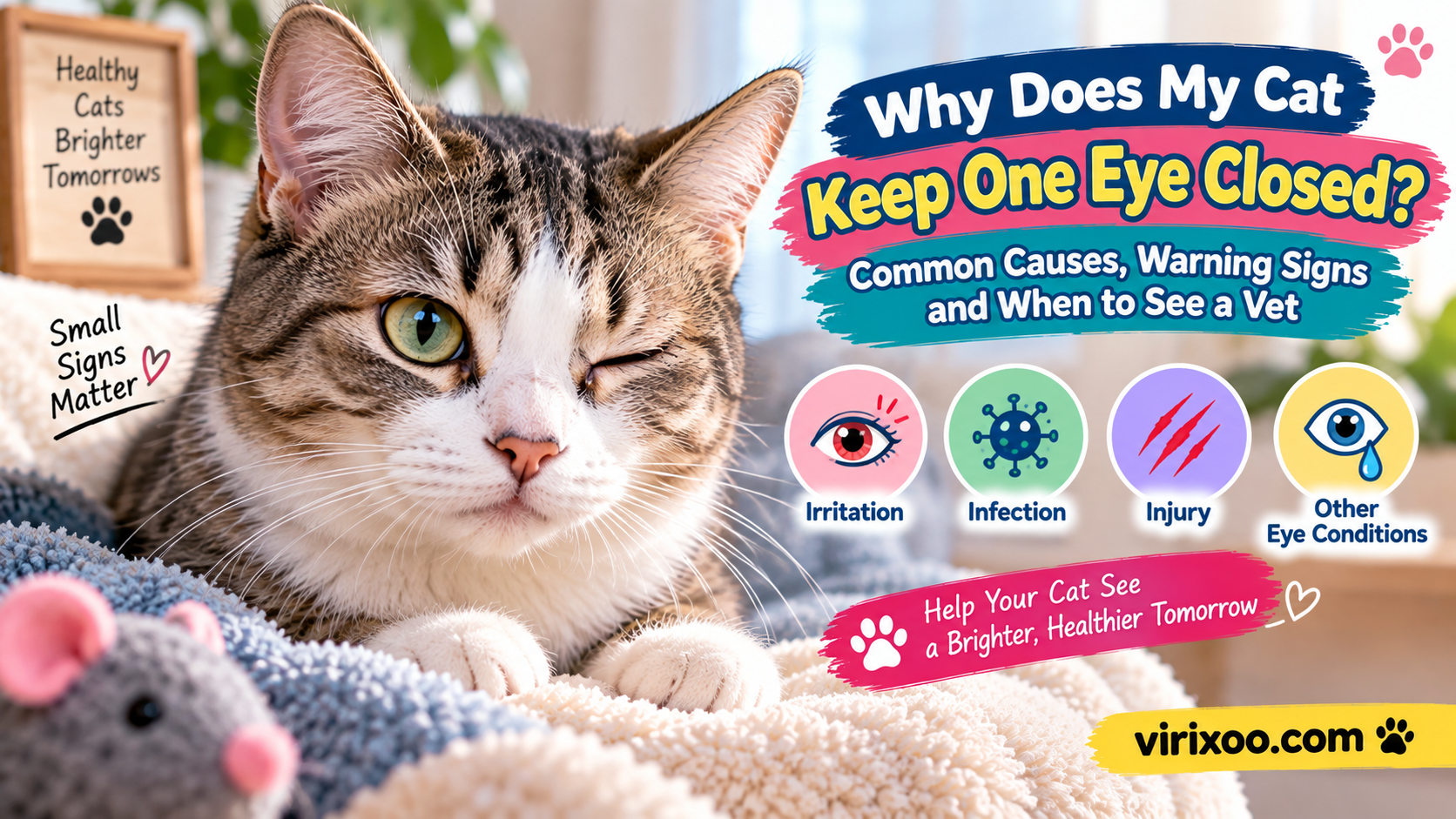
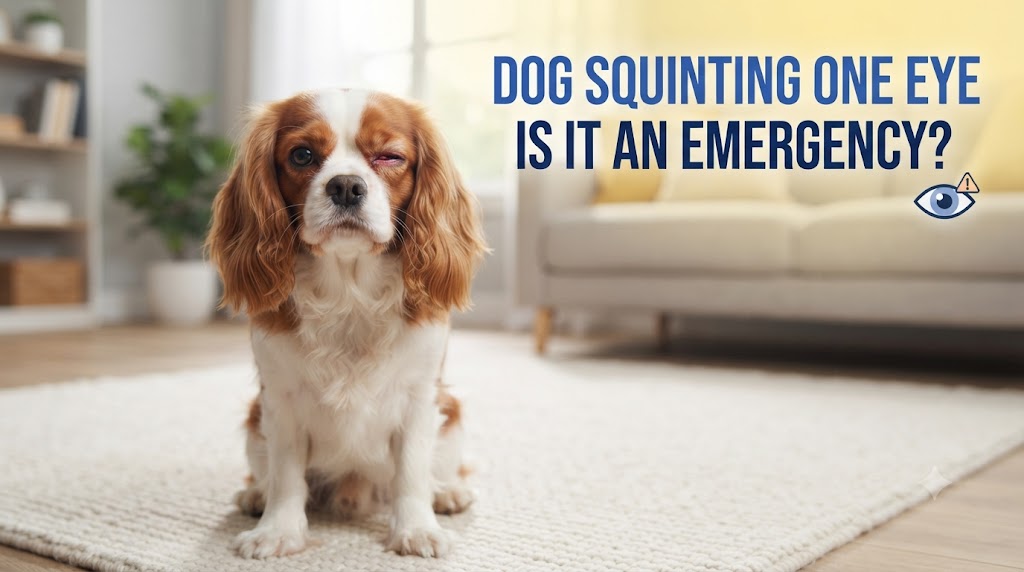
The cornea normally needs to stay transparent. Scratches, ulcers, infection, inflammation, and fluid accumulation can make it look blue-gray or white. Cats with corneal disease may squint, tear, paw at the eye, avoid bright light, or hold the eyelids partly closed. Feline herpesvirus is one recognized cause of recurrent corneal ulceration, though trauma and foreign material are also possible.
A veterinarian may place fluorescein dye on the eye to detect an ulcer. This matters because treatment choices depend on whether the corneal surface is intact. Medication that is appropriate for one eye condition may be unsafe for another.
Inflammation Inside the Eye
Uveitis is inflammation involving the uveal tissues inside the eye. It can cause pain, redness, cloudiness, pupil changes, and reduced vision. Uveitis may occur for many reasons, including infectious, inflammatory, traumatic, and other systemic problems. Because the eye can look hazy without an obvious surface wound, a full eye examination is needed to identify where the problem is located.
Glaucoma: Pressure That Can Damage Vision
Glaucoma occurs when fluid inside the eye does not drain normally and pressure rises. In cats, glaucoma is often secondary to another eye disease such as inflammation. It can damage the optic nerve and vision. Signs can include cloudiness, an enlarged or firm-looking eye, a dilated or poorly responsive pupil, pain, behavior changes, or visual difficulty. Eye pressure cannot be judged by touching the eye at home; veterinarians measure it with a device called a tonometer.
Could It Be a Cataract?
A cataract is opacity of the lens. Cataracts can reduce the amount of light reaching the retina. They are possible in cats, but a sudden cloudy eye should not simply be labeled a cataract from appearance alone. Lens changes tend to look different from many corneal problems under proper examination, and urgency depends on the underlying disorder and whether inflammation is present.
Cloudiness After Trauma
If the eye changed after a fall, collision, scratch, or fight, consider it more urgent. Trauma can injure the cornea, cause bleeding, damage the lens, or trigger inflammation. Even when the eyelids look normal, deeper structures may be affected.
Red Flags That Need Rapid Care
| Finding | Why it matters |
|---|---|
| Cloudiness plus squinting or obvious pain | Corneal ulcer, inflammation, or pressure-related disease may be present. |
| Sudden pupil difference | Can accompany significant eye or neurologic disease. |
| Eye looks enlarged or bulging | Raises concern for glaucoma or severe inflammation. |
| Cloudiness after trauma | Surface and internal eye injury must be considered. |
| Cat bumps into objects or seems suddenly unable to see | Vision may be compromised and urgent assessment is appropriate. |
What to Do Before the Appointment
Keep the cat indoors and in a calm, familiar room. Prevent rubbing if possible; a veterinarian may advise an Elizabethan collar if the cat is persistently pawing at the eye. Take clear photographs in the same lighting so you can document whether the cloudiness is changing. Do not shine a bright flashlight repeatedly into a painful eye just to test the pupil.
Do not use human redness-relief drops or leftover pet eye medication. Steroid-containing ophthalmic products can be harmful in some corneal ulcers, and antibiotics do not treat every cause of cloudiness.
What the Vet May Do
A focused eye exam may include fluorescein staining, measurement of intraocular pressure, pupil and vision checks, examination of the eyelids and cornea, and inspection of structures inside the eye. If systemic disease is suspected, blood tests or other diagnostics may be recommended. These tests are designed to separate conditions that can look similar in a photograph but require different treatment.
Is Mild Age-Related Haze the Same Thing?
Older animals can develop gradual changes in lens appearance, but a new or clearly worsening cloudy eye should not be assumed to be normal aging. Sudden change, asymmetry between the eyes, pain, redness, discharge, or visual difficulty are reasons to have the eye checked.
One Cloudy Eye vs. Both Eyes
Cloudiness limited to one eye often points toward a local eye problem such as trauma, ulceration, inflammation, or secondary glaucoma. Changes in both eyes can still be caused by eye disease but may make systemic conditions more relevant. This distinction does not provide a diagnosis, yet it is useful history. Tell the veterinarian whether both eyes changed together or whether one eye was affected first.
Why Pupil Shape and Size Matter
Compare the pupils only in ordinary room light. A pupil that is much larger, much smaller, irregularly shaped, or poorly responsive compared with the other eye can accompany significant ocular or neurologic disease. Do not repeatedly shine a flashlight to test responsiveness. A photograph taken in the same ambient light can document asymmetry without causing extra discomfort.
Cloudiness Can Change Quickly
Some corneal swelling and inflammatory changes can become more visible over hours. That is why a clear timeline is valuable. If possible, save photographs from when the eye first looked abnormal and again before the appointment. Rapid progression, increasing pain, or expanding haze should be reported when you call because it can change how urgently the clinic wants to see the cat.
What Vision Changes May Look Like at Home
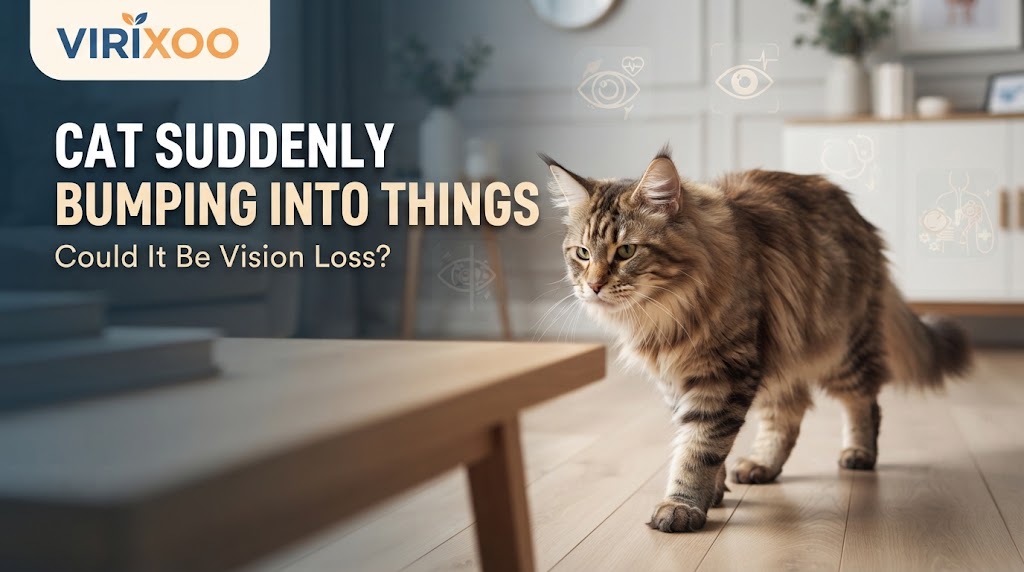
A cat with reduced vision may hesitate at stairs, miss a jump, bump into objects, startle when approached from one side, or become reluctant to move in unfamiliar light. Do not create obstacle courses to test vision. Simply note naturally occurring changes in familiar spaces. Sudden apparent blindness with eye cloudiness warrants urgent veterinary assessment.
Cloudiness Can Be on the Surface or Deeper Inside
A useful description is whether the haze seems to sit on the clear front surface or whether the eye looks cloudy behind the pupil. Owners do not need to decide which structure is affected, but this observation can help the veterinarian prepare for the examination. Photographing both eyes side by side is often more useful than a very close image of only the abnormal one.
Why Eye Color Changes Can Be Misleading
Inflammation and haze can make the iris appear duller or different in color even when the iris itself is not the primary problem. Do not assume that a color change is harmless pigmentation. Sudden alteration in clarity, color, pupil shape, or symmetry should be considered part of the same eye complaint until examined.
Do Not Delay Because the Cat Is Not Crying
Cats often hide ocular pain. A cat may still eat, groom, and interact while vision is at risk. Squinting, reduced activity in bright rooms, or subtle hesitation when jumping can be the only behavioral clues. The absence of vocal pain does not make a cloudy eye safe to monitor for an extended period.
Bottom Line
Sudden cloudiness in a cat’s eye can arise from the cornea, internal inflammation, glaucoma, the lens, or trauma. Several of these conditions can be painful and vision-threatening. Prompt veterinary examination is the safest way to identify the affected structure and protect the eye.