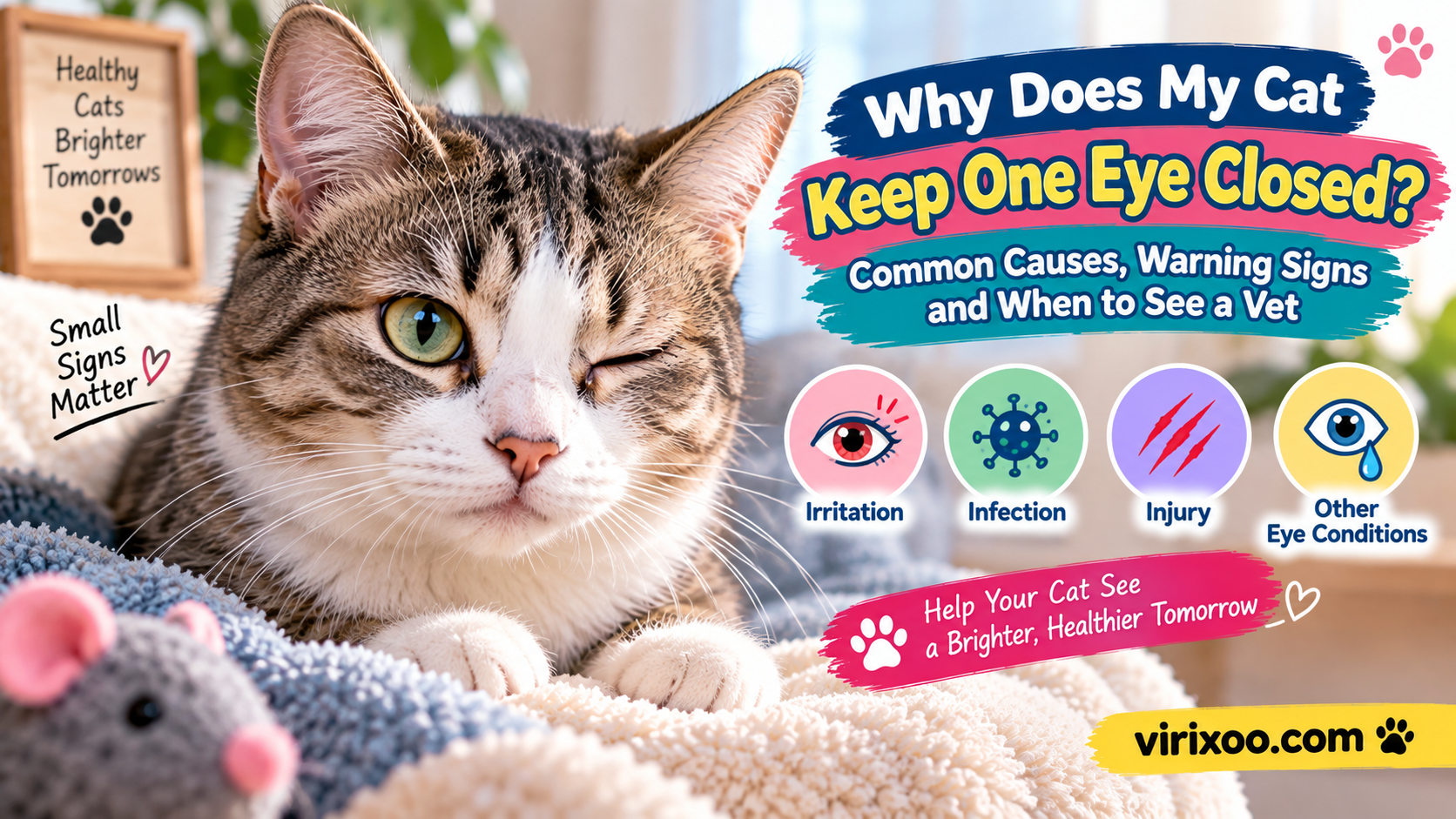
If your cat repeatedly keeps one eye closed, squints, or suddenly starts “winking” on one side, assume the eye is uncomfortable until proven otherwise. Cats often narrow or close a painful eye instead of showing dramatic distress. The cause may be minor irritation, but corneal scratches, ulcers, foreign material, inflammation, and other eye disorders can progress quickly enough that waiting several days is not a good strategy.
Why Cats Close a Painful Eye
The cornea—the clear front surface of the eye—is richly supplied with nerves. Even a small scratch can hurt. Closing the eyelids reduces light exposure and helps protect the surface from further irritation. The degree of squinting does not reliably tell you how severe the underlying damage is. A cat may continue eating and playing while still having an eye problem that needs treatment.
Possible Causes of One-Sided Squinting
A corneal scratch or ulcer
A corneal ulcer is damage to the outer surface of the cornea. Causes can include a claw during play or a fight, trapped debris, plant material, eyelid or eyelash problems, chemical irritation, and infections such as feline herpesvirus. Cats with ulcers may squint, tear, rub the eye, avoid bright light, or develop cloudiness. Veterinarians commonly use fluorescein dye to identify damaged corneal tissue.
Conjunctivitis
Inflammation of the conjunctiva can make an eye red, swollen, watery, or goopy and can cause squinting. Viral and bacterial respiratory infections can contribute, especially if sneezing or nasal discharge is present. Conjunctivitis is common, but appearance alone cannot confirm that the cornea is intact, which is one reason a painful eye deserves examination rather than self-treatment.
Foreign material or local irritation
Dust, plant material, fur, or other debris can become trapped around the eye or beneath an eyelid. A cat may paw at the face, blink repeatedly, or keep the eye shut. Do not dig under the eyelids or use tweezers near the eye. The surface can be scratched easily, and a frightened cat may jerk suddenly.
Trauma
A collision, fall, scratch from another animal, or blunt injury can produce pain even when there is no obvious cut. Blood inside the eye, an irregular pupil, sudden cloudiness, swelling, or obvious visual difficulty after trauma increases urgency.
Inflammation or pressure deeper inside the eye
Uveitis and glaucoma can cause eye pain and visual damage. These conditions are not something an owner can reliably distinguish at home. A veterinarian may need to examine internal eye structures and measure intraocular pressure.
Signs That Should Move the Appointment Forward
Seek prompt veterinary assessment for new persistent squinting, especially when it lasts beyond a brief moment or keeps recurring. Concern is higher if you also see cloudiness, a blue or white haze, yellow-green discharge, marked redness, swelling, an abnormal pupil, the third eyelid covering part of the eye, rubbing, light sensitivity, or a recent injury.
An eye that appears enlarged, severely cloudy, visibly injured, bleeding, displaced, or suddenly nonvisual should be treated as urgent. The same is true if the cat is in obvious pain or the eye problem follows significant trauma.
What Not to Put in the Eye
Do not use leftover eye drops from another pet. Some ophthalmic medications contain corticosteroids, and those can be dangerous in certain corneal injuries. Avoid human redness-relief drops, antibiotic ointments that were not prescribed for this cat, contact-lens solutions, essential oils, and homemade mixtures. Even products that sound gentle may irritate feline eyes or delay the correct diagnosis.
What You Can Observe Without Hurting the Eye
In good ambient light, compare both eyes for size, pupil shape, redness, discharge, cloudiness, and eyelid swelling. Note whether the cat is rubbing its face or avoiding light. A clear photo of both eyes and a short video of the squint can help show whether the sign is constant or intermittent.
If loose debris is sitting on the fur around the eye, gently clean the surrounding fur with a soft damp cloth, but avoid rubbing the eyeball itself. If chemical exposure is suspected, contact a veterinarian or emergency service immediately for specific flushing instructions.
What the Veterinarian May Check
The exam may include magnified inspection of the eye, fluorescein staining for corneal damage, evaluation of the eyelids and conjunctiva, and pressure measurement when glaucoma or uveitis is a concern. Treatment can be completely different depending on the finding, which is why “eye infection drops” are not a safe universal answer.
If the Eye Looks Normal but the Cat Still Squints
Do not dismiss the behavior simply because you cannot see a wound. Tiny ulcers, trapped material, inflammation inside the eye, and pressure changes are not always obvious without proper equipment. Repeated one-sided squinting is useful information on its own.
Why Eye Problems Are Treated More Urgently Than Many Skin Problems
The eye has delicate transparent tissues that must remain structurally intact for vision. A small corneal injury can deepen, become infected, or trigger substantial inflammation. That is why a cat that keeps one eye closed should not be managed like a minor scratch on the skin. The goal of prompt examination is not to assume the worst; it is to identify a treatable problem before it has time to damage the eye.
Discharge Color Is Helpful but Not Diagnostic
Clear tears can occur with pain or irritation, while thicker yellow or green material can accompany infection or marked inflammation. However, discharge color cannot tell you whether a corneal ulcer is present. A cat may have a painful ulcer with only watery tearing, or conjunctivitis with more obvious discharge. Use the discharge as one clue among several rather than as the basis for choosing medication.
What Repeated Pawing at the Eye Means
Pawing, face-rubbing, and rubbing the eye against furniture indicate discomfort and can worsen surface damage. If your cat is persistently traumatizing the eye, contact the clinic promptly. The veterinarian may recommend a protective collar until the cause is treated. Do not bandage the eye yourself or tape the eyelids closed.
After Treatment, Watch Function as Well as Appearance
Improvement means more than less redness. The cat should open the eye normally, stop rubbing, tolerate ordinary room light, and move confidently. If the eye looks a little better but the cat still squints or avoids light, pain may still be present. Rechecks are important when the veterinarian wants to confirm that a corneal lesion is actually healing.
Does Sleeping With One Eye Closed Count?
Cats can rest with one eyelid more relaxed than the other, especially when sleepy. The concern is a repeated pattern while awake, particularly if blinking is frequent or the eye looks watery, red, cloudy, or swollen. A normal sleeping posture should disappear when the cat becomes alert; painful squinting tends to persist during normal activity.
Why Contact With Plants Matters
Indoor and outdoor plants can contribute to eye injury through leaves, stems, pollen, or small fragments. If squinting started after the cat explored a plant-filled area, tell the veterinarian. Do not try to sweep the eye with a finger or cotton swab, because an invisible corneal injury may already be present.
What to Tell the Clinic When You Call
Say whether the eye is fully closed or partly squinted, whether discharge is clear or thick, whether the cornea looks cloudy, and whether there was trauma. Mention appetite, activity, and any respiratory signs. This lets the clinic judge whether the cat should be seen the same day, urgently, or at the next available appointment.
Bottom Line
A cat that keeps one eye closed is usually protecting an uncomfortable eye. Minor irritation is possible, but corneal ulcers, trauma, conjunctivitis, and deeper eye disease can look similar at home. Persistent or sudden squinting deserves timely veterinary evaluation, and cloudiness, severe pain, trauma, abnormal pupils, or apparent vision loss increase the urgency.