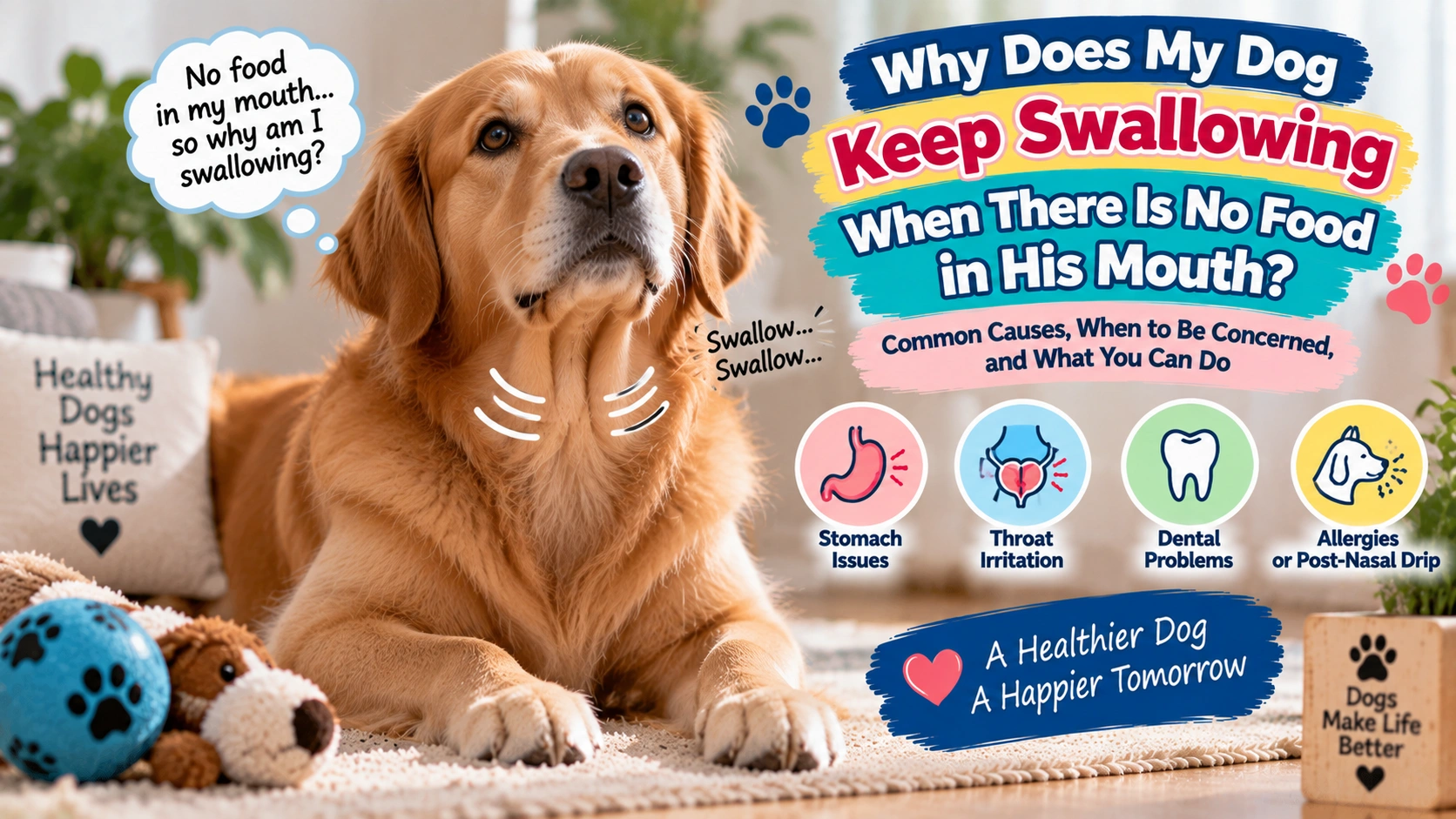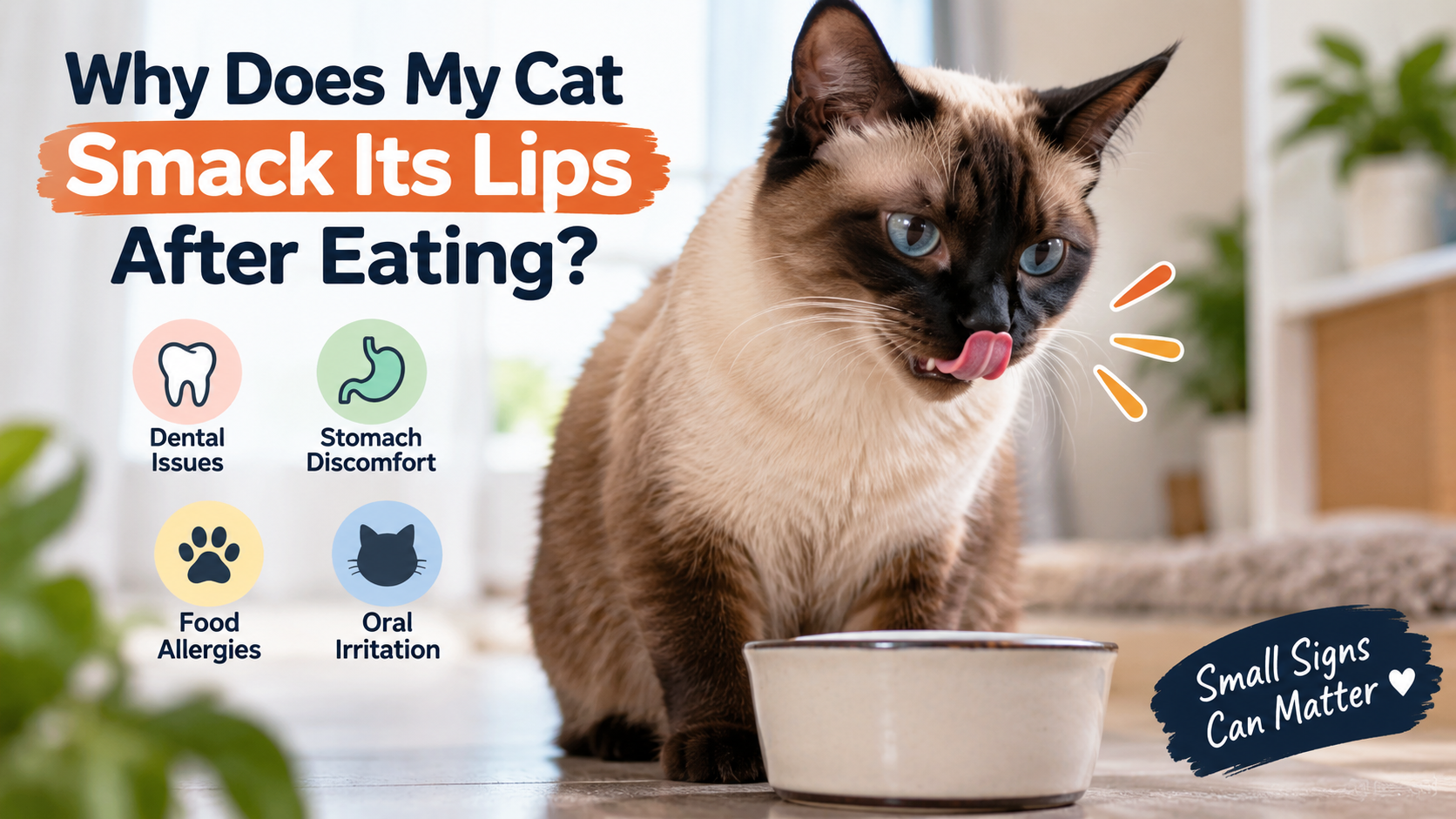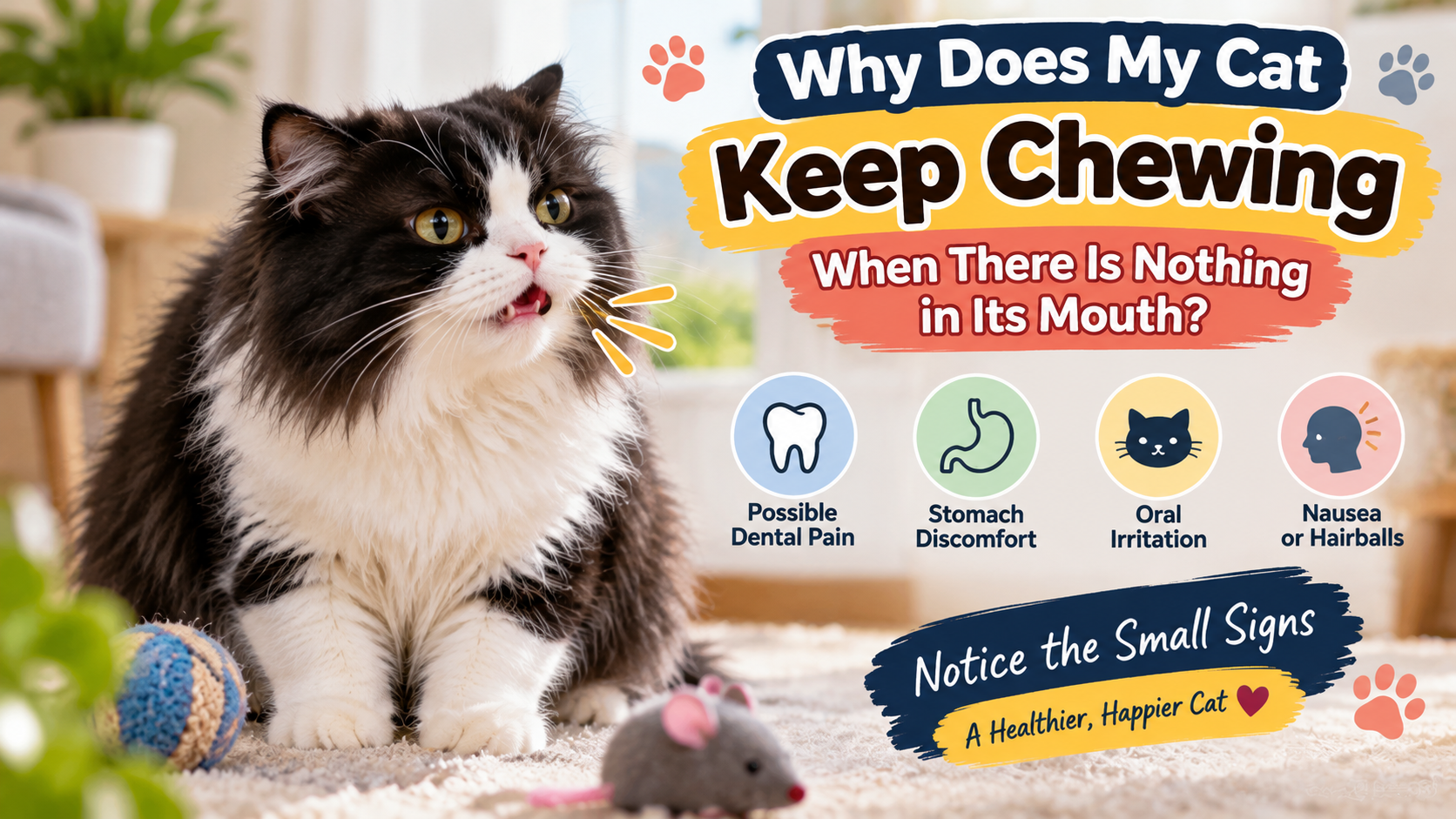
A cat that keeps swallowing when there is no food in its mouth may simply be clearing saliva once or twice, but repeated gulping is not a behavior to dismiss if it is new. Extra saliva, nausea, dental pain, inflammation in the mouth or throat, a foreign object, and true swallowing difficulty can all produce similar-looking motions. The useful question is whether your cat is swallowing comfortably or repeatedly trying to clear something that is irritating, painful, or difficult to move.
Quick Answer
Watch whether the swallowing happens only briefly or continues for minutes, returns frequently, or is paired with drooling, gagging, coughing, vomiting, food refusal, pawing at the mouth, neck stretching, or noisy breathing. Repeated swallowing deserves veterinary evaluation when it persists or changes eating and drinking. Seek urgent care if your cat cannot swallow water or saliva, repeatedly chokes, has trouble breathing, becomes weak, or may have swallowed string, a sharp object, medication, or a toxin.
What Repeated Swallowing Can Look Like
Owners describe this sign in different ways: gulping, hard swallowing, repeated throat movements, lip licking followed by a swallow, or a cat that seems to “swallow nothing.” A short video is often more useful than the description alone because coughing, gagging, retching, and swallowing can look similar.
Notice whether the mouth stays closed, whether the tongue appears normally controlled, and whether the cat can eat and drink without coughing or dropping food. If the behavior appears only after grooming or drinking and stops quickly, it may be minor. A new repetitive pattern deserves more attention.
Extra Saliva Can Trigger More Swallowing
A cat producing more saliva than usual may swallow repeatedly instead of visibly drooling. Mouth inflammation, dental disease, unpleasant tastes, nausea, some toxins, and difficulty swallowing can all increase salivation. This is why a cat may look as though it is swallowing “air” even though it is actually trying to manage saliva.
If saliva begins to spill from the mouth, compare the pattern with Why Is My Cat Drooling?. Drooling plus trouble swallowing, oral pain, toxin exposure, or breathing changes raises the urgency.
Dental and Oral Pain
Inflamed gums, tooth resorption, a fractured tooth, stomatitis, an oral ulcer, or a painful mass can alter normal tongue and swallowing movements. Cats often hide oral pain. Instead of crying, they may chew differently, pause at the bowl, swallow kibble with little chewing, prefer soft food, or make repeated mouth movements after eating.
Do not force the mouth open. If your cat allows a calm look at the lips and front of the mouth, note obvious blood, swelling, string, a broken tooth, or an ulcer, but stop if the cat resists. The deeper mouth and throat cannot be evaluated safely at home.
Nausea and Digestive Discomfort
Nausea does not always cause vomiting. Some cats become quiet, lick or smack the lips, swallow frequently, turn away from food, or sit near the bowl without eating. A single brief episode after eating too fast may settle, but repeated nausea can accompany gastrointestinal disease, kidney disease, pancreatitis, medication effects, toxins, and many other conditions.
If appetite is falling, use Why Is My Cat Not Eating? as a related guide. The key issue is not only how much food is missing from the bowl, but whether the cat wants to eat and cannot do so comfortably.
When the Throat or Swallowing Mechanism Is the Problem
True dysphagia means swallowing is difficult or abnormal. Throat inflammation, a foreign body, a mass, neuromuscular disease, or problems affecting the pharynx can interfere with moving saliva, food, or water normally. Coughing during drinking, gagging, food or fluid coming back through the mouth or nose, repeated attempts to swallow, and weight loss are important clues.
Difficulty swallowing matters because food or liquid can enter the airway. A cat that coughs or struggles every time it drinks should not simply be offered repeated bowls of water to “test” the problem.
Foreign Material and String Need Special Caution
Thread, ribbon, fishing line, grass, bone fragments, needles, or other material can become trapped in the mouth or throat. If string is visible under the tongue or from the mouth, do not pull it. Linear material can be anchored farther inside the digestive tract, and pulling can cause serious injury.
Sharp-object exposure, repeated gagging, sudden drooling, or obvious distress after chewing a toy or household item warrants prompt veterinary advice.
How to Judge the Urgency
| Pattern | Suggested response |
|---|---|
| One or two swallows after drinking or grooming, then normal behavior | Usually reasonable to observe |
| Repeated swallowing that keeps returning but eating and breathing remain normal | Schedule veterinary evaluation if persistent |
| Swallowing with drooling, mouth pain, vomiting, food refusal, or weight loss | Prompt veterinary assessment |
| Cannot swallow saliva or water, choking, severe gagging, breathing difficulty, collapse | Emergency care |
What You Can Safely Record at Home
- When the episode started and how long it lasts.
- Whether it occurs before food, after food, after drinking, or at rest.
- Whether the cat licks or smacks the lips first.
- Any drooling, odor, vomiting, coughing, gagging, or voice change.
- Whether hard and soft foods are handled differently.
- Any access to string, plants, medications, cleaners, bones, needles, or toys that can break.
A short video taken without restraining the cat can help the veterinarian distinguish swallowing from cough, gag, or retching.
What Not to Do
- Do not push food or water into a cat that is struggling to swallow.
- Do not pull visible string.
- Do not induce vomiting unless a veterinary professional specifically instructs you to do so.
- Do not give antacids, nausea medicine, or human pain medication on your own.
- Do not repeatedly open the mouth of a painful or frightened cat.
What a Veterinarian May Check
The examination may include the teeth, gums, tongue, jaw, throat, hydration, abdomen, and neurologic function. Depending on the pattern, the veterinarian may recommend an oral examination under sedation, dental X-rays, blood tests, imaging of the neck or chest, or evaluation for gastrointestinal disease. If aspiration is a concern, chest imaging may also be appropriate.
Related Virixoo Guides
If the swallowing is accompanied by visible mouth sores, see Mouth Ulcers in Cats. If the tongue itself suddenly hangs out or cannot be controlled normally, the more specific guide Cat’s Tongue Suddenly Hanging Out covers oral, jaw, and neurologic warning signs.
Bottom Line
Repeated swallowing without food is a sign, not a diagnosis. A brief isolated swallow may be normal, but persistent gulping can reflect extra saliva, nausea, mouth pain, throat irritation, a foreign object, or true dysphagia. Focus on whether your cat can swallow, breathe, eat, and drink normally. Difficulty with those basic functions should shorten the wait for veterinary care.