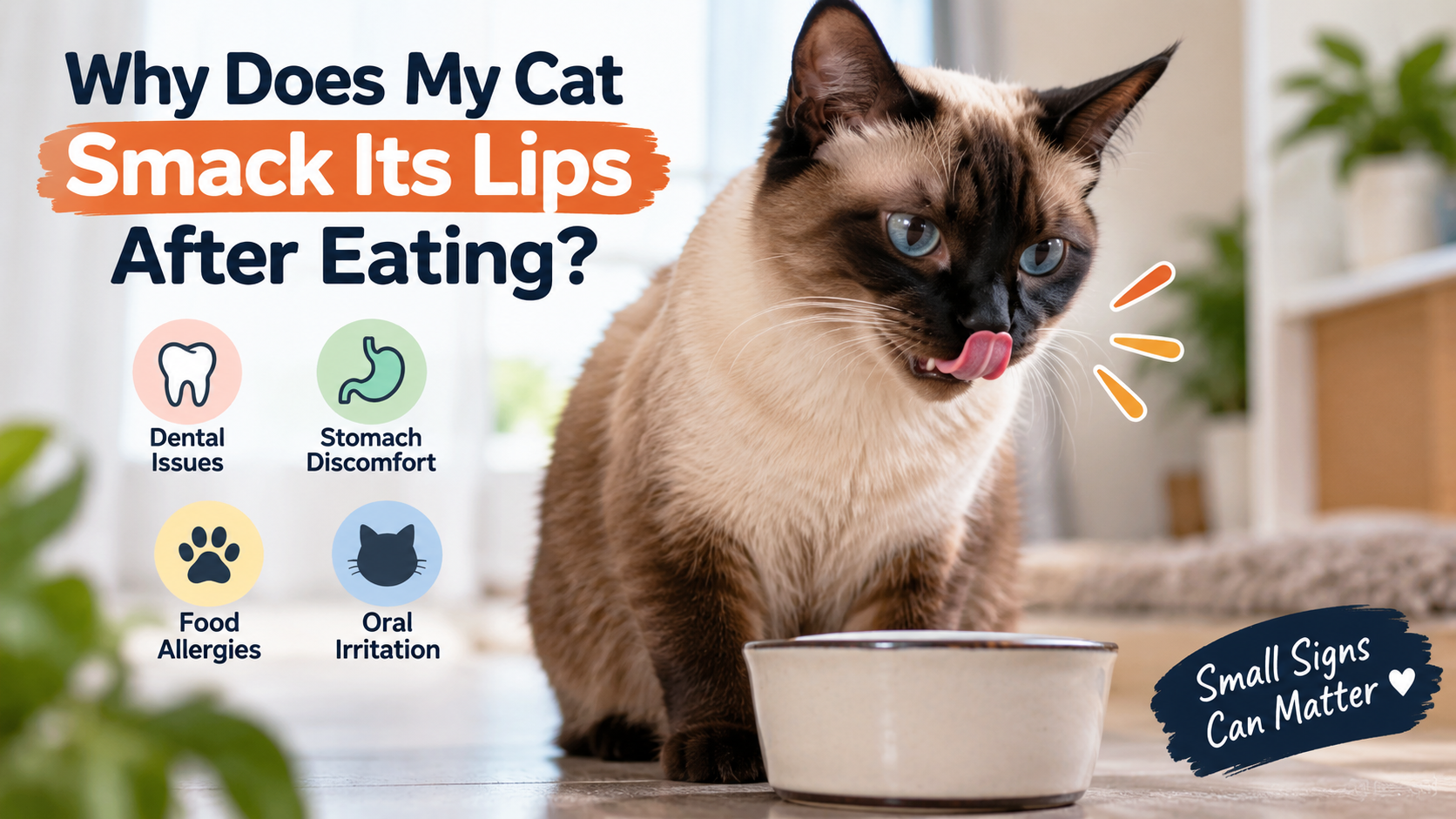
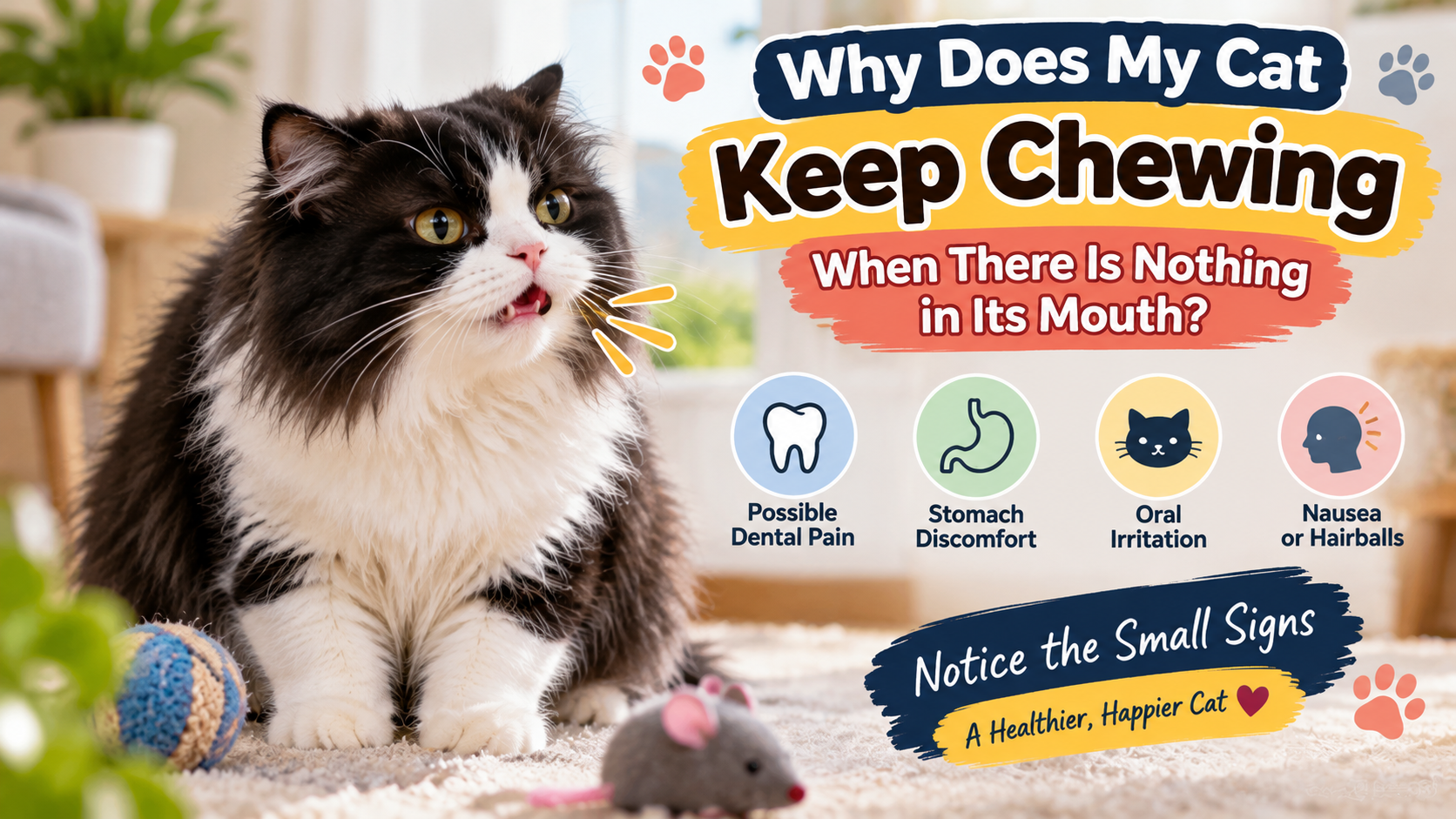
Repeated chewing motions when there is no food in the mouth are not the same as a single lick, yawn, or grooming movement. Cats may “chew air” because something in the mouth hurts or feels abnormal, because saliva or nausea is triggering mouth movements, because the jaw is uncomfortable, or—less commonly—because abnormal neurologic activity is affecting facial movements.
Quick Answer
If the behavior is new and repeats frequently, record a short video and arrange veterinary evaluation. Look for drooling, bad breath, one-sided chewing during meals, food dropping, pawing at the mouth, facial swelling, difficulty opening or closing the jaw, vomiting, or changes in awareness. Seek urgent care if the cat cannot close the mouth, cannot swallow, has major facial trauma, has breathing difficulty, or develops seizure-like activity or collapse.
Dental Pain Is One of the First Things to Consider
Tooth resorption, fractured teeth, inflamed gums, periodontal disease, and other dental problems can make the cat move the jaw repeatedly in response to pain. Tooth resorption is particularly important in cats because affected teeth can be extremely sensitive while the cat still appears hungry.
During meals, watch for head tilting, chewing on one side, swallowing kibble whole, or dropping food. Cornell notes that cats with painful resorptive lesions may show these eating changes even before appetite disappears.
Oral Inflammation or Ulcers
Stomatitis and mouth ulcers can make opening the mouth and moving the tongue painful. A cat may appear to chew, chatter, lick, or work the jaw after touching food or grooming. Drooling, bad breath, blood-tinged saliva, and reluctance to yawn are additional clues.
For visible or suspected sores, see Mouth Ulcers in Cats.
A Broken Tooth Can Be Easy to Miss
A chipped tooth may have a small visible defect while deeper tissue is painful. The cat may compensate by using the opposite side. Do not tap or probe a suspicious tooth. The Virixoo guide Broken or Chipped Tooth in Cats explains what changes around a damaged tooth make evaluation more urgent.
Something May Be Caught in the Mouth
Grass, thread, string, hair, bone fragments, or toy material can lodge between teeth or under the tongue. Sudden repetitive mouth movements with drooling or pawing at the face can fit this pattern. Only inspect the front of the mouth if the cat is calm and cooperative. Do not reach deep into the mouth of a distressed cat.
If string is visible, do not pull it. It may extend farther into the digestive tract.
Nausea and Excess Saliva
Some cats make chewing or lip movements when nauseated, especially if extra saliva is present. They may swallow repeatedly, lick the lips, approach food and walk away, or eventually vomit. The jaw movement itself does not tell you whether the problem is dental or gastrointestinal, so the surrounding signs matter.
Jaw Pain or Mechanical Problems
Trauma, temporomandibular joint problems, inflammation, or a jaw fracture can alter normal movement. A jaw that sits crooked, a mouth that cannot close, obvious facial swelling, or pain after a fall is not a routine dental issue.
If the mouth remains abnormally open, use Cat Cannot Close Its Mouth as the more specific urgent guide.
Could It Be Neurologic?
Repetitive facial or chewing movements can occasionally occur with neurologic disorders, including focal seizure activity. This is more concerning when the cat also stares, seems briefly unresponsive, twitches one side of the face, salivates suddenly, or behaves abnormally before or after the episode.
Do not diagnose a seizure from chewing alone. A clear video and a timeline of what happens before, during, and after the episode can help a veterinarian decide whether neurologic testing is needed.
How to Tell Chewing From Teeth Chattering
Cats can chatter briefly while watching prey through a window. That behavior is usually linked to visual excitement and stops when the stimulus disappears. Repetitive jaw movement during rest, after meals, or with signs of pain is a different context.
What to Record
- How often episodes occur and how long they last.
- Whether the cat is fully responsive during the movement.
- Whether it happens around meals or at random.
- Any drooling, odor, blood, vomiting, or pawing at the mouth.
- Whether hard food is harder to eat than soft food.
- Whether the jaw looks straight and closes normally.
When the Pattern Needs Faster Care
| Finding | Concern |
|---|---|
| Occasional brief motion with normal eating and no other signs | Record and monitor for recurrence |
| Frequent chewing motions with dental clues | Veterinary dental evaluation |
| Facial swelling, severe pain, food refusal, persistent drooling | Prompt veterinary care |
| Cannot close mouth, major trauma, breathing difficulty, collapse, seizure-like episode | Emergency care |
What the Veterinarian May Do
The veterinarian may examine the mouth, teeth, tongue, jaw alignment, facial nerves, and general neurologic status. Dental radiographs are often needed to identify painful disease below the gum line. If the mouth appears normal but episodes continue, blood tests, imaging, or neurologic evaluation may be recommended based on the history and video.
Bottom Line
“Chewing nothing” is a description of a movement, not a diagnosis. In cats, painful dental and oral disease is common and should be ruled out, especially when eating changes. Jaw problems, nausea, foreign material, and neurologic causes are also possible. Record the behavior, avoid manipulating a painful mouth, and seek veterinary assessment when the pattern is new or repetitive.