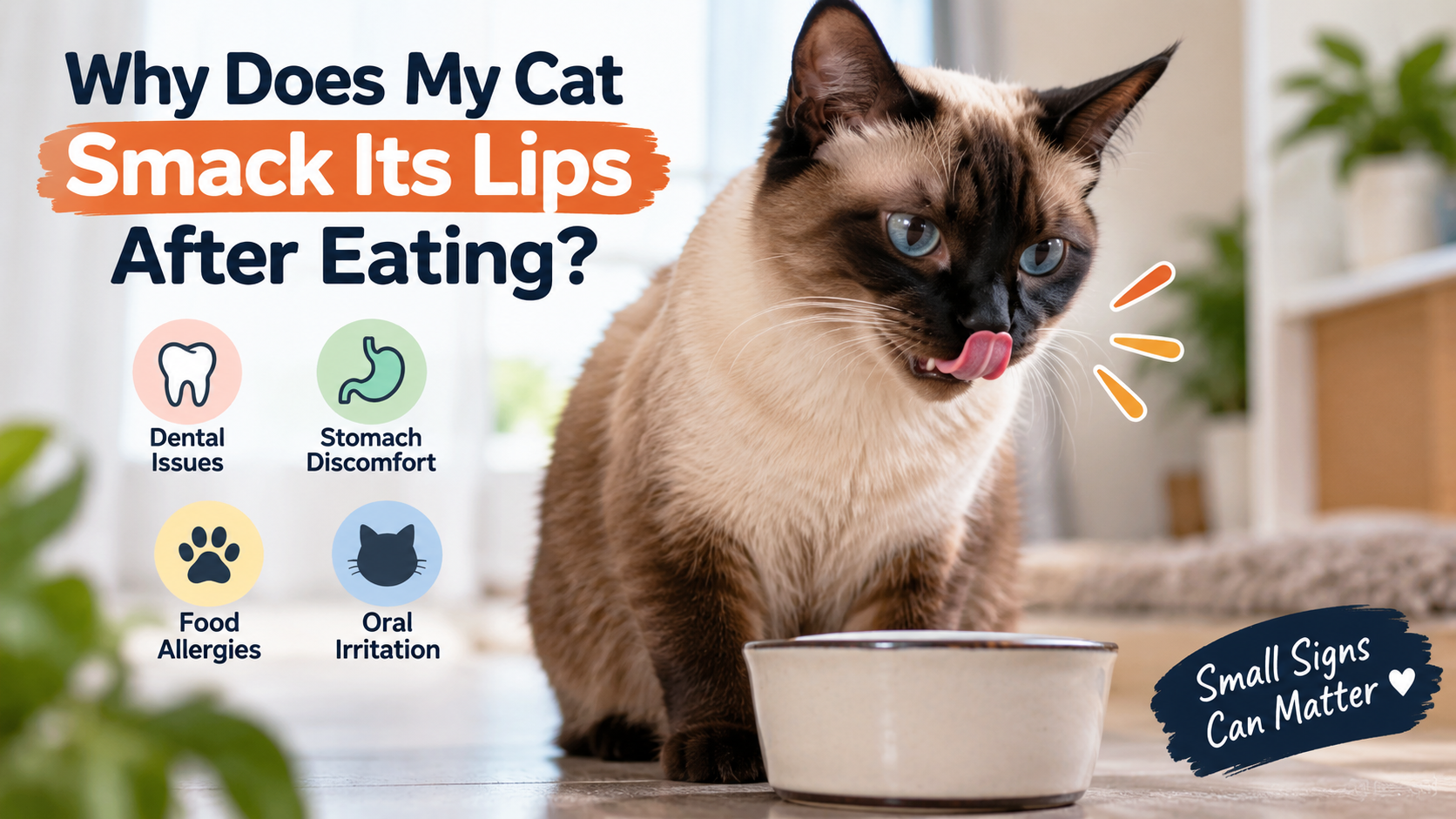
A cat that repeatedly paws at the mouth after eating is usually trying to respond to discomfort, irritation, or an unusual sensation. Dental pain, tooth resorption, ulcers, food trapped around a painful tooth, foreign material, jaw discomfort, and nausea are all possible causes.
Quick Answer
Do not force the mouth open. Observe whether the behavior follows every meal and look for drooling, bad breath, food dropping, one-sided chewing, blood, facial swelling, gagging, or reduced appetite. Persistent pawing after meals deserves veterinary evaluation. Seek urgent care if the cat cannot close the mouth, cannot swallow, has severe swelling, major trauma, or breathing difficulty.
Dental Pain Is Common
Painful gums, tooth resorption, periodontal disease, and fractured teeth can make food contact uncomfortable. A cat may paw at the mouth, shake the head, or rub the face after biting a painful area.
For broader dental signs, see Why Does My Cat Have Bad Breath?.
Tooth Resorption
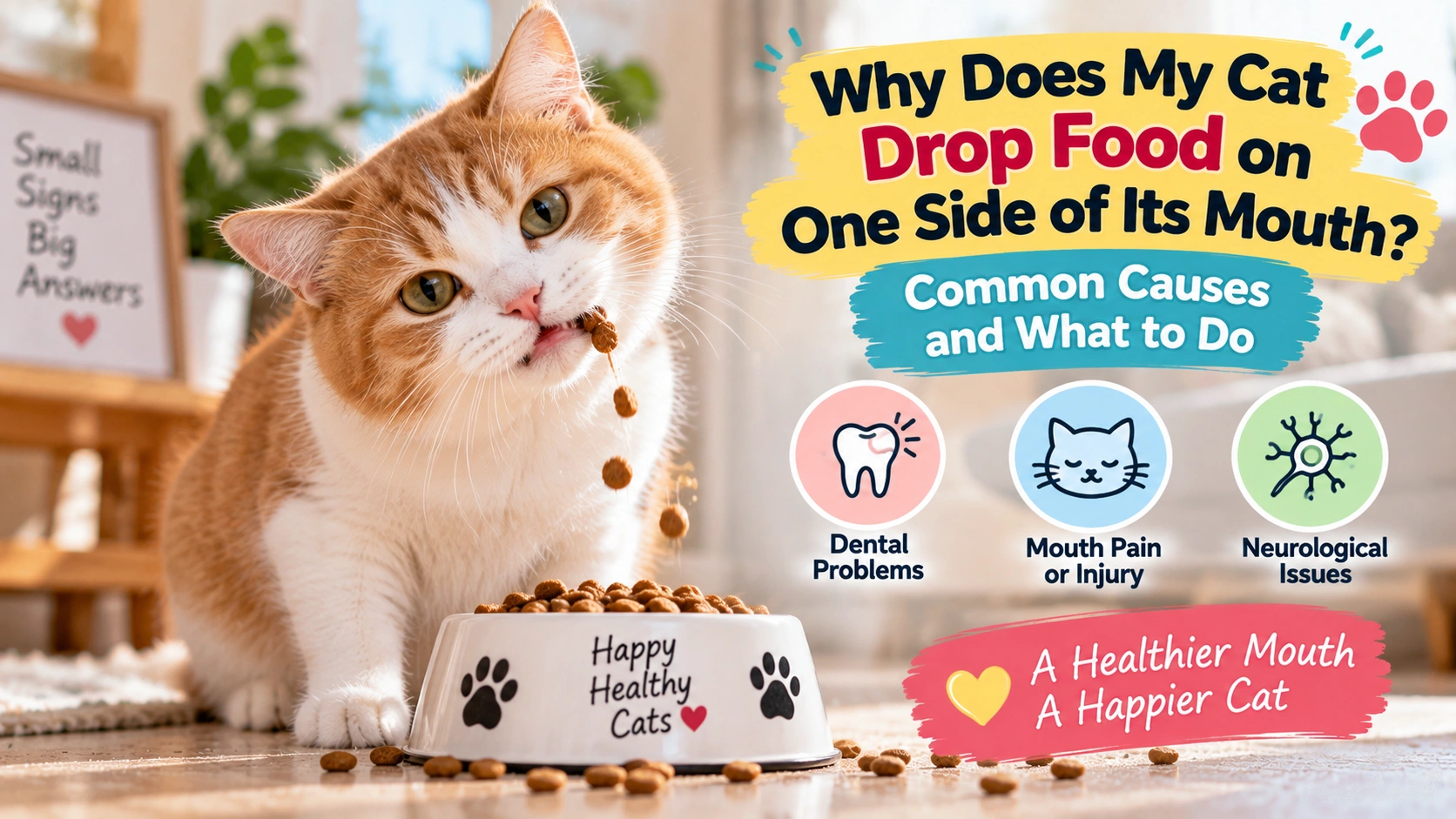
Tooth resorption can cause severe sensitivity. Cats may continue eating but alter how they chew. Pawing, head tilting, dropping food, or preferring soft food can accompany the problem.
Food or Foreign Material
A piece of food, grass, hair, thread, or toy material may lodge between teeth or under the tongue. If the behavior begins suddenly after chewing something unusual, this becomes more likely. Never pull visible string.
Mouth Ulcers and Stomatitis
Inflammation can make the lips, tongue, gums, or back of the mouth painful. Drooling, foul odor, blood-tinged saliva, and reluctance to yawn are useful clues.
See Mouth Ulcers in Cats if sores are suspected.
Jaw Problems
Trauma or jaw-joint disease can cause discomfort during chewing. A crooked jaw, inability to close the mouth, or sudden tongue protrusion needs prompt assessment.
If the mouth stays open, use Cat Cannot Close Its Mouth.
What to Observe at the Next Meal
- Does pawing happen after the first bite or after the meal?
- Does the cat use one side of the mouth?
- Is kibble dropped?
- Is there drooling or odor?
- Does soft food seem easier?
- Does the cat remain interested in eating?
What Not to Do
- Do not reach deep into a painful mouth.
- Do not pull string.
- Do not apply human oral gels.
- Do not give human pain medicine.
- Do not assume the behavior is just face washing if it is repetitive and new.
When to Seek Care
| Finding | Response |
|---|---|
| One brief paw after a messy meal, then normal | Observe |
| Repeated pawing after meals | Dental/oral examination |
| Drooling, blood, food refusal, facial swelling | Prompt care |
| Cannot swallow, cannot close mouth, breathing difficulty | Emergency care |
What the Veterinarian May Do
The veterinarian may inspect the teeth, gums, tongue, and jaw and look for material trapped in the mouth. Dental radiographs under anesthesia may be recommended because tooth resorption and root disease are often hidden below the gum line.
Bottom Line
Repeated pawing at the mouth after eating is a discomfort signal. Dental disease is common, but ulcers, foreign material, jaw problems, and nausea can look similar. A video of the behavior and one normal meal can help the veterinarian localize the problem without forcing the mouth open at home.