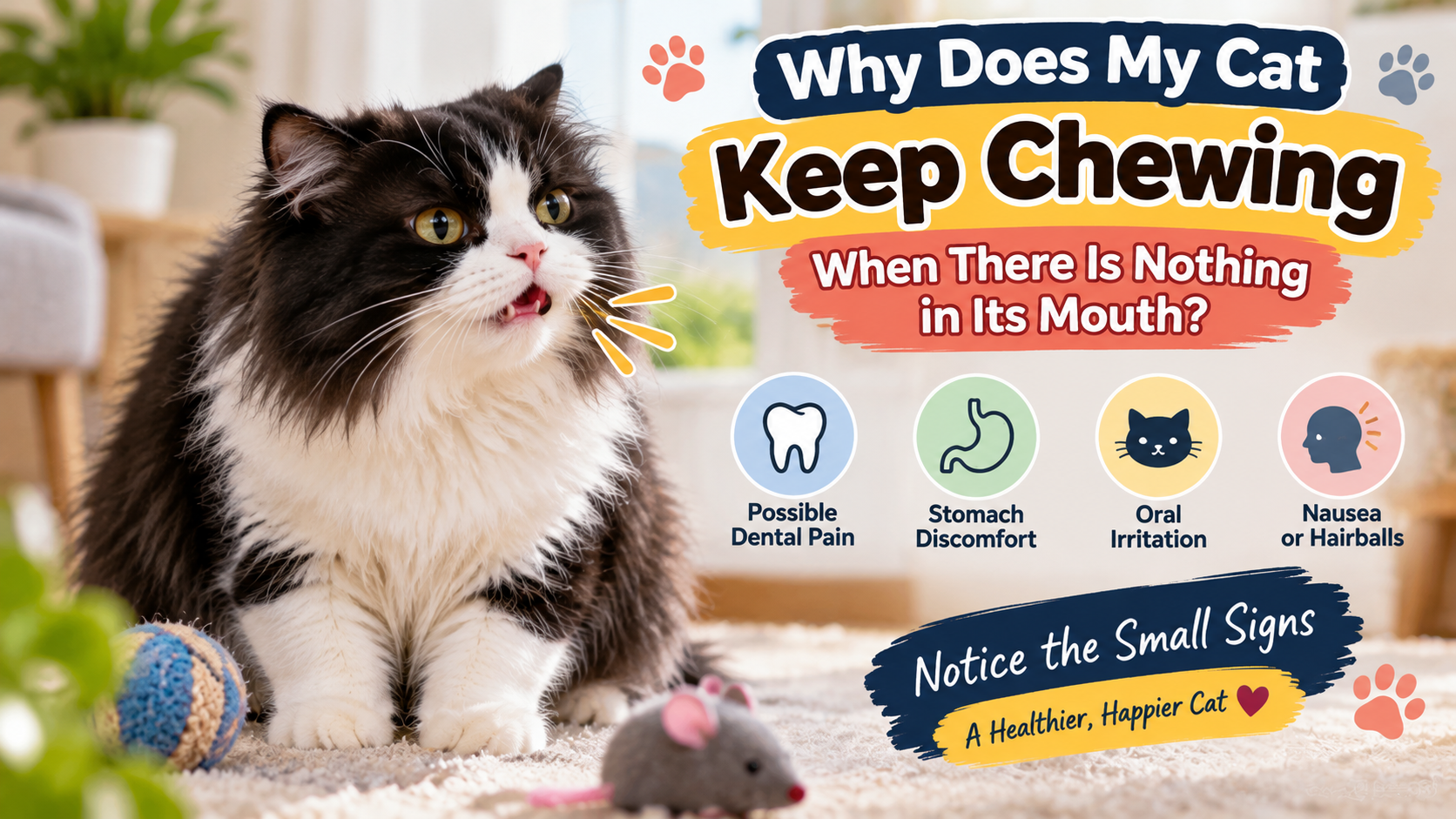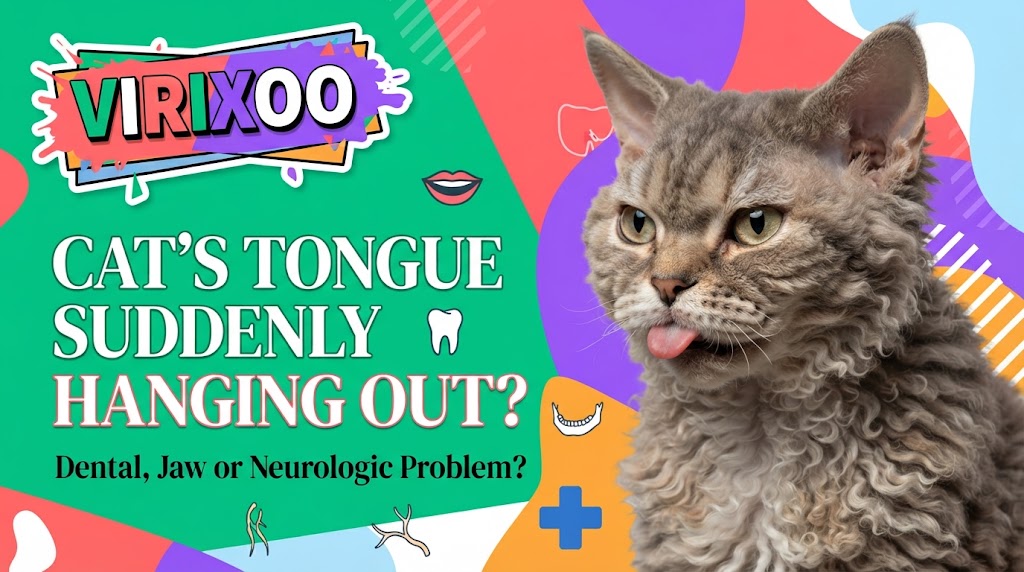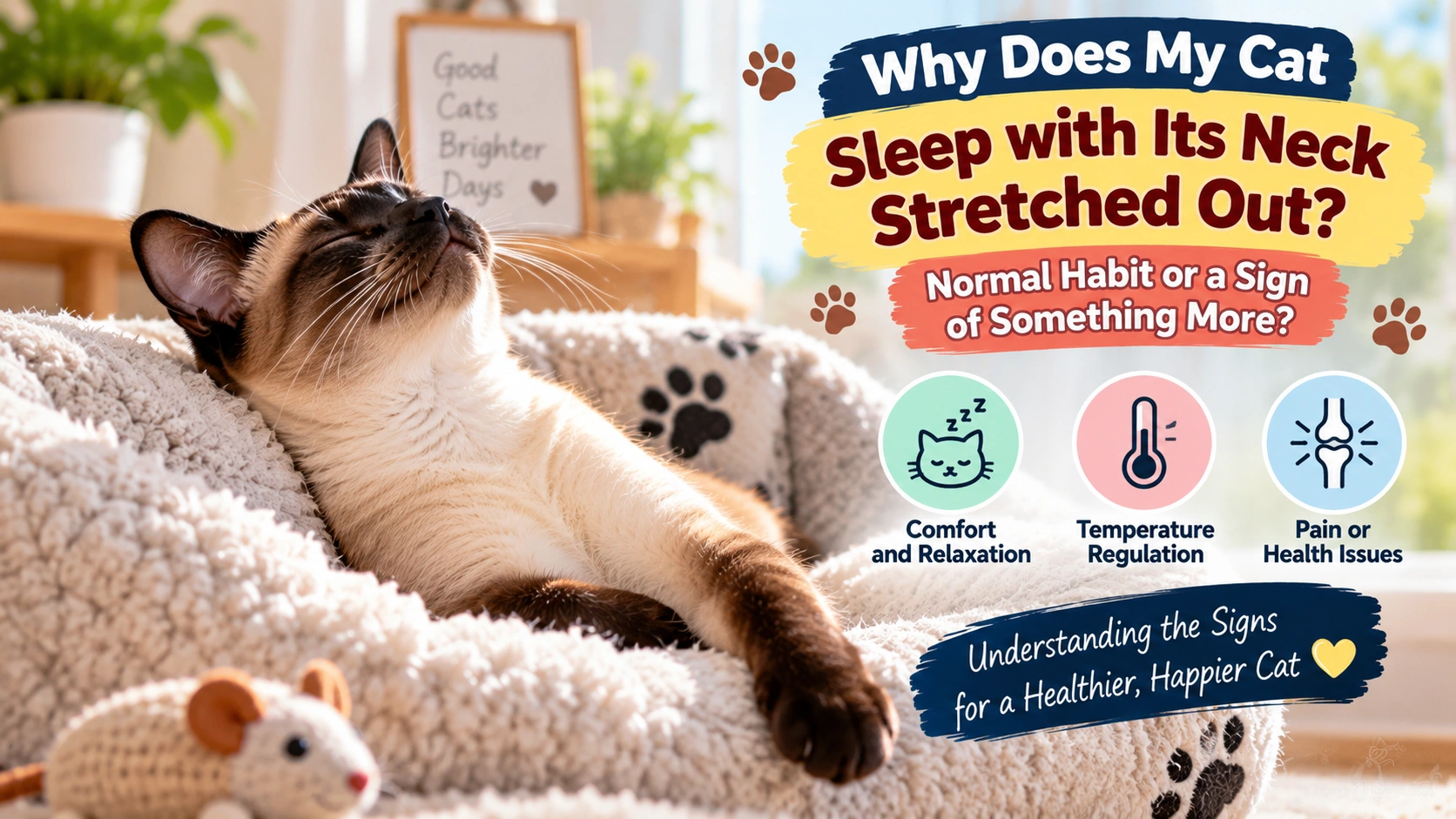
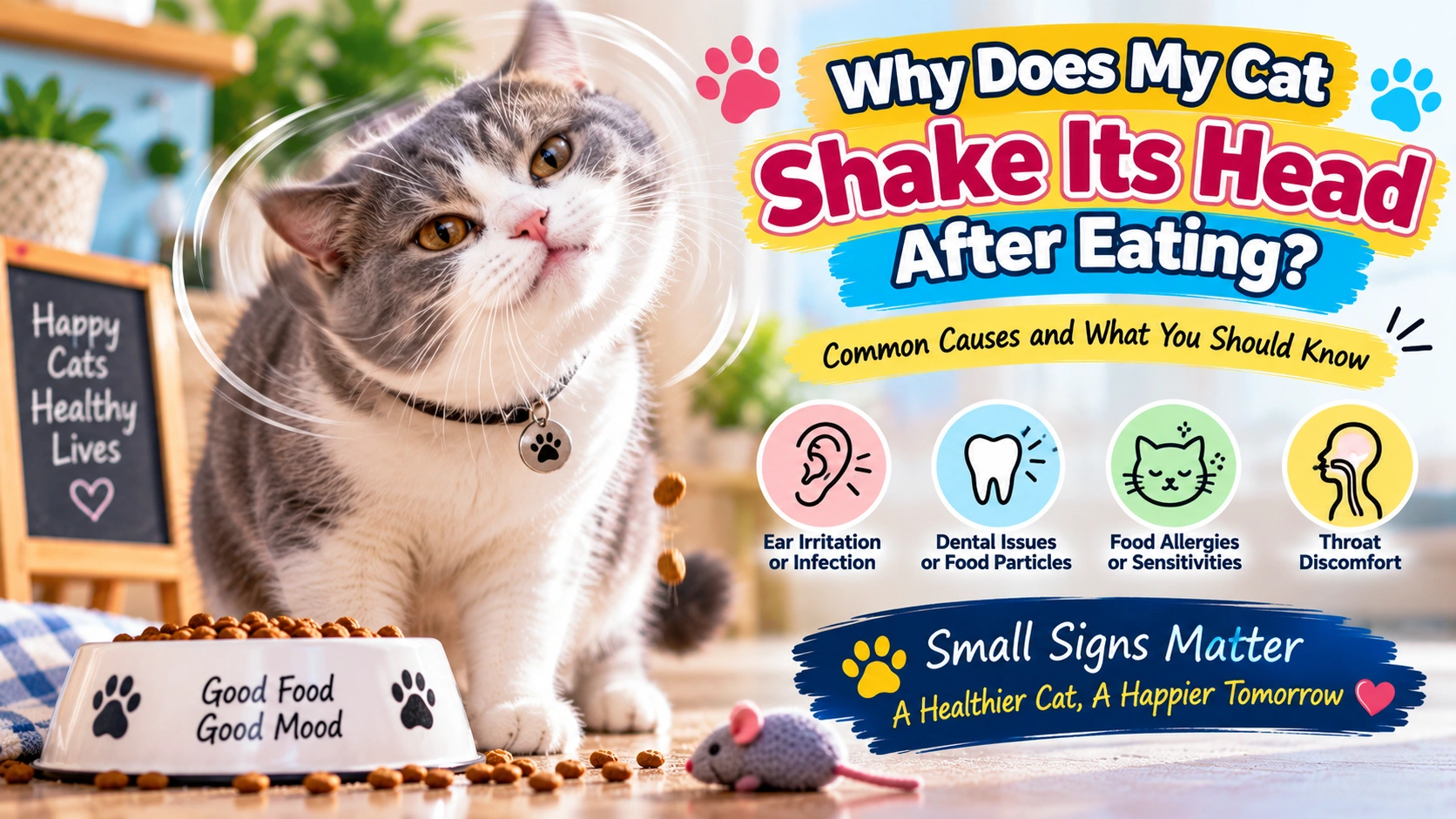
A cat that repeatedly moves its jaw from side to side when it is not normally chewing deserves attention, especially if the movement is new. Some jaw motion is part of normal eating and grooming, but repetitive lateral movement can also appear when a tooth hurts, the mouth is inflamed, the jaw joint is uncomfortable, saliva is building up, or the cat is trying to manage an unpleasant oral sensation.
Quick Answer
Watch whether the movement happens only during meals or also at rest. Check for one-sided chewing, food dropping, drooling, bad breath, pawing at the mouth, facial swelling, difficulty opening or closing the mouth, reduced appetite, or weight loss. A persistent new pattern should be evaluated by a veterinarian. Seek urgent care if the jaw becomes stuck open, the cat cannot swallow, has major facial trauma, severe swelling, breathing difficulty, or seizure-like changes.
Normal Chewing vs. Abnormal Jaw Motion
Cats do not chew with the same broad side-to-side pattern humans use. Their jaw is built primarily for opening, closing, tearing, and crushing. A small amount of lateral motion can occur during chewing, but repeated exaggerated sideways movement, especially away from food, is more suspicious.
A short video can help because owners may describe very different movements as “jaw shifting,” “chewing air,” “chattering,” or “grinding.”
Dental Pain Is a Major Possibility
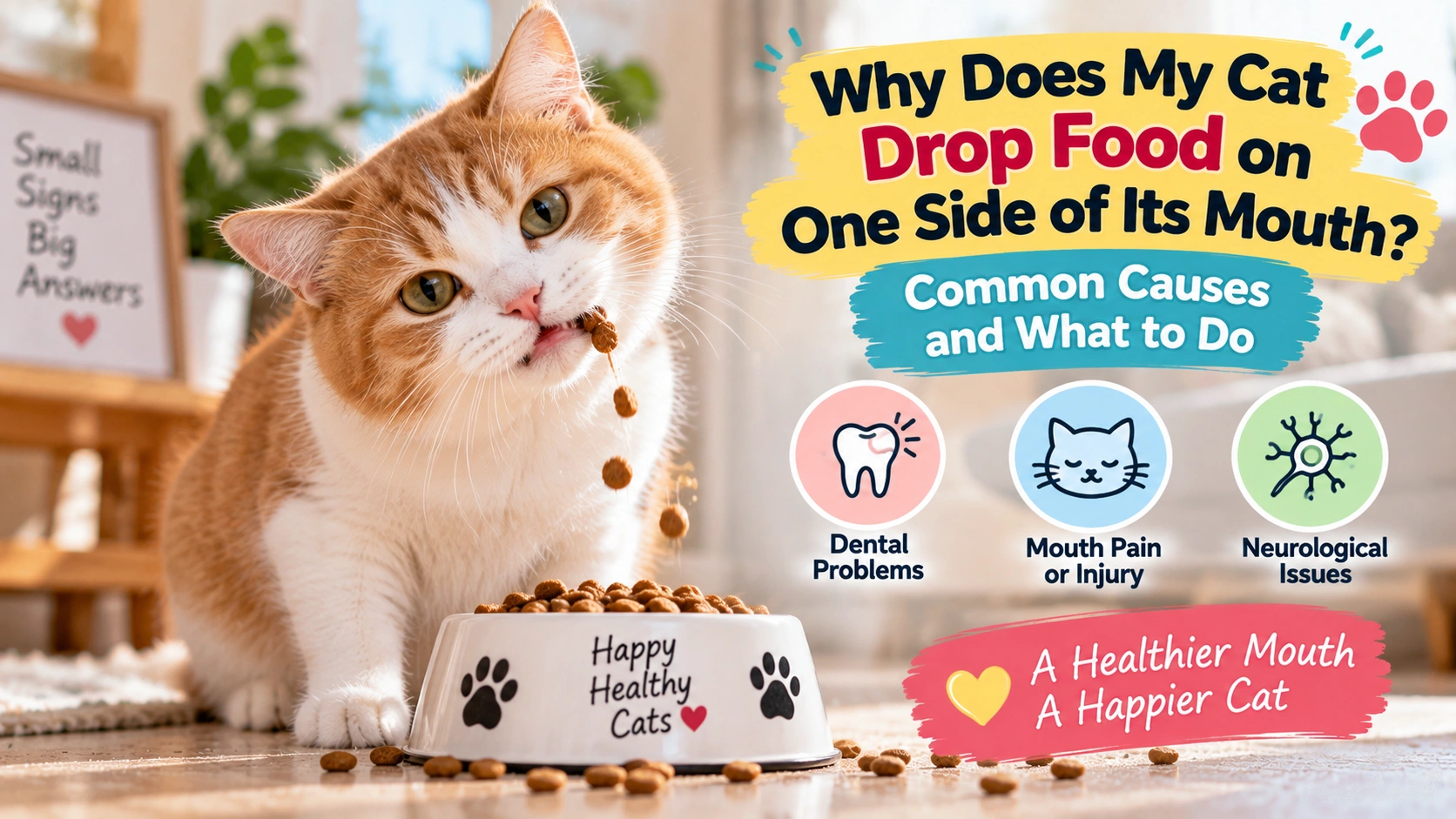
Tooth resorption, periodontal disease, gingivitis, a fractured tooth, or painful inflammation around a tooth can make the cat alter how it closes the jaw. Instead of stopping eating, many cats compensate by chewing on the opposite side or moving food around the mouth differently.
If the cat also has strong mouth odor, see Why Does My Cat Have Bad Breath?. If a tooth looks visibly damaged, Broken or Chipped Tooth in Cats is the more specific guide.
Tooth Resorption Can Be Hidden
Tooth resorption is common in cats and can be painful even when the crown of the tooth does not look dramatic. Signs can include head tilting while eating, jaw movements after chewing, dropping kibble, swallowing food with little chewing, or suddenly preferring soft textures. Dental radiographs are often needed because much of the disease can exist below the gum line.
Stomatitis and Mouth Ulcers
Inflammation in the gums or back of the mouth can make normal jaw and tongue movements uncomfortable. Cats with oral inflammation may drool, recoil after taking a bite, paw at the mouth, cry while yawning, or make repeated mouth motions after meals.
Visible or suspected sores are covered in Mouth Ulcers in Cats.
Jaw Joint or Muscle Pain
Trauma, inflammation, or problems involving the temporomandibular joint can alter jaw movement. A cat that recently fell, was struck, fought with another animal, or developed facial asymmetry needs a careful examination. Do not repeatedly open and close the jaw to test range of motion.
Could Something Be Stuck?
Grass, string, hair, bone fragments, or toy material can lodge around the teeth or under the tongue. Sudden jaw movements plus drooling, gagging, pawing at the face, or refusal to eat can fit this pattern. Do not pull on visible string because it may be anchored farther inside the digestive tract.
Nausea Can Cause Mouth Movements Too
Nauseated cats may lick the lips, swallow repeatedly, salivate, and move the jaw in ways that look like chewing. Vomiting is not required. If the jaw motion is followed by repeated swallowing or lip smacking, the pattern may involve nausea rather than a purely dental problem.
When Neurologic Causes Enter the Differential
Repetitive facial or jaw movements can rarely occur with neurologic disease or focal seizure activity. Concern rises if the cat stares, becomes briefly unresponsive, twitches one side of the face, collapses, or behaves abnormally before or after an episode. Jaw motion by itself is not enough to diagnose a seizure.
What to Record
- Whether the motion happens at rest, during meals, or after meals.
- Whether the jaw shifts more to one side.
- Any drooling, blood, odor, swelling, or food dropping.
- Whether hard food is more difficult than soft food.
- Whether the cat remains fully alert during the episode.
- Whether the mouth opens and closes normally.
When to Seek Care
| Pattern | Response |
|---|---|
| One brief odd movement, normal eating and behavior afterward | Observe for recurrence |
| Repeated sideways jaw movement with dental clues | Veterinary dental examination |
| Marked pain, food refusal, facial swelling, persistent drooling | Prompt veterinary care |
| Jaw stuck open, cannot swallow, breathing difficulty, collapse, major trauma | Emergency care |
What the Veterinarian May Do
The veterinarian may examine the teeth, gums, tongue, jaw alignment, facial symmetry, and neurologic function. A complete dental assessment often requires anesthesia and dental radiographs. If the mouth does not explain the movement, blood tests, imaging, or neurologic evaluation may be considered.
Bottom Line
Side-to-side jaw movement is best treated as a symptom rather than a diagnosis. Dental and oral pain are common explanations, but jaw disease, nausea, foreign material, and neurologic causes are also possible. A clear video plus information about eating and swallowing can make the veterinary evaluation much more focused.