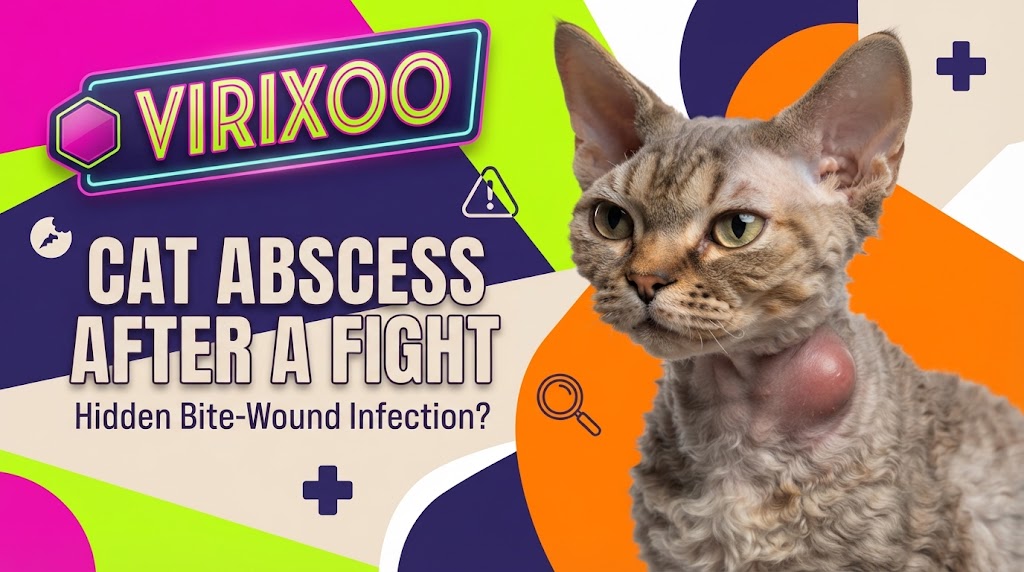
Cat bite wounds are easy to miss because the punctures can be tiny, but bacteria can be pushed deep under the skin. The surface may close quickly while infection develops underneath, forming a painful abscess over the next several days.
Quick Answer
If your cat has been in a fight, check the head, neck, shoulders, legs, and tail base for tenderness, swelling, heat, or small punctures. Contact a veterinarian if a painful lump develops, the cat becomes lethargic, stops eating, has a fever, or the area starts draining.
Why Cat Bites Become Infected
Sharp canine teeth create narrow punctures that can carry bacteria beneath the skin. Because the opening seals quickly, oxygen-poor conditions can develop inside and allow infection to progress.
Common Abscess Locations
The face, neck, shoulders, forelimbs, hindquarters, and tail base are common because these areas are exposed during fights. Long fur can hide swelling until it becomes large.
Early Signs
The first clue may be pain rather than a visible lump. The cat may hide, resent being touched, limp, stop grooming, or become quiet. Fever and reduced appetite can appear before drainage.
When an Abscess Opens
An abscess may rupture and release foul-smelling pus or blood. This can relieve pressure, but it does not mean the infection is cured. The pocket may still need cleaning, drainage, and medication.
What Not to Do
- Do not squeeze a swollen lump.
- Do not lance it with a needle.
- Do not pour peroxide into deep wounds.
- Do not give leftover antibiotics.
What the Veterinarian May Do
The veterinarian may clip fur, examine for punctures, open and drain an abscess, flush infected tissue, provide pain relief, and prescribe antibiotics when appropriate. Sedation may be needed for painful areas.
When a Fight Wound Is More Urgent
Deep wounds near the eye, chest, abdomen, or joints deserve prompt evaluation. Weakness, breathing difficulty, severe bleeding, or inability to use a limb also increases urgency.
Disease Transmission
Outdoor fighting can expose cats to feline immunodeficiency virus and other infectious risks. Your veterinarian may discuss testing based on the cat’s history and vaccination status.
Prevention
Keeping cats indoors or supervising outdoor access reduces fight risk. Neutering can also reduce roaming and territorial conflict in some cats.
Bottom Line
A tiny bite wound can become a significant infection. After a fight, monitor for pain, swelling, fever, appetite loss, and drainage. Abscesses usually need veterinary treatment rather than squeezing or home antibiotics.
Why Fever Can Be Easy to Miss
Owners may notice only that the cat hides, sleeps more, or refuses food. These behavior changes can reflect fever and pain even if the abscess is still small. A painful swelling after a fight should be taken seriously even before it drains.
Indoor Cats Can Still Get Bite Wounds
Multi-cat households can occasionally produce serious fights. A hidden puncture under thick fur may be overlooked, so check the body after any intense conflict where biting occurred.
What to Record Before the Appointment
For cat abscess after a fight, write down when the sign first appeared, whether onset was sudden or gradual, and whether it is getting better, worse, or staying the same. Record appetite, water intake, urination, stool, grooming, sleep, breathing, activity, and behavior. Include recent trauma, fights, outdoor access, medication changes, toxin exposure, vomiting, diarrhea, or weight loss when relevant.
If the problem is intermittent, a short natural photo or video can be useful. Do not provoke pain, force movement, manipulate an injured area, or delay urgent care just to document the sign.
How to Decide Whether Monitoring Is Still Reasonable
Monitoring is only reasonable when the cat is comfortable, the sign is mild, there is a plausible non-urgent explanation, and no red flags are present. If the cat becomes weaker, stops eating, breathes abnormally, develops severe pain, cannot urinate, collapses, or the sign rapidly worsens, the situation has changed and needs prompt veterinary reassessment.
Why Abscesses Can Feel Soft or Firm
Early infection may feel like a firm painful swelling. As pus accumulates, the center can become softer or fluctuant. Once it ruptures, the area may suddenly look smaller even though infected tissue remains. This is why size alone does not tell you whether the infection is resolved.
Why Appetite Loss Matters
Fever and pain can cause a cat to stop eating before the abscess becomes obvious. Cats that remain off food are at risk of additional complications, so reduced appetite after a fight is an important reason to seek care.
Hidden Punctures Near Joints
A bite over a joint or close to the chest or abdomen can be more serious than a superficial skin wound. Infection can extend into deeper tissues. Limping, severe pain with movement, or swelling near a joint deserves prompt assessment.
Why Leftover Antibiotics Are a Poor Choice
The wrong drug, dose, or duration may fail to control the infection and can delay proper drainage. Abscess treatment often requires physically opening and flushing the infected pocket in addition to medication.
Aftercare at Home
Follow wound-cleaning and medication instructions exactly. Keep the cat indoors, prevent licking if advised, and monitor the site for renewed swelling, odor, or discharge. A wound that closes too quickly while infection remains underneath may refill.
Preventing Future Fights
Indoor living, supervised outdoor access, neutering, and careful introductions between household cats can reduce fight risk. If conflict is occurring inside the home, environmental management and behavior guidance may be needed.
A Practical Decision Guide
When evaluating cat abscess after a fight, start with the cat’s overall function. A cat that can breathe comfortably, walk normally, eat, drink, urinate, and respond to the environment is different from one that is weak, painful, hiding, confused, or unable to perform a normal function. Next consider speed: a change that developed over minutes or hours generally deserves more urgency than a stable finding that has been unchanged for months.
Combinations of signs matter. Pain plus food refusal, weakness plus pale gums, swelling plus breathing difficulty, or neurologic change plus collapse are more concerning than one mild isolated feature. If you are uncertain, call the veterinary clinic and describe the cat’s current condition rather than only naming the symptom.
How to Keep the Cat Comfortable While Waiting
Use a quiet indoor room, minimize unnecessary handling, and keep food, water, and the litter box easy to reach. Prevent access to stairs or high furniture if mobility is abnormal. For suspected trauma, reduce activity. Do not force food, water, exercise, or handling when the cat is distressed.
What Follow-Up Should Focus On
After treatment begins, track whether the cat is returning toward its normal baseline. Improvement should include comfort, appetite, grooming, movement, and normal litter-box habits—not just a smaller swelling or less visible lesion. Contact the clinic if the original problem returns, new signs appear, or the cat worsens after initially improving.
Why Draining Wounds Need Ongoing Care
Once an abscess opens, the skin may look dramatically better because pressure is relieved. However, a deep pocket can remain. Follow cleaning instructions, complete prescribed medication, and attend rechecks if recommended. Recurrent swelling means the infection may not be fully resolved.
What If the Cat Was Bitten Near the Eye or Chest?
Location changes the concern. Facial bites can affect the eye, while chest or abdominal punctures can penetrate deeper than they appear. Difficulty breathing, eye swelling, severe pain, or weakness after a fight deserves urgent assessment.
Why Vaccination and FIV/FeLV History Matter
Outdoor fighting increases exposure to infectious disease. Depending on the cat’s history and the nature of the fight, the veterinarian may discuss testing or vaccination updates. This is especially relevant after repeated fights or unknown-cat exposure.
When to Recheck Even After Initial Improvement
A cat can look better for a few hours while the underlying problem is still present. Recheck is appropriate when the sign returns, appetite falls, the cat hides more, breathing changes, mobility worsens, or new pain appears. Follow any scheduled veterinary recheck even if the visible sign seems smaller or less dramatic.
Keep treatment consistent and do not stop prescribed medication early unless the veterinarian tells you to. If a new symptom appears after treatment begins, report both the symptom and the timing relative to medication or feeding changes.
Why the Skin May Look Normal at First
A fresh cat bite can leave only one or two tiny punctures, especially under thick fur. The area may look normal for a day before pain and swelling appear. After a known fight, gently observe the cat for several days rather than relying on the absence of a visible wound immediately afterward.
Any new limp, hiding, feverish behavior, or appetite loss after a fight is worth reporting.
Continue monitoring the cat’s overall comfort, appetite, breathing, mobility, and litter-box habits while following veterinary advice. A worsening change in any basic function is more important than one isolated symptom appearing slightly better.