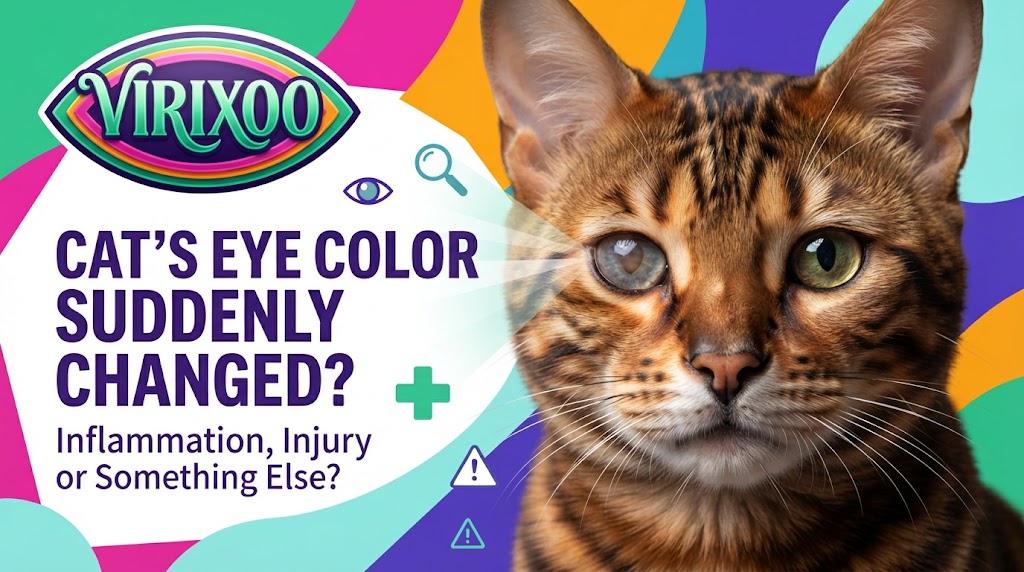
A sudden change in the color of one eye is not the same as a kitten’s normal eye-color development. In an adult cat, a new iris color change, haziness, redness, darkening, or visible blood can reflect inflammation, injury, glaucoma, bleeding, pigment change, or other eye disease.
Quick Answer
If an adult cat’s eye suddenly looks a different color, arrange veterinary examination promptly. Seek urgent care for squinting, severe redness, cloudiness, a dilated pupil that does not respond normally, obvious trauma, vision loss, or significant eye pain.
True Iris Color Change vs. Surface Cloudiness
Owners often describe any change in eye appearance as a color change. Sometimes the iris itself has changed, while in other cases the cornea has become cloudy or the fluid inside the eye has become hazy. A veterinary eye examination can determine which structure is responsible.
Uveitis
Inflammation inside the eye can make the iris look darker, redder, or less distinct. Uveitis can be painful and may occur because of infection, immune-mediated disease, trauma, cancer, or systemic illness. Squinting, a small pupil, redness, and light sensitivity may accompany it.
Glaucoma
Elevated pressure inside the eye can cause pain, pupil changes, cloudiness, and vision loss. The eye may look larger or bluer in some cases. Measuring eye pressure is an important part of evaluating a painful or visibly altered eye.
Bleeding Inside the Eye
Blood in the front chamber of the eye can create a red or dark appearance. Trauma, high blood pressure, clotting disorders, retinal disease, or other conditions can be involved. Visible blood inside the eye warrants prompt evaluation.
Pigment Changes
Some cats develop gradual benign pigment spots in the iris, but progressive iris pigmentation can sometimes require monitoring for more serious disease. A slow freckle-like change over months is different from an abrupt color change accompanied by pain.
High Blood Pressure and the Eye
Systemic hypertension can damage the retina and cause bleeding or sudden vision loss. Older cats and cats with kidney or thyroid disease are at increased risk, so blood-pressure measurement may be part of the examination.
What to Check at Home
Compare both eyes in the same lighting. Note pupil size, redness, discharge, squinting, cloudiness, and whether the cat navigates normally. Do not shine a bright flashlight repeatedly into the eye or use human eye drops.
Red Flags
| Finding | Concern |
|---|---|
| Squinting or pawing at eye | Possible pain |
| Cloudy cornea | Urgent eye disease possible |
| Sudden vision loss | Prompt veterinary assessment |
| Blood inside eye | Needs urgent evaluation |
| Unequal pupils | Eye or neurologic disease possible |
What the Veterinarian May Check
The veterinarian may examine the cornea, iris, lens, retina, pupil responses, and eye pressure. Fluorescein stain, blood pressure measurement, blood tests, ultrasound, or referral to a veterinary ophthalmologist may be recommended.
Why Photos Are Useful
If the change is subtle or intermittent, take a clear photo in natural light without flash. Older photos can help show whether the color difference is truly new or has been developing gradually.
Bottom Line
A new eye-color change in an adult cat should be treated as a medical sign rather than a cosmetic change until proven otherwise. Pain, cloudiness, unequal pupils, bleeding, or vision changes make prompt evaluation especially important.
Why Kittens Are Different
Kittens normally change from blue-gray neonatal eyes to their adult color over the first months of life. That developmental change is gradual and usually affects both eyes. A sudden change in an adult or a painful eye at any age is a different situation.
When a Freckle Needs Monitoring
Small flat iris pigment spots can be benign, but progressive darkening, thickening, pupil distortion, or growth deserves veterinary monitoring. Serial photographs can help document whether a spot is stable.
Why Eye Disease Should Not Be Treated With Leftover Drops
Some eye medications are inappropriate when the cornea is ulcerated or when eye pressure is abnormal. Using leftover drops can mask symptoms or worsen disease, so treatment should follow an examination.
A Practical Decision Guide
For cat eye color suddenly changed, start by deciding whether the change is truly new and whether the cat can still perform basic functions normally. Breathing, walking, eating, drinking, urinating, defecating, grooming, and responding to the environment are more useful than one isolated sign. A cat that becomes weak, painful, unable to urinate, unable to swallow, or neurologically abnormal has moved beyond routine home monitoring.
Next consider speed. A problem that develops over minutes or hours generally deserves more urgency than a stable finding that has looked the same for months. Finally, look for combinations of signs. Pain plus food refusal, weakness plus pale gums, eye change plus vision loss, or swelling plus breathing difficulty are more concerning than a single mild feature.
What to Record Before the Appointment
Write down when the problem began, whether onset was sudden or gradual, and whether it is constant or intermittent. Record appetite, water intake, urination, stool, grooming, sleep, breathing, movement, and behavior. Include recent trauma, falls, fights, medication changes, toxin exposure, weight loss, vomiting, diarrhea, or outdoor access when relevant.
A short photo or video can be useful if the sign comes and goes, but do not provoke pain, force movement, manipulate an injured area, or delay urgent care just to document the problem.
Common Mistakes Owners Make
- Waiting for a dramatic symptom before calling.
- Using leftover medication from another illness.
- Giving human pain medicine.
- Repeatedly touching or testing a painful body part.
- Assuming normal eating means the cat is not in pain.
- Stopping treatment as soon as one visible sign improves.
How to Keep the Cat Comfortable While Waiting
Use a quiet indoor room, minimize unnecessary handling, and keep food, water, and the litter box easy to reach. Prevent access to stairs or high furniture when movement is abnormal. If trauma is suspected, restrict activity. Do not force food, water, exercise, or handling when the cat is distressed.
What Follow-Up Should Focus On
After treatment begins, improvement should involve the whole cat rather than only the visible sign. Appetite, grooming, mobility, litter-box habits, breathing, sleep, and social behavior should move back toward the cat’s normal baseline. Contact the clinic if the original problem returns, new signs appear, or the cat worsens after initially improving.
When to Recheck Even After Initial Improvement
A cat can look better for a few hours while the underlying problem remains. Recheck is appropriate when the sign returns, appetite falls, the cat hides more, breathing changes, mobility worsens, or new pain appears. Follow any scheduled veterinary recheck even if the visible sign seems smaller or less dramatic.
Do not stop prescribed medication early, change the dose, or add supplements without discussing it with the veterinarian. If a new symptom appears after treatment begins, report both the new sign and the timing relative to medication, feeding, or activity changes.
Why Eye Pain Can Be Easy to Miss
Cats with painful eyes may not cry. They may simply keep one eye slightly narrowed, avoid bright windows, sleep more, or turn the face away when touched. Subtle squinting together with a new color or clarity change should be taken seriously.
When Color Change Develops Slowly
Gradual iris darkening over months may be less urgent than a sudden painful change, but it still deserves monitoring. Photograph the eye in similar lighting every few weeks if your veterinarian recommends observation, and return sooner if the pupil shape changes, the pigment thickens, or vision appears affected.
Why Contact Lenses or Human Drops Are Not Appropriate
Do not use cosmetic products, redness-relief drops, or medication prescribed to a person. Feline eye disease requires the correct diagnosis because drugs that help one condition can worsen another.
Final Safety Check
Before continuing home observation, confirm that the cat is comfortable, breathing normally, responsive, and able to eat, drink, move, urinate, and defecate. A worsening change in any of these basic functions is more important than one isolated symptom appearing slightly better. When the cause is uncertain or the sign is progressing, veterinary reassessment is safer than prolonged experimentation at home.
Why Both Eyes Should Be Compared
Compare the affected eye with the other eye in the same room and lighting. Differences in pupil size, clarity, redness, or iris pattern can be easier to detect side by side. Do not assume a darker-looking eye is simply a lighting effect if the difference persists when the cat changes position.
If the cat also bumps into objects, hesitates at steps, or seems unable to track movement, mention possible vision loss when arranging the appointment.
When to Contact the Clinic Again
Call again if the cat develops new pain, appetite loss, vomiting, breathing changes, weakness, abnormal urination, or neurologic signs, even if the original symptom looks slightly improved. A change in overall function is an important reason to shorten the monitoring period and seek reassessment.