Quick Answer
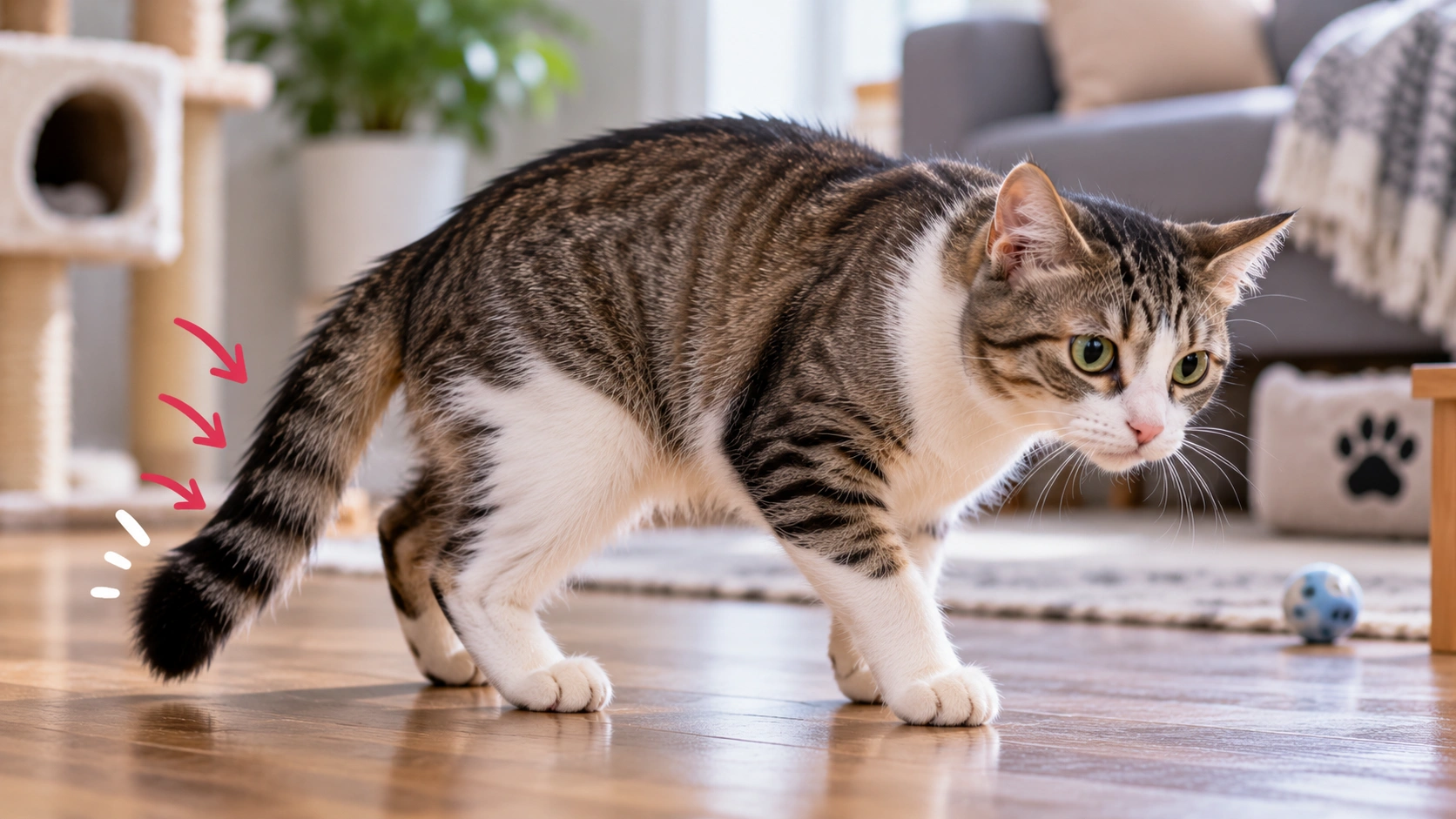
A cat that suddenly carries its tail lower than usual may be communicating fear or discomfort, but pain, tail injury, lower-back disease, anal-area problems, and nerve injury also need consideration. The key is whether the tail still moves normally and whether other functions have changed.
Behavioral Tail Lowering
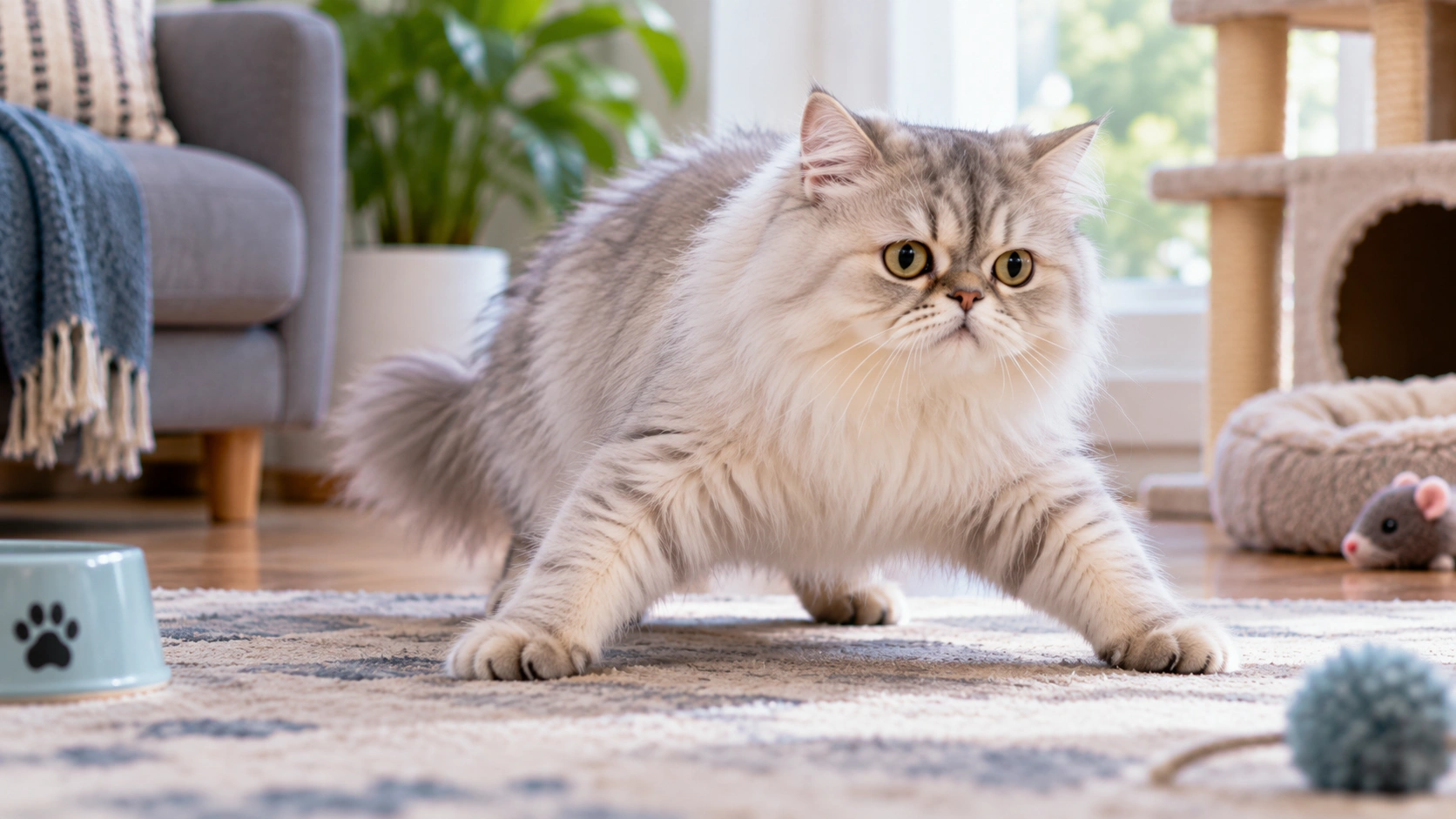
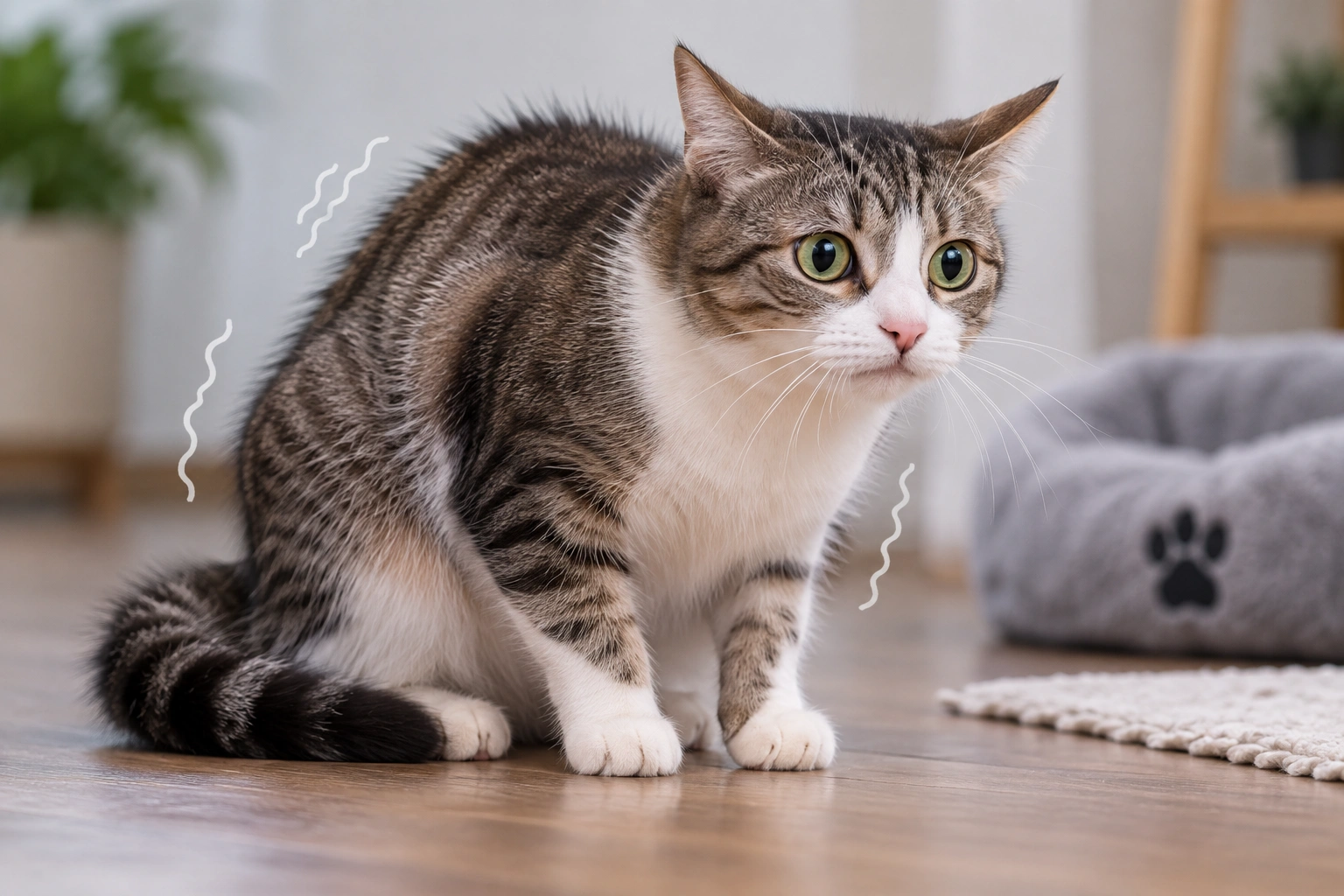
A frightened or uncertain cat may temporarily lower or tuck the tail while moving through an unfamiliar environment. This should improve when the cat feels safe and should not cause pain when the tail moves naturally.
Tail and Lower-Back Pain
Bites, falls, door injuries, pulls, and other trauma can hurt the tail or sacral region. The cat may resist sitting, lick the tail base, hold the tail low, or react when the area is approached. Do not bend or pull the tail to test it.
Why Nerve Function Matters
Nerves near the tail base also contribute to bladder and bowel function. A severe traction injury can affect tail movement and, in some cases, urination or defecation. A limp tail after trauma plus inability to urinate is an urgent problem.
Anal and Perineal Discomfort
Inflammation, wounds, diarrhea, constipation, or other painful conditions around the anus can make a cat carry the tail differently. Look for excessive licking, swelling, discharge, or difficulty defecating without manipulating the area.
Observe Movement, Not Forced Range of Motion
Watch whether the cat lifts the tail to greet you, moves it side to side, and changes position during normal walking. Natural movement is more informative and safer than manually flexing the tail.
What the Vet May Check
The examination may assess pain, tail tone, reflexes, hind-limb neurologic function, bladder size, and the lower spine. Radiographs or other imaging may be recommended after trauma or when neurologic deficits are present.
When to Seek Prompt Care
Seek prompt veterinary care for a completely limp tail, severe pain, open wounds, known traction injury, hind-limb weakness, inability to urinate, fecal incontinence, or rapidly increasing swelling.
Tail Position and Tail Tone Are Different
A cat may voluntarily carry the tail low while retaining normal strength and movement. A neurologically weak tail may hang without normal lifting or side-to-side motion. Owners should observe spontaneous movement rather than trying to determine tone by pulling or bending the tail.
Why the Tail Base Is Neurologically Important
The sacral and caudal nerves around the pelvis and tail base are closely related to functions of the bladder, anus, and tail. Significant traction injuries can therefore produce a combination of tail paralysis and elimination problems. This functional link is why urination is always important after tail trauma.
What Recovery Can Look Like
Minor soft-tissue injuries may improve with pain control and time, while nerve injuries have a variable prognosis depending on severity. Return of voluntary tail movement and normal bladder function are encouraging signs, but follow-up examinations may be needed to assess neurologic recovery.
Bottom Line
A low tail can be behavioral, but a sudden persistent change—especially with pain or loss of movement—deserves attention. Never pull on the tail to test it, and treat urinary difficulty after tail trauma as urgent.