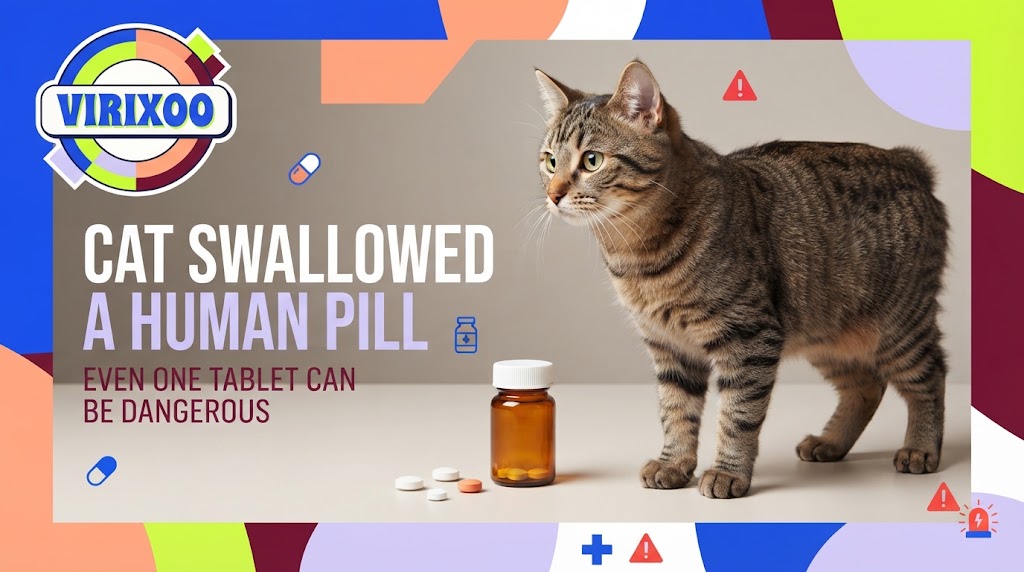
Even one human tablet can be dangerous to a cat depending on the medication and dose. Cats metabolize many drugs differently from people, and medicines that are routine for humans can cause kidney injury, liver damage, gastrointestinal bleeding, heart problems, or neurologic toxicity in cats.
Quick Answer
If your cat may have swallowed a human pill, contact a veterinarian or animal poison service immediately. Have the medication name, strength, number of tablets missing, approximate time of ingestion, and the cat’s weight available. Do not induce vomiting unless specifically instructed.
Why One Tablet Can Matter
Cats are small, so a single adult human dose can represent a very large dose per kilogram. Some medications also have a narrow safety margin in cats.
Common High-Risk Medication Categories
Pain relievers, antidepressants, stimulants, heart medications, diabetes drugs, sleep aids, and many other prescription or over-the-counter products can be dangerous. The exact active ingredient matters more than whether the medicine is sold without a prescription.
Acetaminophen Is Particularly Dangerous
Acetaminophen can cause severe toxicity in cats and should never be given unless a veterinarian explicitly directs it. Signs can include weakness, facial or paw swelling, abnormal gum color, breathing difficulty, and liver injury.
NSAIDs Can Damage Kidneys and the Gut
Human nonsteroidal anti-inflammatory drugs such as ibuprofen and naproxen can cause gastrointestinal ulceration and kidney injury in cats. Never use them for pain unless a veterinarian has prescribed a cat-specific plan.
What Information to Gather
- Exact medication name
- Strength per tablet or capsule
- How many may be missing
- Time of possible ingestion
- Cat’s approximate weight
- Any current symptoms
Do Not Wait for Symptoms
Some toxic effects are delayed. A cat may appear normal while organ injury is developing. Early treatment can be much more effective than waiting until vomiting, weakness, or other signs appear.
What Not to Do
- Do not induce vomiting without professional instruction.
- Do not give another medication to “cancel out” the first.
- Do not give milk, oil, or food unless directed.
- Do not throw away the pill bottle or package.
What Veterinary Care May Include
Treatment depends entirely on the medication and timing. It can include decontamination, activated charcoal when appropriate, intravenous fluids, antidotes for specific toxins, blood tests, heart monitoring, or hospitalization.
Prevention
Keep pill bottles closed and stored behind doors, never leave tablets on counters or nightstands, and retrieve dropped pills immediately. Cats may bat pills across the floor and swallow them during play.
Bottom Line
Human medications are one of the most important household poisoning risks for cats. If ingestion is possible, identify the exact drug and call for veterinary or poison-control guidance immediately rather than waiting for symptoms.
Why the Exact Formulation Matters
Two products with similar brand names may contain different active ingredients or strengths. Extended-release tablets can also behave differently from immediate-release products. Bring the bottle, blister pack, or pharmacy label whenever possible.
What If You Find the Pill Later?
If you are certain the missing pill is found intact and the cat never had access to another dose, risk may be lower. However, if the pill is chewed, wet, partially missing, or ingestion cannot be ruled out, call for professional advice.
Why Weight Matters
Toxicity is often dose-dependent. A single tablet represents a much larger dose per kilogram for a small cat than for a human adult. Accurate body weight improves poison-risk calculations.
What to Record Before You Call
For cat swallowed a human pill, write down the exact time the problem or exposure began, what you saw, and whether the cat is getting better, worse, or staying the same. Record appetite, drinking, urination, stool, vomiting, breathing, movement, awareness, and any unusual behavior. For poisoning or foreign-body concerns, keep the product package, plant photo, object description, or medication label available.
Do not delay urgent care to collect perfect information. When a cat is weak, collapsing, struggling to breathe, seizing, repeatedly vomiting, unable to urinate, or rapidly deteriorating, transport takes priority over documentation.
How to Decide Whether Monitoring Is Still Safe
Monitoring is only reasonable when the cat is comfortable, the exposure or behavior has been professionally judged low-risk, and no red flags are present. A cat that becomes quieter may not simply be resting; it may be becoming weaker. Look at the whole cat rather than one visible sign.
If new pain, breathing changes, neurologic signs, food refusal, repeated vomiting, or abnormal urination develops, contact the veterinarian again even if the original sign appears slightly improved.
Common Mistakes to Avoid
- Waiting for severe symptoms after a known high-risk exposure.
- Giving a home remedy before identifying the substance or object.
- Using medication prescribed for another pet.
- Forcing food, water, or handling when the cat is distressed.
- Assuming that normal walking or eating rules out a serious problem.
What Follow-Up Should Focus On
After treatment or professional advice, track whether the cat returns toward its normal baseline. Appetite, grooming, breathing, movement, litter-box habits, and interaction should all be considered. Follow recheck recommendations even when the visible problem seems better, because some toxicities and internal injuries can evolve after the first examination.
Why Early Advice Often Changes the Outcome
Many feline emergencies are easier to treat before severe symptoms develop. Early veterinary or poison-control guidance can determine whether decontamination, imaging, observation, or immediate treatment is appropriate. Waiting until the cat is obviously ill can remove safer or less invasive options.
When in doubt, describe the exact exposure or behavior, the timeline, and the cat’s current condition rather than trying to diagnose the problem yourself.
Why Combination Products Are Easy to Misjudge
Cold remedies, sleep products, and pain-relief combinations may contain several active ingredients. Owners sometimes recognize one familiar ingredient and overlook another that is more dangerous. Always provide the full product label rather than only the brand name.
What If the Cat Chewed the Capsule but Did Not Swallow It?
Medication can still be absorbed from liquid or powder released in the mouth. A punctured capsule, wet tablet, or powder on the fur counts as a potential exposure. Prevent grooming and call for guidance.
Why Poison-Control Calculations Need Exact Strength
A 5 mg tablet and a 50 mg tablet are very different exposures. The professional assessing risk uses the cat’s body weight and the drug concentration to estimate dose. This is why guessing the product strength can lead to poor decisions.
Medication Storage Tips
Use closed cabinets rather than pill organizers left on counters. Cats can bat tablets from bedside tables or tear into soft packaging. Count dropped pills immediately and keep handbags containing medication out of reach.
What Improvement Should Look Like
For cat swallowed a human pill, improvement means the cat is returning toward its normal baseline rather than showing only one isolated change. Appetite, grooming, movement, breathing, litter-box habits, awareness, and social behavior should all be considered. If the original sign looks better but the cat becomes weaker, more withdrawn, painful, or unable to perform a normal function, the overall situation is not improving.
Follow any veterinary instructions exactly and complete recommended rechecks. Do not add supplements, human medication, or home remedies unless the veterinary team specifically approves them.
Why Delayed Toxicity Is Important
Some medications cause problems before owners see obvious symptoms, while others produce delayed kidney, liver, or cardiovascular effects. A normal-looking cat in the first hour does not prove the dose was safe. Professional risk assessment should happen as soon as ingestion is suspected.
What to Tell the Vet About Other Medications
List every prescription, supplement, flea product, or recent medication the cat is already receiving. Drug interactions and existing kidney, liver, or heart disease can change the risk and treatment plan.
When to Call Again After Initial Advice
For cat swallowed a human pill, call the veterinary team again if the cat develops a new symptom, the original sign becomes more frequent or severe, or basic functions change. Important changes include repeated vomiting, food refusal, weakness, abnormal breathing, inability to urinate, severe pain, tremors, seizures, or collapse.
Describe what changed and when it changed. A clear timeline helps the clinic decide whether home monitoring is still appropriate or whether the cat should be examined sooner.
Why Poison Advice Should Be Drug-Specific
There is no universal safe response to a swallowed pill. One medication may require decontamination, another may need an antidote, and another may require heart or kidney monitoring. The correct next step depends on the exact drug, strength, dose, and timing.
Final Safety Check
Before deciding to continue home observation, confirm that the cat is breathing comfortably, walking normally, responsive, and able to eat, drink, urinate, and use the litter box. A change in any of these basic functions can be more important than the original symptom itself. When the situation is time-sensitive or the exposure is known to be high-risk, professional advice should take priority over waiting for visible deterioration.