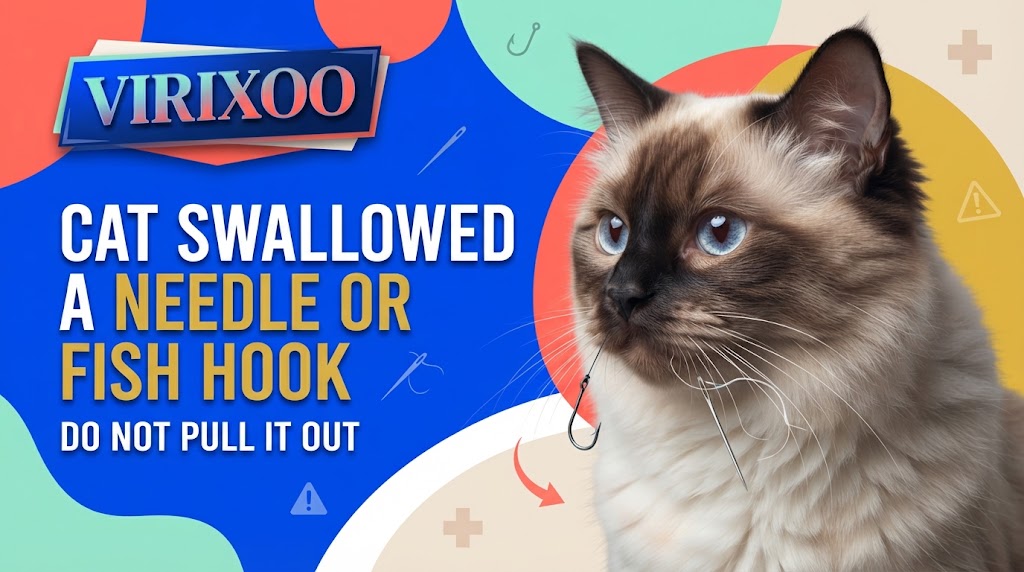
A swallowed needle, fish hook, or other sharp object is a veterinary emergency risk even if the cat appears normal. Sharp objects can pierce the mouth, esophagus, stomach, or intestines. If thread or fishing line is attached, pulling it can drag the sharp object through tissue and cause additional injury.
Quick Answer
Contact a veterinarian or emergency clinic immediately. Do not pull on thread, fishing line, or a hook that is visible from the mouth. Do not induce vomiting and do not feed bulky food in an attempt to cover the object. Keep the cat calm and transport it safely.
Why Sharp Objects Are Different
Needles and hooks can penetrate tissue rather than simply blocking the intestine. A sewing needle may travel with attached thread, creating both a puncture risk and a linear foreign-body risk. Fish hooks can catch in the tongue, mouth, esophagus, stomach, or intestine.
If the Object Is Visible in the Mouth
Do not try to pull it free if it is embedded or attached to line. A frightened cat may bite, and movement can worsen the injury. If the hook or needle is loose and completely outside the mouth, move it away from the cat, but do not reach deeply into the mouth.
Why You Should Not Induce Vomiting
Bringing a sharp object back through the esophagus can cause additional punctures or tears. Vomiting should only be induced when a veterinarian determines that it is appropriate for a specific ingestion, and sharp objects are particularly concerning.
Possible Warning Signs
- Drooling
- Gagging or repeated swallowing
- Pawing at the mouth
- Vomiting
- Food refusal
- Abdominal pain
- Lethargy
- Blood from the mouth or in vomit
A Normal-Looking Cat Can Still Be Injured
Some cats show little discomfort immediately after swallowing a sharp object. The absence of symptoms does not prove that the object is safely positioned. Early veterinary imaging may allow removal before a more serious complication develops.
What the Veterinarian May Do
Metal needles and hooks are often visible on X-rays. The veterinarian may determine whether the object can be removed through the mouth or stomach with endoscopy or whether surgery is safer. If tissue injury is suspected, additional imaging and monitoring may be needed.
Transport Tips
Place the cat in a secure carrier and minimize handling. If fishing line is hanging from the mouth, do not let the cat chew or swallow more line. Do not tie the line to the carrier or pull it tight.
What Not to Do
- Do not pull attached thread or line.
- Do not cut an embedded hook out of tissue at home.
- Do not induce vomiting.
- Do not feed bread, cotton, or other material to “wrap” the object.
- Do not wait for symptoms before calling.
Prevention
Keep sewing needles in closed containers, dispose of used fishing line and hooks securely, and never leave baited hooks where pets can reach them. Cats are attracted to moving thread and may swallow a needle attached to it during play.
Bottom Line
A swallowed needle or fish hook deserves immediate veterinary attention. Do not pull attached material or try to make the cat vomit. Early imaging and controlled removal are safer than waiting for the object to move or cause symptoms.
What If the Needle Is Attached to Thread?
This creates two risks at once: puncture from the needle and tension from the thread. Do not cut or pull the thread unless a veterinarian directs you. Knowing approximately how much thread is missing can help the veterinary team plan imaging.
Why Early Imaging Is Valuable
A metal object is often easier to locate before it moves farther through the gastrointestinal tract. Earlier localization can sometimes make removal less invasive than waiting until the object causes injury.
After Removal
Monitor appetite, swallowing, vomiting, and pain. If the object injured the mouth or gastrointestinal tract, your veterinarian may recommend additional medication, diet changes, or rechecks.
What to Record Before You Call
For cat swallowed needle or fish hook, write down the exact time the problem or exposure began, what you saw, and whether the cat is getting better, worse, or staying the same. Record appetite, drinking, urination, stool, vomiting, breathing, movement, awareness, and any unusual behavior. For poisoning or foreign-body concerns, keep the product package, plant photo, object description, or medication label available.
Do not delay urgent care to collect perfect information. When a cat is weak, collapsing, struggling to breathe, seizing, repeatedly vomiting, unable to urinate, or rapidly deteriorating, transport takes priority over documentation.
How to Decide Whether Monitoring Is Still Safe
Monitoring is only reasonable when the cat is comfortable, the exposure or behavior has been professionally judged low-risk, and no red flags are present. A cat that becomes quieter may not simply be resting; it may be becoming weaker. Look at the whole cat rather than one visible sign.
If new pain, breathing changes, neurologic signs, food refusal, repeated vomiting, or abnormal urination develops, contact the veterinarian again even if the original sign appears slightly improved.
Common Mistakes to Avoid
- Waiting for severe symptoms after a known high-risk exposure.
- Giving a home remedy before identifying the substance or object.
- Using medication prescribed for another pet.
- Forcing food, water, or handling when the cat is distressed.
- Assuming that normal walking or eating rules out a serious problem.
What Follow-Up Should Focus On
After treatment or professional advice, track whether the cat returns toward its normal baseline. Appetite, grooming, breathing, movement, litter-box habits, and interaction should all be considered. Follow recheck recommendations even when the visible problem seems better, because some toxicities and internal injuries can evolve after the first examination.
Why Early Advice Often Changes the Outcome
Many feline emergencies are easier to treat before severe symptoms develop. Early veterinary or poison-control guidance can determine whether decontamination, imaging, observation, or immediate treatment is appropriate. Waiting until the cat is obviously ill can remove safer or less invasive options.
When in doubt, describe the exact exposure or behavior, the timeline, and the cat’s current condition rather than trying to diagnose the problem yourself.
Why Fish Hooks Can Be Especially Difficult
Hooks are designed to resist being pulled backward. Barbs can catch in tissue and make home removal dangerous. A hook caught in the lip may look simple, but if the point or barb is buried, the safest removal method may require sedation and controlled cutting or advancement by a veterinarian.
What If the Cat Swallowed Only the Thread?
Thread without a needle is still a linear foreign-body risk. If you cannot account for the needle, assume both may have been swallowed until proven otherwise. Tell the veterinary team exactly what sewing materials were present.
Why Eating Before Imaging Can Matter
Do not feed a large meal unless the veterinary clinic tells you to. Sedation, endoscopy, or surgery may be needed, and recent food intake can affect the plan. Ask the clinic whether food and water should be withheld during transport.
How to Prevent Recurrence
Store hooks and needles in rigid closed containers, never leave threaded needles unattended, and dispose of fishing line in a way that pets cannot pull it from the trash. Cats that repeatedly steal small metal or string objects may benefit from more structured play and stricter environmental management.
What Improvement Should Look Like
For cat swallowed needle or fish hook, improvement means the cat is returning toward its normal baseline rather than showing only one isolated change. Appetite, grooming, movement, breathing, litter-box habits, awareness, and social behavior should all be considered. If the original sign looks better but the cat becomes weaker, more withdrawn, painful, or unable to perform a normal function, the overall situation is not improving.
Follow any veterinary instructions exactly and complete recommended rechecks. Do not add supplements, human medication, or home remedies unless the veterinary team specifically approves them.
Why Endoscopy May Be Preferred in Some Cases
If a sharp object is still in the esophagus or stomach and can be reached safely, endoscopic removal may avoid abdominal surgery. Whether this is possible depends on the object’s shape, location, whether tissue has already been damaged, and the cat’s stability. Waiting can allow the object to move farther and reduce less-invasive options.
What to Watch for After Going Home
Monitor swallowing, appetite, vomiting, drooling, abdominal comfort, and energy. A cat that suddenly stops eating, vomits repeatedly, or becomes painful after removal needs prompt reassessment because irritation or perforation can become apparent later.
When to Call Again After Initial Advice
For cat swallowed needle or fish hook, call the veterinary team again if the cat develops a new symptom, the original sign becomes more frequent or severe, or basic functions change. Important changes include repeated vomiting, food refusal, weakness, abnormal breathing, inability to urinate, severe pain, tremors, seizures, or collapse.
Describe what changed and when it changed. A clear timeline helps the clinic decide whether home monitoring is still appropriate or whether the cat should be examined sooner.