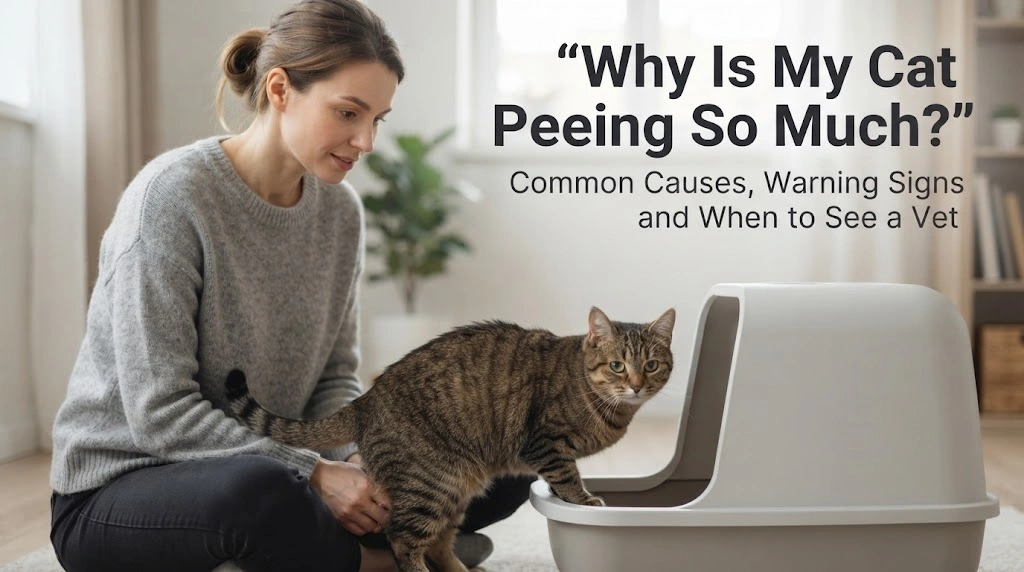
“Peeing a lot” can describe two very different patterns: producing a large volume of urine or making many small attempts to urinate. Large volumes often travel with increased thirst and can occur with kidney, endocrine or metabolic disease. Repeated trips that produce only drops can reflect painful lower urinary tract disease—and in a blocked cat, little or no urine is a true emergency. Distinguishing the two patterns is essential.
Quick Answer
Watch the litter box closely. Are the clumps much larger than usual, or is your cat visiting repeatedly and producing only tiny spots? Keep water available. A cat making frequent painful attempts, crying, licking the genital area or passing blood needs veterinary attention. A cat—especially a male—that strains repeatedly but produces little or no urine may have a urethral obstruction and needs emergency care immediately.
Two Main Patterns Behind Increased Urination
Larger urine volume from increased water loss
Kidney disease, diabetes and some other illnesses can cause a cat to produce more urine than normal. The litter box may contain noticeably larger or more numerous full-sized clumps, and the water bowl may empty faster.
Bladder inflammation
Feline lower urinary tract disease can cause urgency, discomfort and repeated attempts. A cat may enter and leave the box often, pass small amounts, urinate outside the box or lick the genital region.
Urinary stones or crystals
Mineral material can irritate the bladder and, in some cats, contribute to obstruction. Symptoms overlap with other urinary problems, so appearance alone cannot identify the cause.
Urinary tract infection
Bacterial infection is one possible cause of urinary signs, particularly in some older cats or cats with other health conditions, but many younger cats with urinary discomfort do not have a bacterial infection. Urinalysis and sometimes culture guide diagnosis.
Stress-associated urinary disease
Stress and environmental changes can be associated with feline idiopathic cystitis. A move, conflict between cats or changes in routine may matter, but stress should not be used to explain away a cat that may be obstructed.
Large Clumps vs. Tiny Frequent Spots
This distinction helps determine urgency and what information to give your veterinarian.
| Litter-Box Pattern | Possible Direction | Urgency |
|---|---|---|
| Large clumps plus more drinking | Increased urine volume | Veterinary assessment if persistent |
| Many small clumps or drops | Bladder/urethral irritation | Veterinary assessment promptly |
| Straining with little or no urine | Possible obstruction | Emergency |
| Blood plus frequent attempts | Lower urinary tract disease possible | Prompt veterinary care |
| New accidents plus urinary change | Pain or urgency may be involved | Medical causes first |
What You Can Check Safely
Observation is helpful, but do not delay care while waiting for a perfect urine log.
- Count litter-box visits for a short period if you can observe without disturbing the cat.
- Note whether each visit produces a normal clump, a tiny spot or nothing.
- Keep multiple clean litter boxes accessible, especially in multi-cat homes.
- Keep fresh water available and maintain normal access to food.
- Take a photo of unusual urine color or clump size when useful.
What to Track Before the Vet Visit
A veterinarian will often ask about both water intake and urinary output.
- Urine volume and frequency.
- Straining, crying or licking around the genitals.
- Blood or urine outside the litter box.
- Water intake and appetite.
- Age, sex, previous urinary disease, medications and recent household stress.
What Not to Do
Do not assume straining is constipation without checking whether urine is actually being passed. Do not press on the abdomen or attempt to express the bladder. Do not give leftover antibiotics or urinary supplements as a substitute for diagnosis.
When to Contact a Veterinarian
Contact a veterinarian for persistent increases in urine volume, frequent small urinations, urinary accidents, blood, discomfort or a new drinking increase. Urinalysis, bloodwork and imaging may be recommended depending on the pattern.
When It Is an Emergency
Repeated straining with little or no urine is an emergency, particularly in male cats. Worsening distress, vomiting, lethargy or collapse can occur as obstruction progresses. Do not wait overnight to see whether the cat improves.
Related Virixoo Guides
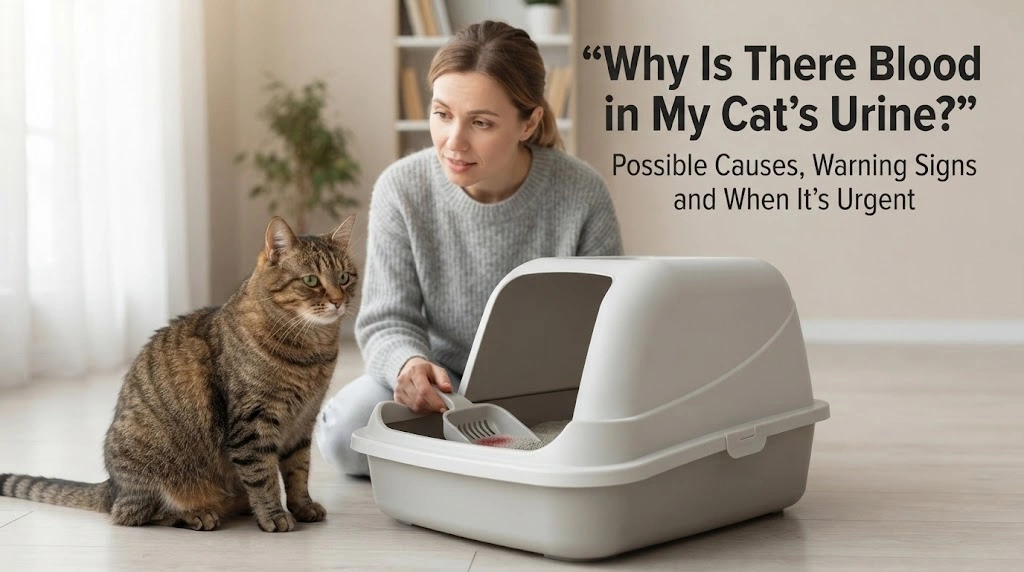
For visible blood, read Why Is There Blood in My Cat's Urine?. For increased thirst, see Why Is My Cat Drinking So Much Water?. If elimination outside the box is the main issue, use Why Is My Cat Not Using the Litter Box?.
Use the Litter Box as a Health Monitor
Scoopable litter creates a surprisingly useful record. Learn what a normal day's clumps look like for your cat before a problem occurs. When something changes, note both number and size. In a multi-cat home, temporarily separating cats with their own complete resources may be necessary to identify which cat is producing abnormal urine, but separation should not reduce water access or create severe stress. Smart litter devices can provide trends, but they cannot determine whether a straining cat is blocked; direct observation still matters when signs are acute.
Why Urinating Outside the Box Is Not “Revenge”
Painful urgency can make a cat choose a bathtub, sink, rug or other nearby surface. A cat may also associate the litter box with discomfort and avoid it. Address medical causes before treating sudden inappropriate urination as a training problem. Punishment can increase stress and may make the cat hide urinary attempts, which removes information you need to judge severity.
Bottom Line
Do not treat every increase in litter-box activity as the same problem. Large-volume urination and repeated tiny attempts point in different directions, and inability to pass urine is a time-critical emergency.