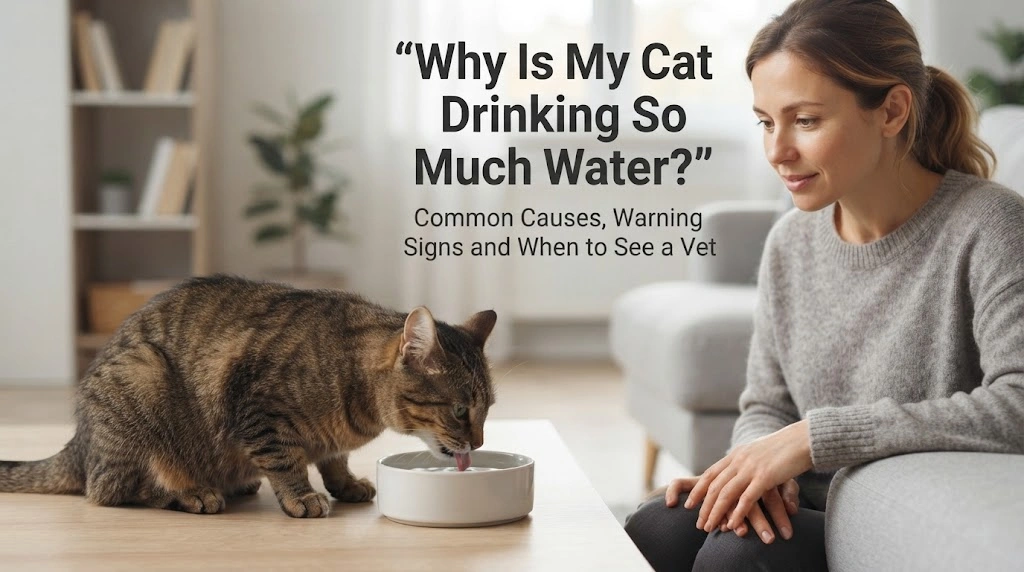
Some cats drink more after a diet change, hot weather or increased activity, but a sustained increase in thirst is important health information. Owners often notice the bowl emptying faster, a cat visiting faucets repeatedly, or larger clumps appearing in the litter box. Kidney disease, diabetes, hyperthyroidism and several other disorders can increase thirst and urination, especially in middle-aged and older cats. The safest response is to measure the change without restricting water.
Quick Answer
Keep fresh water freely available. If possible, measure how much you add to bowls over 24 hours and note whether urination has increased too. Record appetite, weight, vomiting, energy and medication changes. A clear persistent increase in drinking—especially with larger urine clumps, weight loss, appetite changes or lethargy—deserves veterinary assessment. Never take water away to test whether your cat is “really thirsty.”
Why Cats May Start Drinking More
A shift to drier food or hotter conditions
Cats obtain a substantial portion of water from food when eating moisture-rich diets. Switching toward dry food, warmer weather or increased activity may therefore increase visible drinking. The change should still make sense in context and should not cause progressive thirst or illness signs.
Chronic kidney disease
As kidney function declines, urine may become less concentrated, so a cat produces more urine and drinks more to compensate. Kidney disease is particularly important in senior cats and can also cause weight loss, reduced appetite, nausea or a less well-groomed coat.
Diabetes mellitus
Diabetes can cause increased urination and thirst because excess glucose affects how water is handled in the urine. Weight loss despite a strong appetite can occur, although not every diabetic cat shows the same pattern.
Hyperthyroidism
An overactive thyroid can increase metabolism and may be associated with weight loss, increased appetite, restlessness, vomiting, diarrhea and increased thirst. It is most common in older cats and requires veterinary testing for diagnosis.
Medication or other medical conditions
Some medications and several endocrine, liver or systemic disorders can affect thirst. Do not stop prescribed medication because you notice extra drinking; report the change to the veterinarian who prescribed it.
Measure the Whole Thirst-and-Urine Pattern
Water intake becomes much more useful when paired with litter-box observations and weight.
| Observation | Why It Helps |
|---|---|
| Bowl empties faster but litter clumps unchanged | Could reflect food or environmental change |
| More drinking plus much larger urine clumps | Medical causes become more important |
| More drinking plus weight loss | Needs veterinary assessment |
| New thirst in an older cat | Kidney, thyroid and metabolic testing may be appropriate |
| Drinking more with vomiting or weakness | Seek veterinary advice promptly |
How to Monitor Without Restricting Water
You can collect useful information safely over a day or two while keeping hydration available.
- Use measured amounts of water in bowls and record refills if practical.
- If multiple pets share bowls, temporarily provide separate monitored stations without reducing access.
- Photograph or note the size and number of litter clumps.
- Weigh your cat on the same scale weekly if you can do so calmly.
- Record whether food changed from wet to dry or whether weather and activity changed.
What to Track Before the Vet Visit
Bring a concise log rather than trying to estimate the pattern from memory.
- Approximate 24-hour water use.
- Number and size of urine clumps.
- Current diet and moisture content.
- Appetite and recent body-weight trend.
- Vomiting, diarrhea, weakness, medication and age.
What Not to Do
Do not restrict water unless a veterinarian has given a specific medical instruction. Do not add salt, sports drinks or human electrolyte products to encourage drinking. Avoid assuming that visible drinking is simply a good hydration habit when it is a new and persistent change.
When to Contact a Veterinarian
Arrange veterinary assessment when increased thirst persists, is clearly different from your cat's normal behavior, or occurs with increased urination, weight loss, appetite changes, vomiting or reduced energy. Testing often includes a physical exam, bloodwork and urinalysis.
When It Is an Emergency
Seek prompt care if a thirsty cat becomes very weak, repeatedly vomits, cannot keep water down, collapses, has breathing difficulty or develops another severe acute sign.
Related Virixoo Guides
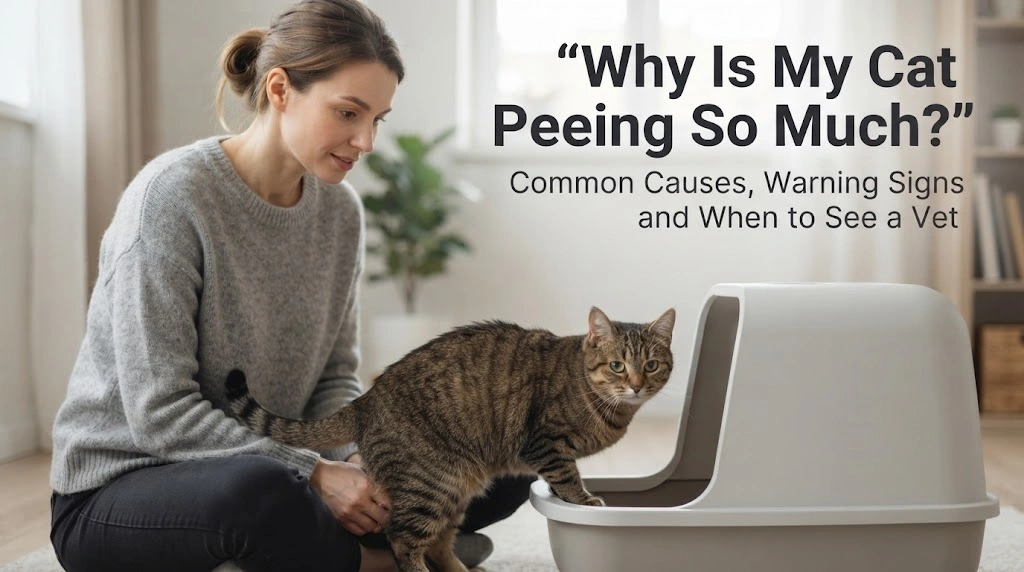
If your concern is low water intake rather than excessive thirst, read How to Get Your Cat to Drink More Water. For increased urination, continue with Why Is My Cat Peeing So Much?.
Why Measuring Water Can Be Tricky
Evaporation, spilled bowls, fountains and several pets sharing water make visual estimates unreliable. If your veterinarian asks for a measurement, use a simple controlled method: measure what goes into the bowl, measure what remains after 24 hours, and account for refills. Do this only if every pet still has unrestricted access to adequate water. Wet food also supplies substantial moisture, so a diet change can alter bowl drinking without changing total water intake. The goal is to document a trend, not to create an artificial restriction test.
Weight Is an Important Companion Measurement
Increased thirst paired with weight loss is particularly useful information. Weighing a cat at the same time of day on the same scale once a week can reveal gradual changes hidden by a fluffy coat. Do not wait for dramatic thinness before mentioning a trend. Older cats benefit from regular health checks because kidney, thyroid and metabolic diseases can begin with subtle changes in water, urine and weight.
Bottom Line
A cat drinking more is giving you measurable information. Keep water available, pair drinking with urine and weight observations, and investigate a persistent unexplained increase rather than waiting for more obvious illness.