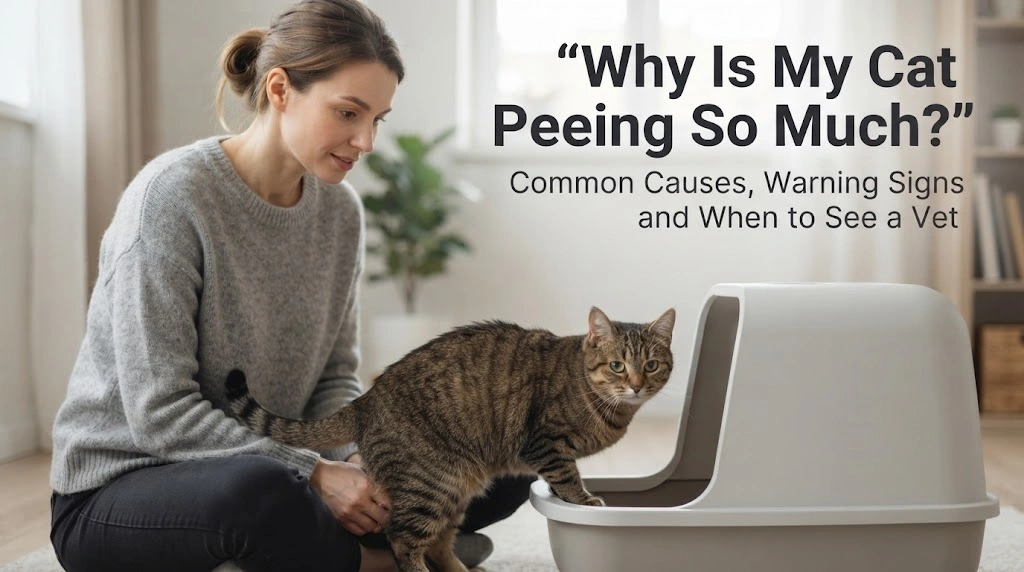
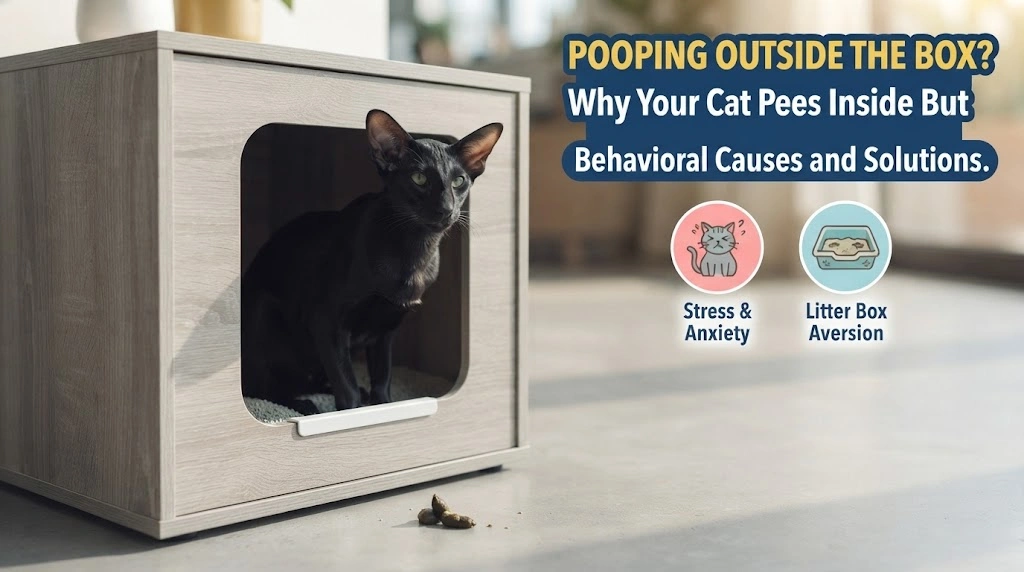
If your cat still urinates in the litter box but repeatedly defecates somewhere else, the pattern is more specific than general litter-box avoidance. The cat is demonstrating that the box is acceptable for at least one function. That makes stool-related discomfort, box setup, mobility, defecation posture, substrate preference, or a learned association with bowel movements especially important to investigate.
Start With the Stool, Not Just the Behavior
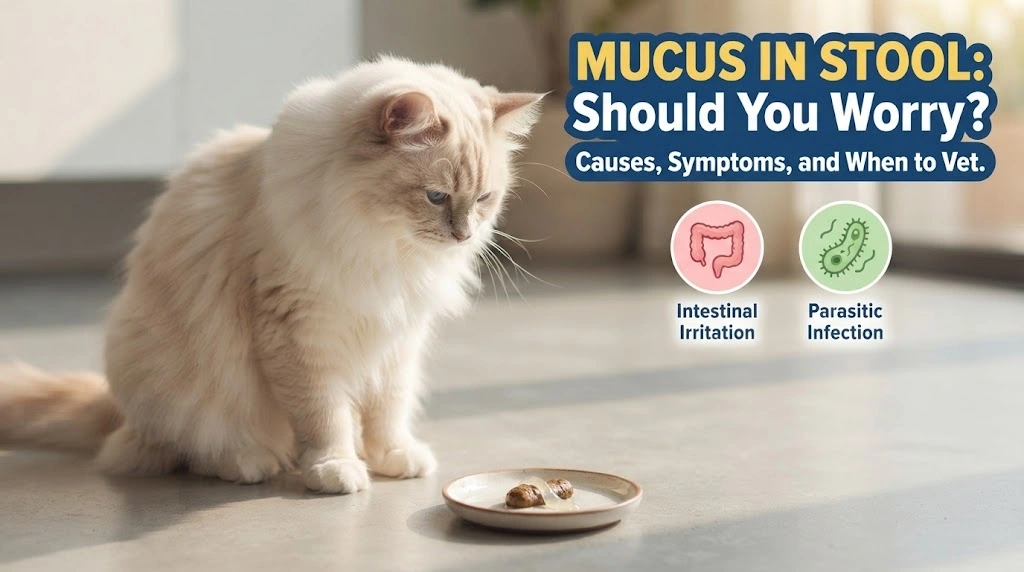
Check whether feces are hard and dry, very large, soft, watery, mucus-coated, or bloody. Constipation can make defecation painful, while diarrhea can create urgency that prevents the cat from reaching the box in time. A cat may associate the litter box with discomfort after one or more painful bowel movements and begin choosing a different surface.
Constipation and Painful Defecation
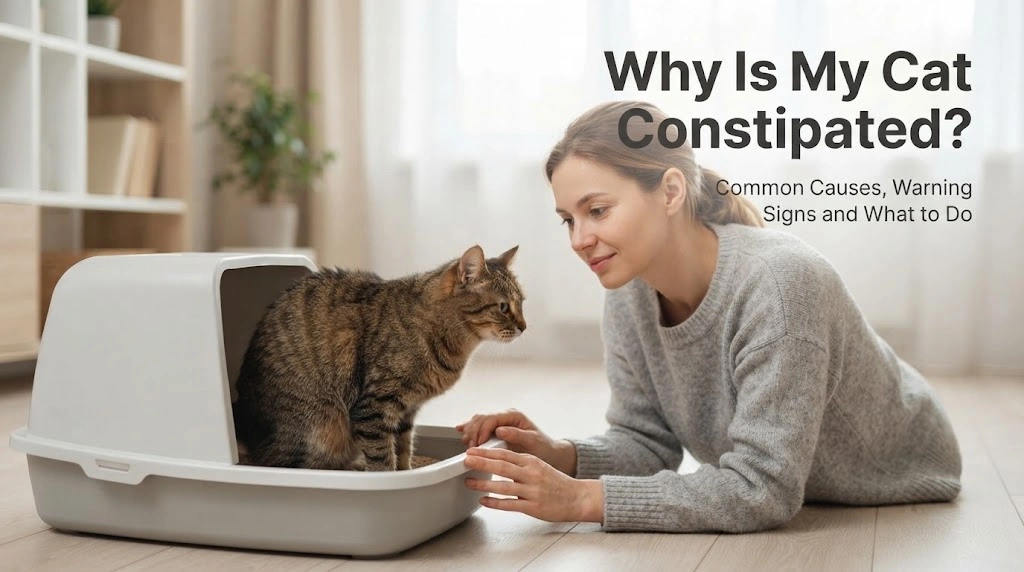
A constipated cat may enter the box, strain, leave, and later pass stool elsewhere. Some cats choose soft carpet, bedding, or another location when the usual posture becomes uncomfortable. If stools are infrequent, hard, dry, or accompanied by prolonged straining, veterinary assessment is appropriate.
Arthritis Can Affect Defecation More Than Urination
Defecation often requires a longer squat and more postural effort than urination. A cat with arthritis or spinal pain may still manage a quick urination in the box but avoid the prolonged posture needed to pass stool. High box sides and small boxes can make this worse.
Box Size Matters
Many commercial litter boxes are too small for comfortable turning and posturing. A useful box is generally large enough for the cat to enter, turn around, dig, and eliminate without touching the sides. Older or stiff cats may benefit from a large box with a low entry.
Location and Privacy
A box in a noisy laundry room, behind a door, near a dog, or in a place where another cat can block the exit may feel unsafe during a longer bowel movement. The cat may urinate quickly but avoid lingering there to defecate. Adding a box in a quiet, accessible location can test this possibility.
Substrate Preferences Can Become Function-Specific
Some cats develop strong preferences for texture. They may urinate in litter but prefer a smoother or softer surface for stool, especially after an episode of painful defecation. Do not punish the cat or force it into the box after accidents; that can strengthen the negative association.
Why Punishment Makes the Problem Harder
Cats do not defecate outside the box out of spite. Punishment can increase stress and cause the cat to hide elimination rather than solve the trigger. Clean accidents with an appropriate enzymatic cleaner and focus on medical comfort and box setup.
A Practical Box Reset
Provide at least one additional large, uncovered box with unscented litter in a quiet location. Scoop frequently. If the cat is older or stiff, choose a low entry. Keep food and water away from the box. In multi-cat homes, distribute boxes so one cat cannot guard all access routes.
When Medical Evaluation Comes First
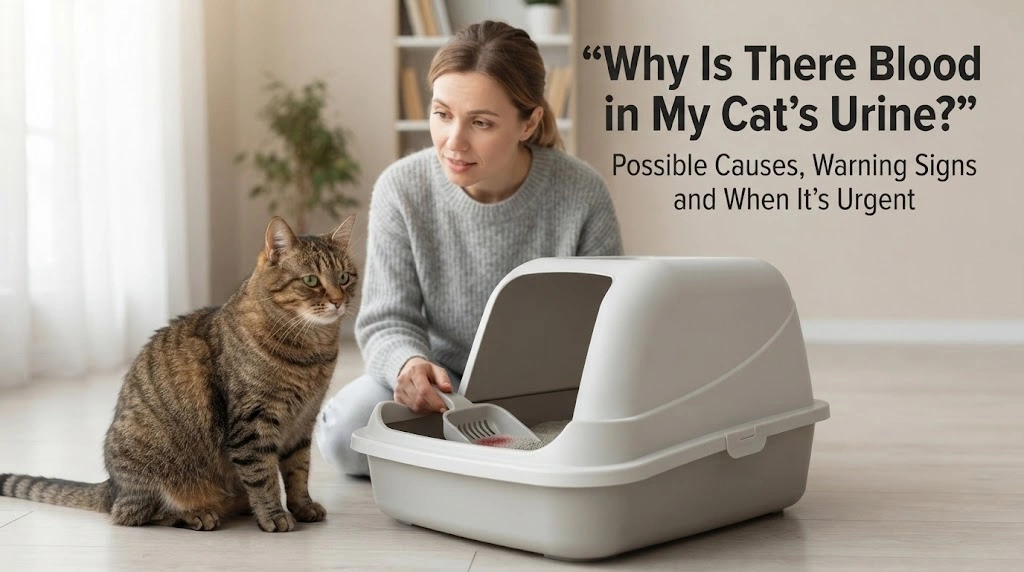
Arrange veterinary care when the change is sudden, stool is abnormal, the cat strains, cries, loses weight, vomits, eats poorly, or has mobility changes. Also seek urgent care if you are not sure the cat is passing urine; urinary obstruction can be mistaken for constipation and is an emergency.
What the Veterinarian May Check
The exam may include abdominal palpation, body and joint assessment, rectal or anal evaluation when appropriate, and review of stool consistency. Fecal testing, radiographs, blood tests, or other diagnostics may be recommended if constipation, diarrhea, pain, or systemic disease is suspected.
Placement of the Accident Can Give a Clue
Stool deposited immediately beside the box may suggest that the cat wanted to use the area but found something about the box or posture difficult. Defecation in distant, hidden, or repeatedly chosen locations may point toward surface preference, fear, or a learned habit. Map where accidents occur rather than cleaning them up without recording the pattern.
Covered Boxes Can Feel Different During Defecation
Some cats tolerate a covered box for quick urination but dislike remaining inside it for a longer bowel movement. Odor can be stronger inside a covered box, and escape routes are limited. Testing one large uncovered box can be a simple way to see whether box design is part of the problem.
Why One Extra Box Can Change the Pattern
In multi-cat homes, another cat may block access at certain times. Adding boxes in separate locations reduces competition and gives the cat options. Placing all boxes side by side is less useful because one cat can still guard the whole resource area.
Constipation Can Create a Long-Lasting Negative Association
Even after stool becomes normal, a cat may remember that defecation in the box was painful and continue using another surface. Medical treatment and environmental retraining may therefore need to happen together. Place a clean box near the preferred accident location temporarily and gradually shift it once reliable use returns.
Clean Accidents Without Making the Area More Attractive
Use an enzymatic cleaner suitable for the surface and avoid ammonia-based products, which can smell urine-like to pets. Do not use strong fragrances as a deterrent near the box because they may also make the litter area less acceptable.
How to Rebuild Reliable Litter-Box Use
Once medical causes are addressed, environmental management should make the desired behavior easy. Provide a large, clean box in the location the cat is most likely to use. Use unscented litter unless the cat clearly prefers another substrate. Keep the box accessible around the clock and avoid placing it where loud appliances, children, dogs, or other cats can interrupt elimination.
If accidents happen in one predictable location, placing a temporary box there can be more effective than trying to block the area immediately. Once the cat uses the box consistently, it can be moved gradually if necessary. Clean previous accident sites thoroughly with an enzymatic product so odor does not reinforce the location.
For older or arthritic cats, think about the entire route to the box: stairs, slippery floors, high sides, narrow doors, and long distances can all matter. A litter-box plan that ignores mobility will fail even if the litter itself is perfect.
Bottom Line
Pooping outside the box while still peeing inside suggests a problem specific to defecation rather than total box rejection. Evaluate stool quality, pain, mobility, box size, location, and negative associations. Avoid punishment, improve access, and involve a veterinarian when the pattern is new or persistent.