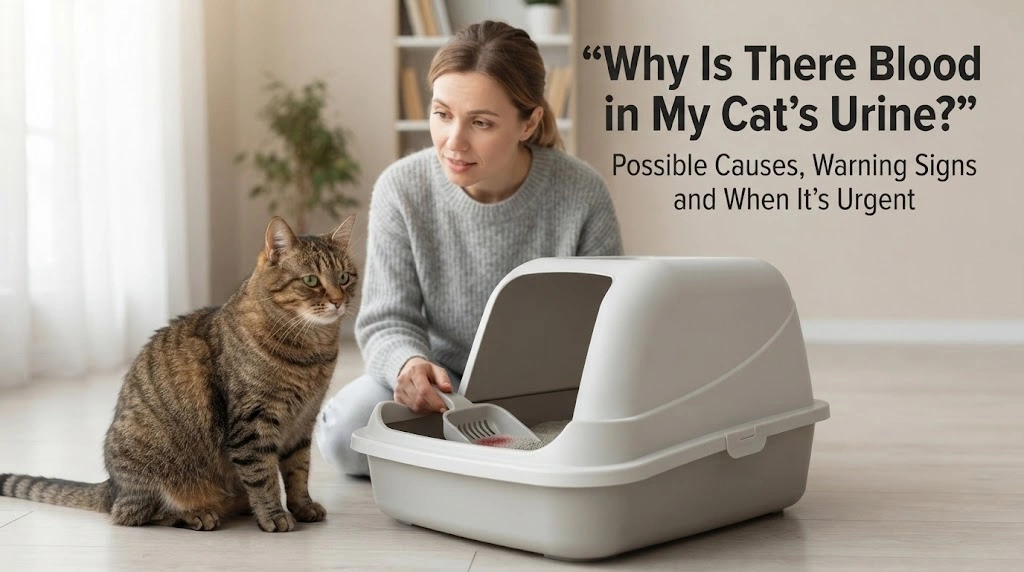

A cat that suddenly takes longer to step into the litter box may be showing a mobility problem before it develops an obvious limp. High box walls, slippery floors, arthritis, paw pain, back pain, weakness, or fear of discomfort during urination or defecation can all contribute.
Quick Answer
Watch whether the hesitation happens before stepping over the box wall or after the cat is already inside. If entry itself looks difficult, try a stable low-entry box while arranging evaluation for persistent stiffness or pain. If the cat repeatedly enters but strains, cries, produces little urine, or cannot urinate, treat that as a urinary problem rather than simple mobility trouble. A male cat straining without producing urine is an emergency.
Separate Access Problems From Elimination Problems
A mobility problem usually appears before the cat enters: pausing, testing the edge, lifting a leg slowly, or choosing another route. Urinary or bowel discomfort tends to appear after entry, with repeated posturing, straining, crying, or frequent visits.
Arthritis Can Make Box Walls Difficult
Older cats often develop osteoarthritis without obvious limping. Stepping over a high wall requires hip, knee, spine, and balance control. A cat may still walk around the house normally but hesitate at the box, stairs, or furniture.
If reduced jumping is also present, see Cat Suddenly Cannot Jump.
Paw or Claw Pain
Cracked pads, overgrown nails, a torn claw, or a sore toe can make stepping into coarse litter uncomfortable. Inspect the paws visually. If the pads are cracked or peeling, Cracked or Peeling Paw Pads in Cats may be relevant.
Back or Tail-Base Pain
Crouching and stepping over the box wall can aggravate lower-back or tail-base discomfort. Watch for sensitivity when touched, stiffness after sleep, or reluctance to climb.
Box Design Can Create the Problem
A tall storage-bin style box may become difficult as a cat ages. Covered boxes can also require tighter turning. Slippery floors around the box make entry harder. A large open box with one low side and a non-slip path can reduce physical demands.
Do Not Miss Urinary Obstruction
Repeated trips to the litter box, straining, crying, licking the genital area, or producing only drops of urine should never be explained by arthritis alone. A male cat that cannot urinate can deteriorate rapidly.
For increased urination rather than difficulty entering, see Why Is My Cat Peeing So Much?.
Constipation Can Also Cause Hesitation
A cat that associates the box with painful defecation may pause before entering. Hard dry stool, prolonged straining, reduced stool frequency, or vomiting can suggest constipation. The relevant guide is Why Is My Cat Constipated?.
What to Change at Home
- Offer at least one low-entry box.
- Place a non-slip mat outside the box.
- Keep one box on each floor used by the cat.
- Avoid forcing the cat into the box.
- Keep litter depth and type familiar while investigating a sudden change.
When to Seek Care
| Pattern | Response |
|---|---|
| Older cat hesitates at a high wall but eliminates normally | Provide low-entry access and schedule mobility assessment |
| Persistent stiffness, reduced jumping, or paw pain | Veterinary appointment |
| Straining, crying, blood, repeated box visits | Prompt urinary or digestive evaluation |
| Male cat repeatedly straining with little or no urine | Emergency care |
Bottom Line
Slower litter-box entry is a functional clue. Determine whether the obstacle is the box itself, the cat’s mobility, or pain associated with elimination. A low-entry box can improve access immediately, but a sudden persistent change still deserves evaluation for arthritis, injury, urinary disease, or constipation.