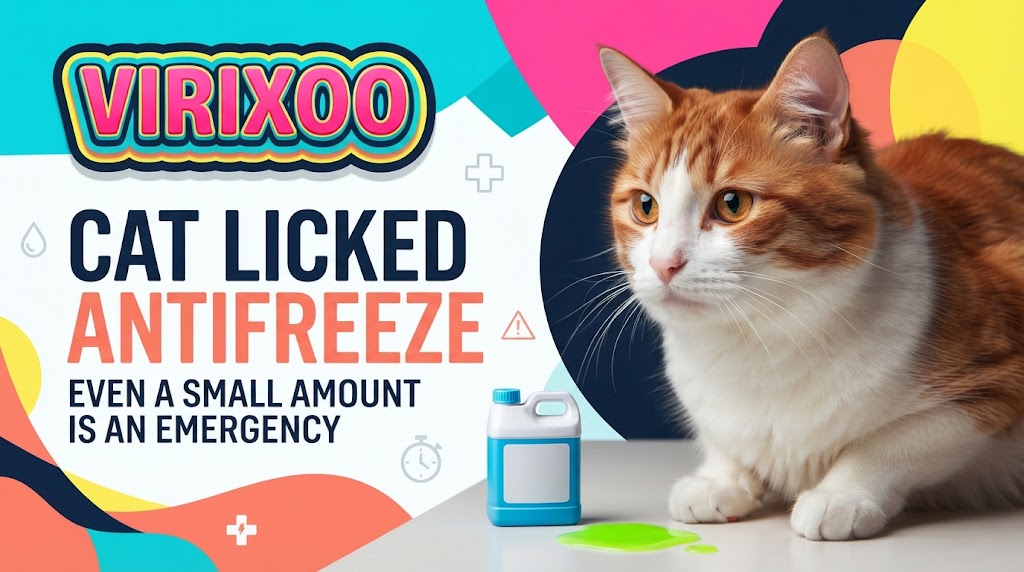
Ethylene glycol antifreeze is extremely toxic to cats, and even a small exposure can cause fatal kidney injury. Cats may lick spilled fluid from a garage floor, paw, fur, or open container. Early signs can resemble intoxication and may temporarily improve even while internal damage is progressing.
Quick Answer
If your cat may have licked ethylene glycol antifreeze, seek emergency veterinary care immediately. Do not wait for symptoms. Bring the product container or a photo of the label if possible. Early antidotal treatment is time-sensitive.
Why Antifreeze Is So Dangerous
Ethylene glycol itself and the toxic metabolites produced by the body can cause severe metabolic disturbances and kidney damage. Cats are particularly sensitive.
Early Signs
Within hours, a cat may vomit, drool, appear uncoordinated, act depressed, drink more, urinate more, or seem intoxicated. These signs can be mistaken for a temporary stomach problem or neurologic episode.
The Dangerous “Improvement” Phase
A cat may appear to improve after the earliest signs. This can be misleading. Kidney injury may continue developing even as the cat seems less drunk or nauseated.
Later Kidney-Failure Signs
As kidney damage progresses, the cat may become severely lethargic, stop eating, vomit, become dehydrated, and produce very little urine. Once severe kidney failure develops, prognosis becomes much worse.
Why Time Matters
Antidotal treatment is most effective very early after exposure. This is why suspected ingestion should be treated as an emergency before laboratory abnormalities or severe symptoms appear.
What to Bring
Bring the container or a photo of the product label. Some modern antifreeze products use different ingredients, so exact identification matters.
What Not to Do
- Do not wait for symptoms.
- Do not induce vomiting without professional guidance.
- Do not give alcohol or other home antidotes.
- Do not assume the cat is safe because early signs improved.
What Veterinary Treatment May Include
Treatment can include an antidote when appropriate, intravenous fluids, correction of acid-base disturbances, kidney monitoring, and supportive care. Severe kidney failure may require intensive therapy.
Prevention
Store antifreeze securely, clean spills immediately, repair leaking vehicles, and keep cats out of garages or work areas where coolant is handled. Even small puddles can be dangerous.
Bottom Line
Suspected antifreeze exposure is an emergency in cats. Do not wait for vomiting, weakness, or reduced urination. Rapid veterinary treatment offers the best chance of preventing fatal kidney injury.
Why the Garage Is a Common Risk Area
Vehicle leaks, open coolant containers, and spills can create small puddles that are easy to overlook. Cats may step in fluid and later ingest it while grooming even if they never drink directly from a container.
What If Antifreeze Is on the Fur?
Prevent grooming and call the emergency clinic for decontamination instructions while preparing for transport. Do not delay medical care to complete a long bath at home.
Why Product Labels Matter
Some coolant products use propylene glycol or other ingredients instead of ethylene glycol. Exact identification helps the veterinary team choose the correct risk assessment and treatment.
What to Record Before You Call
For cat licked antifreeze, write down the exact time the problem or exposure began, what you saw, and whether the cat is getting better, worse, or staying the same. Record appetite, drinking, urination, stool, vomiting, breathing, movement, awareness, and any unusual behavior. For poisoning or foreign-body concerns, keep the product package, plant photo, object description, or medication label available.
Do not delay urgent care to collect perfect information. When a cat is weak, collapsing, struggling to breathe, seizing, repeatedly vomiting, unable to urinate, or rapidly deteriorating, transport takes priority over documentation.
How to Decide Whether Monitoring Is Still Safe
Monitoring is only reasonable when the cat is comfortable, the exposure or behavior has been professionally judged low-risk, and no red flags are present. A cat that becomes quieter may not simply be resting; it may be becoming weaker. Look at the whole cat rather than one visible sign.
If new pain, breathing changes, neurologic signs, food refusal, repeated vomiting, or abnormal urination develops, contact the veterinarian again even if the original sign appears slightly improved.
Common Mistakes to Avoid
- Waiting for severe symptoms after a known high-risk exposure.
- Giving a home remedy before identifying the substance or object.
- Using medication prescribed for another pet.
- Forcing food, water, or handling when the cat is distressed.
- Assuming that normal walking or eating rules out a serious problem.
What Follow-Up Should Focus On
After treatment or professional advice, track whether the cat returns toward its normal baseline. Appetite, grooming, breathing, movement, litter-box habits, and interaction should all be considered. Follow recheck recommendations even when the visible problem seems better, because some toxicities and internal injuries can evolve after the first examination.
Why Early Advice Often Changes the Outcome
Many feline emergencies are easier to treat before severe symptoms develop. Early veterinary or poison-control guidance can determine whether decontamination, imaging, observation, or immediate treatment is appropriate. Waiting until the cat is obviously ill can remove safer or less invasive options.
When in doubt, describe the exact exposure or behavior, the timeline, and the cat’s current condition rather than trying to diagnose the problem yourself.
Why Cats Are at High Risk From Small Amounts
Cats are small and highly sensitive to ethylene glycol. What looks like a few licks can represent a dangerous exposure. Owners should not try to calculate whether the amount was “probably too small” to matter.
How Exposure Through Grooming Happens
A cat that walks through coolant can carry the liquid on paws or fur. The cat may then ingest it while cleaning itself. This means a visible spill on the coat is potentially serious even without observed drinking.
Why Waiting for Reduced Urination Is Too Late
By the time severe kidney failure causes very low urine output, the best window for antidotal treatment may have passed. The decision to seek care should be based on suspected exposure, not on waiting for kidney-failure signs.
Safer Garage Habits
Clean coolant spills immediately, inspect parked vehicles for leaks, store containers upright with secure lids, and keep cats out of work areas during vehicle maintenance. Dispose of used coolant according to local regulations and never leave drain pans unattended.
What Improvement Should Look Like
For cat licked antifreeze, improvement means the cat is returning toward its normal baseline rather than showing only one isolated change. Appetite, grooming, movement, breathing, litter-box habits, awareness, and social behavior should all be considered. If the original sign looks better but the cat becomes weaker, more withdrawn, painful, or unable to perform a normal function, the overall situation is not improving.
Follow any veterinary instructions exactly and complete recommended rechecks. Do not add supplements, human medication, or home remedies unless the veterinary team specifically approves them.
Why Early “Drunken” Behavior Is a Warning
Wobbling, unusual sleepiness, vomiting, or excessive thirst soon after suspected exposure should not be mistaken for a harmless temporary intoxication. These early signs can precede severe kidney injury and should trigger emergency care immediately.
What Follow-Up May Focus On
After emergency treatment, veterinarians may continue monitoring kidney values, urine production, hydration, appetite, and acid-base status. Improvement should be judged over time rather than by one normal-looking moment at home.
When to Call Again After Initial Advice
For cat licked antifreeze, call the veterinary team again if the cat develops a new symptom, the original sign becomes more frequent or severe, or basic functions change. Important changes include repeated vomiting, food refusal, weakness, abnormal breathing, inability to urinate, severe pain, tremors, seizures, or collapse.
Describe what changed and when it changed. A clear timeline helps the clinic decide whether home monitoring is still appropriate or whether the cat should be examined sooner.
Why Apparent Recovery Can Be Misleading
A cat that becomes steadier after the first few hours may still be developing severe kidney injury. Do not use temporary improvement as a reason to cancel emergency evaluation or recommended hospitalization after suspected ethylene glycol exposure.
Final Safety Check
Before deciding to continue home observation, confirm that the cat is breathing comfortably, walking normally, responsive, and able to eat, drink, urinate, and use the litter box. A change in any of these basic functions can be more important than the original symptom itself. When the situation is time-sensitive or the exposure is known to be high-risk, professional advice should take priority over waiting for visible deterioration.
Why Every Minute Matters With Antifreeze
The most effective treatment window is early, before toxic metabolites cause extensive kidney damage. Because the cat may still look relatively normal during this period, the safest decision is based on the exposure itself rather than waiting for severe symptoms. If there is any credible chance that ethylene glycol was swallowed or groomed from the coat, emergency veterinary evaluation is warranted.
Bring the product container if possible and tell the clinic the earliest and latest time the exposure could have happened. This helps the veterinary team decide which tests and treatments are still useful.