
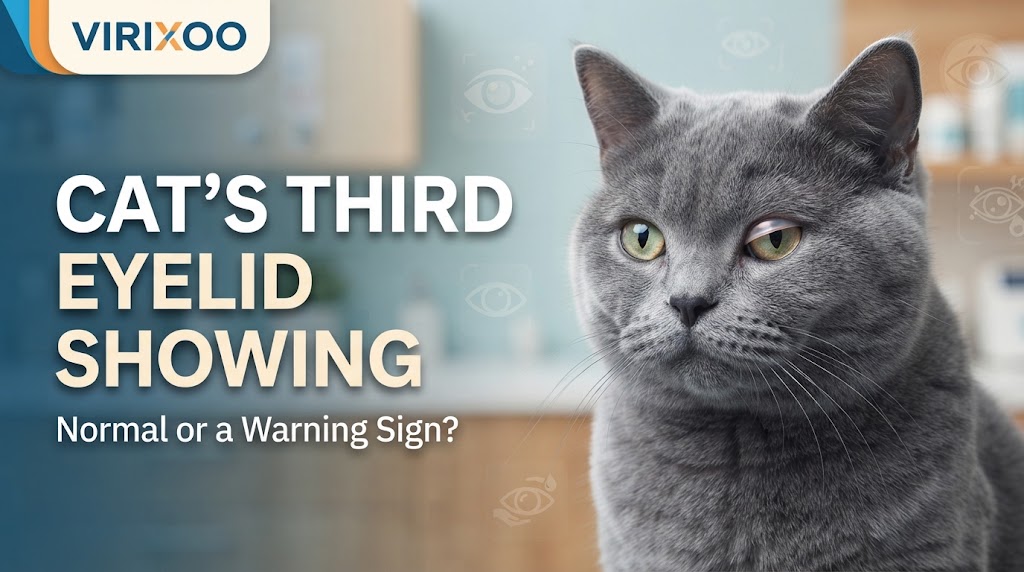
The third eyelid, or nictitating membrane, sits at the inner corner of the eye and normally helps protect and lubricate the cornea. A small amount may be visible while a cat is deeply asleep or just waking, but a membrane that remains raised while the cat is alert deserves context. The most important questions are whether one or both eyes are affected, whether the eye is painful, and whether the cat has other signs of illness.
Quick Answer
If this change is new, persistent, or paired with concerning symptoms, contact a veterinarian rather than assuming it is harmless. The most important warning signs for this topic include squinting, a cloudy cornea, marked redness, sudden vision change, persistent discharge, vomiting, diarrhea, appetite loss, weakness, or a third eyelid that remains visible while the cat is fully awake.
What This Sign Can Mean
Brief sleep-related visibility can be normal. Persistent elevation may occur with eye pain, inflammation, trauma, dehydration, weight loss, gastrointestinal illness, systemic disease, or nerve-related changes. A one-sided change can be more suggestive of a local eye or nerve problem, while both eyes showing may accompany a broader illness.
Why the Pattern Matters
A third eyelid that appears only for a few moments after sleep and disappears once the cat is alert is very different from a membrane that stays raised for hours. Tracking duration is often more useful than repeatedly checking the eye.
Timing, severity, and the cat’s overall condition often matter more than one isolated photograph. A mild-looking sign in a cat that is weak, not eating, breathing abnormally, or behaving neurologically abnormal deserves more attention than the same sign in a comfortable cat with a clear benign explanation.
What You Can Safely Check at Home
Observe the cat in normal room light without forcing the eyelids open. Note whether one or both membranes are visible, how much of the eye is covered, whether the cornea looks clear, and whether the cat is eating, drinking, grooming, and using the litter box normally.
Keep the observation gentle and brief. Cats in pain or distress can become defensive, and repeated manipulation can worsen an eye, ear, limb, tail, or facial problem. A short natural photo or video can be useful when the sign is intermittent, but documentation should never delay urgent care.
Red Flags That Change the Urgency
| Finding | What It Means for Next Steps |
|---|---|
| New and persistent change | Arrange veterinary assessment |
| Pain, severe discomfort, or inability to settle | Seek prompt care |
| Weakness, collapse, or major neurologic change | Emergency evaluation may be needed |
| Breathing difficulty or abnormal gum color | Emergency |
| Rapidly worsening signs | Do not continue home monitoring |
What Not to Do
Do not push the membrane back, touch the cornea, use human redness-relief drops, or reuse old eye medication from another pet.
Also avoid using medication prescribed for another animal, guessing a human-drug dose from the internet, or repeatedly provoking the symptom to “see if it is still there.” These actions can create new problems and can make the original condition harder to evaluate.
What the Veterinarian May Evaluate
A veterinarian may examine the cornea, pupils, tear production, eye position, and third eyelid, and may use fluorescein stain to look for corneal injury. If both eyes are involved and the cat seems unwell, hydration status, temperature, abdominal findings, and blood tests may also be considered.
The exact tests depend on the cat’s age, history, examination findings, and whether the problem looks local or systemic. Not every cat needs every test. The purpose of the examination is to narrow the possibilities safely rather than to treat the visible sign in isolation.
What to Record Before the Appointment
Write down when the problem began, whether onset was sudden or gradual, whether it is constant or intermittent, and whether it is getting better or worse. Record appetite, water intake, urination, stool, grooming, sleep, breathing, activity, and behavior. Also note recent falls, fights, outdoor access, medication changes, toxin exposure, weight loss, vomiting, diarrhea, or other illness signs when relevant.
For cat third eyelid showing, a concise timeline is often more useful than trying to remember every detail during the visit. If you have a photo from before the problem started, comparison can also help.
How to Decide Whether Monitoring Is Still Reasonable
Monitoring is only reasonable when the cat is comfortable, the sign is mild, there is a plausible non-urgent explanation, and no red flags are present. If the sign becomes more pronounced, lasts longer, returns repeatedly, or is joined by pain, weakness, appetite loss, breathing changes, vomiting, abnormal urination, or neurologic behavior, the situation has changed and should be reassessed.
Improvement should involve the whole cat, not only the visible sign. A swelling that looks smaller while the cat becomes lethargic is not reassuring. Likewise, a cat that becomes quieter after a painful episode may be resting, but it may also be becoming weaker.
Why Early Assessment Can Matter
Many feline problems are easier to manage when identified before the cat becomes severely ill. Cats often hide pain and weakness, so owners may underestimate the severity of a problem until appetite, mobility, or behavior changes noticeably. Prompt evaluation is especially important for eye and neurologic signs, circulation problems, inability to urinate, breathing difficulty, significant trauma, or evidence of internal bleeding.
How to Keep Your Cat Comfortable While Waiting
Use a quiet indoor room, minimize unnecessary handling, keep food, water, and the litter box easy to reach, and prevent access to stairs or high furniture if movement or balance is abnormal. Do not force food, water, exercise, or handling when the cat is distressed. For suspected trauma, keep activity controlled until a veterinarian advises otherwise.
Common Mistakes Owners Make
- Assuming a cat is fine because it is still walking or eating.
- Waiting for a dramatic symptom before calling.
- Using leftover medication from a previous illness.
- Repeatedly touching or testing a painful body part.
- Relying on one normal behavior, such as using the litter box, to rule out serious disease.
- Changing several things at once and making the pattern harder to interpret.
Questions Worth Asking the Veterinarian
Ask what findings make the condition urgent, what changes should trigger an immediate recheck, whether home monitoring is appropriate, and whether there are activity, feeding, or medication restrictions. If a diagnostic test is recommended, ask what question the test is intended to answer and how the result would change treatment.
Bottom Line
Learn why a cat’s third eyelid may become visible, when a brief appearance can be harmless, and which accompanying signs make veterinary evaluation important. The safest approach is to judge the sign together with the cat’s comfort, appetite, breathing, movement, and behavior. New persistent changes or red flags deserve veterinary assessment rather than prolonged home experimentation.
A More Detailed Decision Guide
Start by asking whether the sign is truly new. Cats can have individual normal variations, but a clear change from baseline carries more information than a generic description found online. Next, decide whether the cat is comfortable and functioning normally. A cat that can rest, breathe easily, walk normally, eat, drink, urinate, and respond to the environment is different from a cat that is hiding, weak, painful, disoriented, or unable to perform a normal function.
Then consider speed. A change that develops over minutes or a few hours is usually more urgent than one that has remained unchanged for months, although chronic signs still deserve evaluation. Finally, look for combinations. For example, squinting, a cloudy cornea, marked redness, sudden vision change, persistent discharge, vomiting, diarrhea, appetite loss, weakness, or a third eyelid that remains visible while the cat is fully awake are more meaningful when they occur together than when an owner focuses on one isolated feature.
When in doubt, calling the veterinary clinic and describing the timeline is appropriate. The clinic can help decide whether the cat should be seen immediately, the same day, or at the next available appointment. This is safer than trying to force every symptom into a single diagnosis at home.
Emergency Care vs. a Prompt Appointment
Not every case of cat third eyelid showing requires an emergency hospital, but owners should know what changes the decision. Emergency care is appropriate when the cat cannot breathe normally, collapses, has seizures, cannot stand, cannot urinate, has a cold painful limb, shows severe uncontrolled bleeding, or deteriorates rapidly. A same-day or prompt appointment is appropriate when the cat is stable but the sign is new, persistent, painful, or unexplained. Routine monitoring is the least appropriate option when the problem is progressing or affecting basic functions.
If you are unsure which category fits, call the veterinary clinic and describe the cat’s current condition rather than only naming the symptom. Mention breathing, strength, appetite, urination, mobility, level of pain, and how quickly the change developed. Those details help the clinic triage the problem more accurately.
What Follow-Up Should Focus On
After the first examination, follow-up should focus on whether the cat is returning toward its normal baseline. Track the original sign, but also watch appetite, hydration, sleep, grooming, mobility, litter-box habits, and interaction. A treatment may improve one visible feature before the underlying condition is fully controlled, so follow recheck recommendations even when the cat appears better.
Do not stop prescribed medication early, change the dose, or add supplements without discussing it with the veterinarian. If a new symptom appears after treatment begins, contact the clinic and report both the new sign and the timing relative to medication. Good follow-up is especially important for eye disease, neurologic problems, anemia, ear disease, trauma, and circulation disorders because the plan may need adjustment as the cat responds.