Vomiting in cats can happen for relatively minor reasons, but it can also be a sign of illness. The most useful first step is to look at the whole picture: how often the vomiting occurs, what it contains, how the cat behaves afterward, and whether other symptoms are present.
Quick Answer
An isolated episode in an otherwise normal cat may be monitored closely, but repeated vomiting, blood, severe lethargy, pain, breathing trouble, dehydration, inability to keep water down, suspected poisoning, or a possible foreign object warrants prompt veterinary advice. Do not give human medicines or attempt to make a cat vomit unless specifically directed by a veterinarian.
Common Causes
Eating Too Quickly
Some cats bring food back shortly after eating because they eat rapidly. If episodes repeatedly occur immediately after meals, discuss feeding strategies with a veterinary professional.
Hair and Grooming
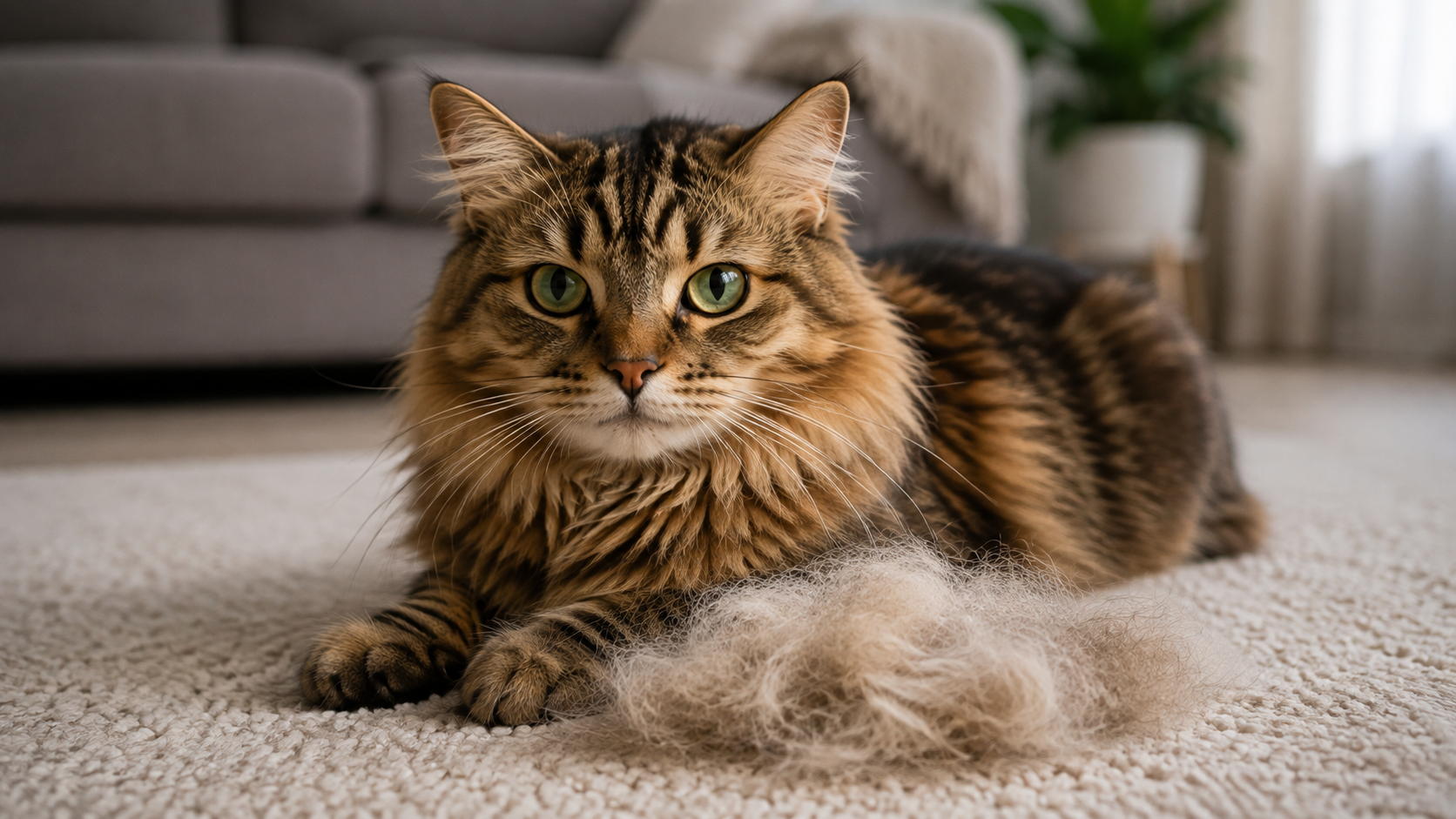
Grooming can contribute to hair in the stomach. Frequent vomiting or repeated hairball-like episodes should not automatically be dismissed as normal.
Dietary Changes
Sudden food changes, table scraps, or foods that do not agree with an individual cat can upset the digestive system. Transition diets gradually when possible.
Gastrointestinal Irritation
Stomach or intestinal irritation can cause vomiting and may occur with diarrhea, appetite changes, or abdominal discomfort.
Foreign Material
String, ribbon, plastic, plants, and small objects can be dangerous if swallowed. Suspected foreign-body ingestion requires veterinary guidance rather than home experimentation.
Underlying Illness
Vomiting can accompany a range of health problems. The pattern and accompanying symptoms help a veterinarian determine what needs investigation.
What Owners Should Record
- Time and number of vomiting episodes.
- Whether the material contains food, liquid, hair, or blood.
- Appetite and water intake.
- Urination and bowel movements.
- Energy level and behavior.
- Any recent diet, medication, plant, or household changes.
What to Do at Home
Keep your cat in a calm, safe environment and provide access to fresh water unless a veterinarian has given different instructions. Monitor behavior and avoid introducing new foods or supplements while the cause is unclear.
Do not give human medications, essential oils, or home remedies unless a veterinarian specifically tells you to use them.
When to Call a Veterinarian
Seek veterinary advice promptly for repeated vomiting, blood in vomit, severe or worsening lethargy, obvious abdominal pain, repeated retching without producing anything, breathing difficulty, collapse, suspected toxin exposure, suspected foreign-object ingestion, or inability to keep water down. Kittens, older cats, and cats with known medical conditions may need a lower threshold for evaluation.
Common Mistakes to Avoid
- Assuming every vomiting episode is a hairball.
- Giving human medication.
- Delaying care when warning signs appear.
- Trying to induce vomiting without professional instruction.
- Making several diet changes at once.
Frequently Asked Questions
Is occasional vomiting normal in cats?
An occasional episode can occur, but frequent or repeated vomiting is not something to routinely dismiss. Your veterinarian can help determine whether the pattern is concerning.
Should I give my cat food after vomiting?
Feeding decisions depend on the cat and the reason for vomiting. If vomiting repeats or your cat seems unwell, contact a veterinarian rather than relying on a generic fasting plan.
When is cat vomiting an emergency?
Repeated vomiting with severe weakness, blood, pain, breathing problems, collapse, suspected poisoning, or possible foreign-body ingestion should be treated as urgent.
Final Thoughts
When asking why your cat is vomiting, focus on frequency, accompanying signs, and possible exposures rather than one symptom alone. Monitor closely and seek veterinary help promptly when warning signs appear.