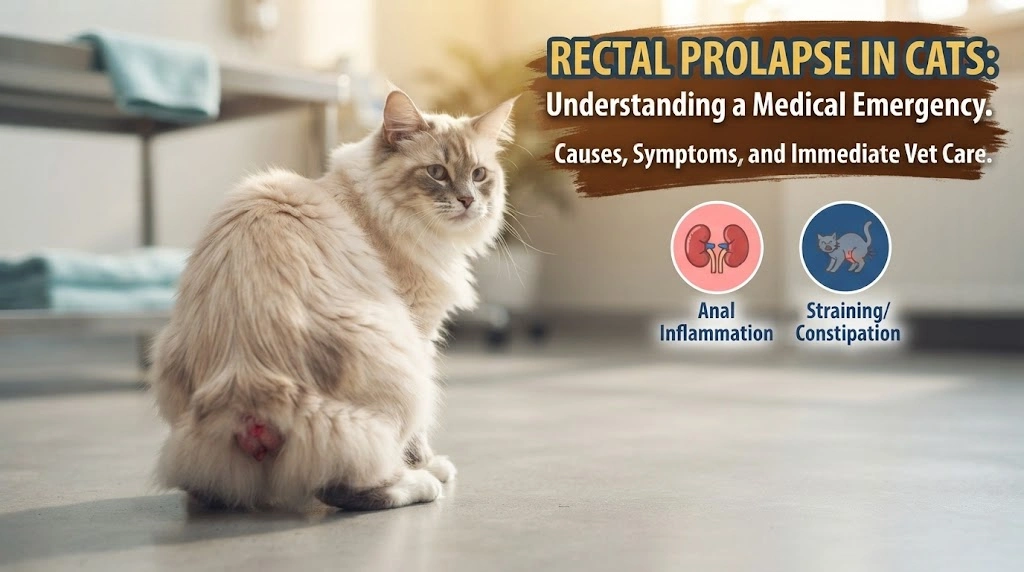
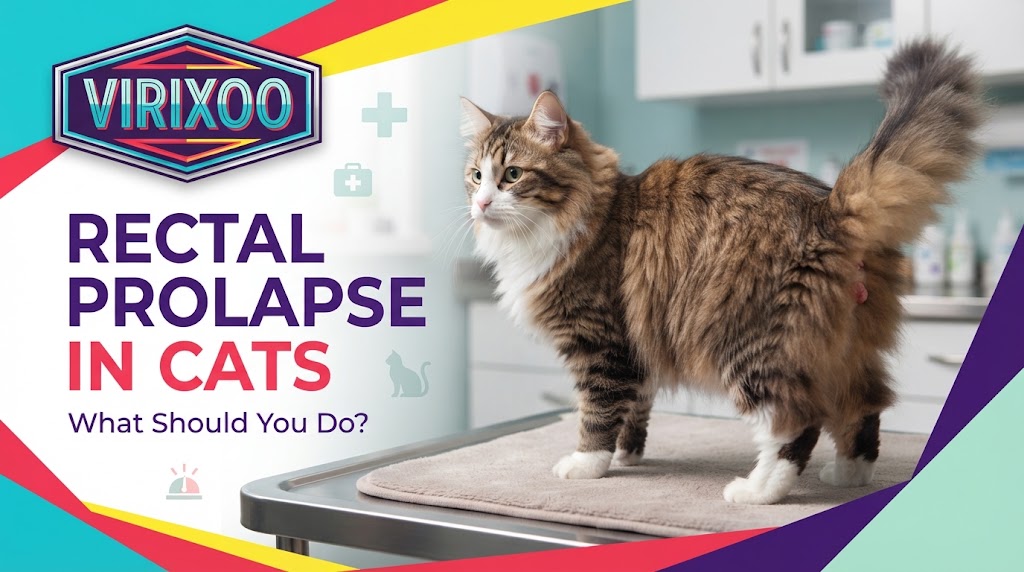
Rectal prolapse in a cat occurs when tissue from the rectum protrudes through the anus. It may look like a pink or red tube, ring, or swollen piece of tissue that remains visible after the cat finishes straining. A true prolapse is not the same as temporary mild swelling after passing stool, and exposed tissue can dry out, become injured, and lose healthy blood flow.
Quick Answer
If tissue is protruding from your cat’s anus and does not quickly return inside, contact a veterinarian promptly. Keep the cat from licking or chewing the area, keep the tissue moist with sterile saline or a water-based lubricant if your veterinarian advises it, and do not attempt to push the prolapse back forcefully. Emergency care is appropriate if the tissue becomes dark purple, black, dry, severely swollen, actively bleeding, or the cat is weak, vomiting, or unable to pass stool or urine.
What Rectal Prolapse Can Look Like
A complete prolapse often appears as a cylindrical piece of moist red or pink tissue extending from the anus. A partial prolapse may look like a smaller ring of tissue that appears during straining and then retracts. Prolapse can be confused with swollen anal tissue, a mass, a rectal polyp, or even a foreign body, so a veterinary examination is needed for confirmation.
Why Cats Develop Rectal Prolapse
Prolapse is usually a consequence of repeated or forceful straining rather than a disease by itself. Severe diarrhea, constipation, intestinal parasites, inflammatory bowel disease, urinary straining, difficult labor, and other conditions can all increase pressure in the abdomen and pelvic area. Young kittens with heavy parasite burdens or prolonged diarrhea may be particularly vulnerable.
Diarrhea and Parasites
Frequent watery stool can cause repeated straining and irritation. Kittens with intestinal parasites may have diarrhea, poor growth, a potbellied appearance, or mucus in the stool. Treating the prolapse without treating the underlying diarrhea or parasite problem increases the chance that it will return.
Constipation and Straining
Hard stool, dehydration, painful defecation, or megacolon can cause prolonged pushing in the litter box. Owners should also remember that urinary obstruction can look like constipation. A male cat repeatedly straining in the litter box without producing urine has a life-threatening emergency, even if the anus looks normal.
Why the Color of the Tissue Matters
| Appearance | What It May Mean |
|---|---|
| Pink or bright red and moist | Freshly prolapsed tissue may still have good blood supply |
| Very swollen or dark red | Increasing inflammation and impaired circulation are possible |
| Purple, gray, or black | Possible severe blood-supply compromise and tissue damage |
| Dry, cracked, or bleeding | Exposed tissue is being injured and needs urgent care |
What You Can Safely Do While Traveling to the Vet
Prevent licking with an appropriately fitted cone if one is available and the cat tolerates it. Keep the cat calm in a carrier with a clean towel. If the clinic instructs you to keep the tissue moist, use sterile saline or a plain water-based lubricant. Do not use alcohol, peroxide, disinfectant, or medicated creams unless specifically directed.
What Not to Do
- Do not pull on the tissue.
- Do not forcefully push it back inside.
- Do not apply ice directly to exposed tissue.
- Do not give human laxatives or enemas.
- Do not assume repeated litter-box straining is only constipation until urine output is confirmed.
What the Veterinarian May Do
The veterinarian will assess the viability of the tissue and search for the cause of straining. Fresh, healthy tissue may sometimes be gently replaced under sedation or anesthesia after swelling is reduced. A temporary purse-string suture may be used around the anus to reduce recurrence while still allowing stool to pass. Damaged or nonviable tissue may require surgery.
Finding the Underlying Cause
Treatment may include fecal testing for parasites, evaluation for diarrhea or constipation, abdominal imaging, blood tests, or assessment of urinary and reproductive disease. The long-term result depends heavily on stopping the straining that caused the prolapse.
After the Prolapse Is Replaced
Follow medication, diet, and stool-softening instructions exactly. The cat may need a softer diet, hydration support, parasite treatment, pain control, or management of gastrointestinal disease. Keep the litter box clean and watch carefully for renewed straining or any tissue reappearing.
When Recurrence Is More Likely
Recurrence is more likely when diarrhea, constipation, parasites, or another source of straining remains active. If even a small amount of tissue begins protruding again, contact the veterinary clinic rather than waiting for it to become larger.
Internal Virixoo Guide
If your cat is straining and you are unsure whether stool or urine is the problem, compare the pattern with our guide on changes in feline urination, while remembering that inability to produce urine is an emergency.
Bottom Line
Rectal prolapse is a visible sign of significant straining and exposed rectal tissue can deteriorate quickly. Keep the tissue protected, prevent licking, avoid forceful home reduction, and arrange prompt veterinary treatment while the underlying cause is investigated.
Why Kittens With Prolapse Need Special Attention
Kittens can dehydrate quickly when diarrhea is severe, and parasite burdens can be heavy relative to body size. A kitten with prolapse plus poor appetite, vomiting, lethargy, or weight loss may need fluids and broader supportive care in addition to treatment of the exposed tissue.
Why Repeated Home Reduction Is a Bad Strategy
Even if tissue can be pushed back temporarily, repeated prolapse means the underlying straining remains unresolved. Each episode can add swelling and tissue damage. Veterinary treatment focuses on both the prolapse and the cause of the pressure.
What to Record Before the Appointment
Note stool consistency, frequency of straining, urine output, appetite, recent deworming, and whether the tissue retracts between episodes. A clear non-graphic photo can help if the prolapse is intermittent, but do not delay transport for documentation.
A Practical Decision Guide
For rectal prolapse in cats, start by deciding whether the change is truly new and whether the cat can still perform basic functions normally. Breathing, walking, eating, drinking, urinating, defecating, grooming, and responding to the environment are more useful than one isolated sign. A cat that becomes weak, painful, unable to urinate, unable to swallow, or neurologically abnormal has moved beyond routine home monitoring.
Next consider speed. A problem that develops over minutes or hours generally deserves more urgency than a stable finding that has looked the same for months. Finally, look for combinations of signs. Pain plus food refusal, weakness plus pale gums, eye change plus vision loss, or swelling plus breathing difficulty are more concerning than a single mild feature.
What to Record Before the Appointment
Write down when the problem began, whether onset was sudden or gradual, and whether it is constant or intermittent. Record appetite, water intake, urination, stool, grooming, sleep, breathing, movement, and behavior. Include recent trauma, falls, fights, medication changes, toxin exposure, weight loss, vomiting, diarrhea, or outdoor access when relevant.
A short photo or video can be useful if the sign comes and goes, but do not provoke pain, force movement, manipulate an injured area, or delay urgent care just to document the problem.
Common Mistakes Owners Make
- Waiting for a dramatic symptom before calling.
- Using leftover medication from another illness.
- Giving human pain medicine.
- Repeatedly touching or testing a painful body part.
- Assuming normal eating means the cat is not in pain.
- Stopping treatment as soon as one visible sign improves.
How to Keep the Cat Comfortable While Waiting
Use a quiet indoor room, minimize unnecessary handling, and keep food, water, and the litter box easy to reach. Prevent access to stairs or high furniture when movement is abnormal. If trauma is suspected, restrict activity. Do not force food, water, exercise, or handling when the cat is distressed.
What Follow-Up Should Focus On
After treatment begins, improvement should involve the whole cat rather than only the visible sign. Appetite, grooming, mobility, litter-box habits, breathing, sleep, and social behavior should move back toward the cat’s normal baseline. Contact the clinic if the original problem returns, new signs appear, or the cat worsens after initially improving.
When to Recheck Even After Initial Improvement
A cat can look better for a few hours while the underlying problem remains. Recheck is appropriate when the sign returns, appetite falls, the cat hides more, breathing changes, mobility worsens, or new pain appears. Follow any scheduled veterinary recheck even if the visible sign seems smaller or less dramatic.
Do not stop prescribed medication early, change the dose, or add supplements without discussing it with the veterinarian. If a new symptom appears after treatment begins, report both the new sign and the timing relative to medication, feeding, or activity changes.
Why Straining Must Be Identified Correctly
Owners often describe any repeated litter-box posture as constipation, but cats can strain because of diarrhea, urinary disease, painful defecation, or reproductive problems. The veterinarian may ask whether stool or urine is actually being produced, how often the cat visits the box, and whether the abdomen seems painful. This distinction matters because a blocked male cat cannot wait for routine constipation care.
Take note of the exact pattern before the visit, but do not delay if the cat is repeatedly straining without producing urine.