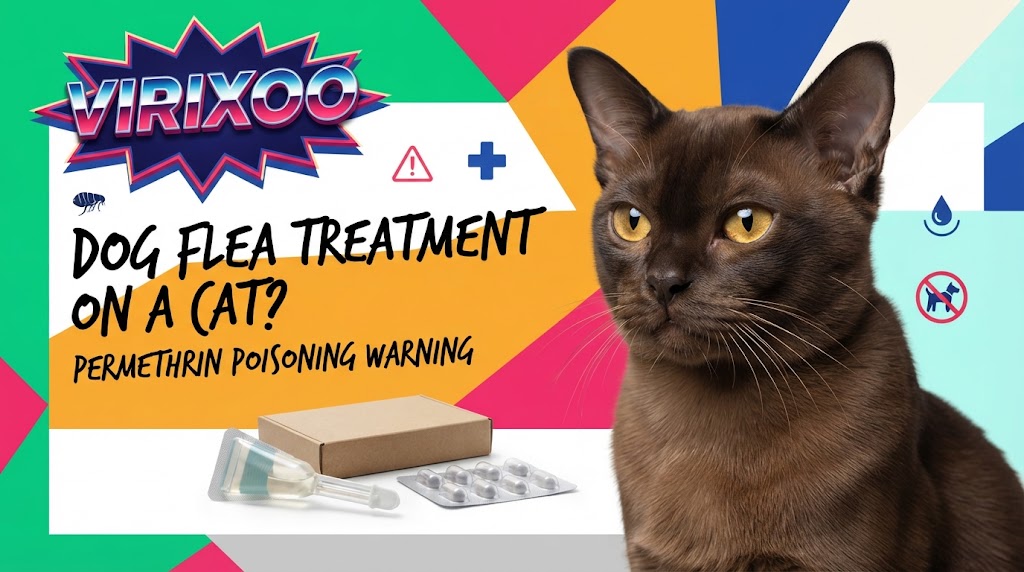
Some flea and tick products made for dogs contain permethrin concentrations that can be extremely toxic to cats. Exposure can occur when a cat is accidentally treated with a dog product or when the cat rubs against or grooms a recently treated dog.
Quick Answer
If a cat has been exposed to a dog flea product containing permethrin, contact a veterinarian or animal poison service immediately. Tremors, twitching, agitation, drooling, difficulty walking, seizures, or abnormal body temperature require emergency care. Do not wait for symptoms if the product label confirms permethrin.
Why Cats Are So Sensitive
Cats metabolize permethrin differently from dogs and can develop severe neurologic toxicity. Products that are safe when used correctly on dogs may therefore be dangerous to cats.
How Exposure Happens
- A dog-only spot-on product is accidentally applied to a cat.
- The cat lies against a recently treated dog.
- The cat grooms the dog before the product dries.
- A household uses an insecticide product incorrectly around the cat.
Early Warning Signs
Signs can include twitching of the ears or skin, muscle tremors, agitation, drooling, sensitivity to touch, wobbliness, and unusual behavior. More severe cases can progress to seizures and dangerous changes in body temperature.
Separate the Cat From the Treated Dog
If exposure came from contact with a recently treated dog, separate the animals to prevent further transfer. Read the product label and have the package available when calling the veterinarian.
Should You Bathe the Cat?
Decontamination can be important after topical exposure, but a trembling or neurologically unstable cat should not be bathed at home because stress and chilling can worsen the situation. Call the veterinary team for instructions based on the cat’s current condition and the product involved.
Why Product Identification Matters
Not every flea medication is the same. The exact active ingredients, concentration, amount applied, and time since exposure determine the risk. Bring or photograph the entire package rather than relying on the brand name alone.
What Not to Do
- Do not wait for tremors to become severe.
- Do not give human sedatives or seizure medication.
- Do not induce vomiting for a topical exposure unless specifically instructed.
- Do not reapply another flea product to “counteract” the first one.
What Veterinary Care May Include
Treatment can involve decontamination, medications to control tremors or seizures, temperature management, fluids, and close monitoring. Cats with severe signs may need hospitalization.
Prevention
Always check that a flea product is specifically labeled for cats before applying it. Store dog and cat products separately, read the active ingredients, and keep cats away from dogs until dog-only topical products are fully dry according to label instructions.
Bottom Line
Permethrin exposure can cause life-threatening neurologic signs in cats. If a dog flea product containing permethrin contacts your cat, seek veterinary or poison-control guidance immediately and bring the product information with you.
Why Tremors Can Escalate
Muscle twitching can progress to continuous tremors or seizures, which increase body temperature and metabolic demand. This is one reason early treatment is valuable before neurologic signs become severe.
What If the Product Was Already Dry?
Risk may be lower after correct drying time, but exposure should still be discussed if the cat groomed the treated dog or develops symptoms. The exact product, concentration, and timing matter.
What to Monitor After Discharge
Watch for renewed twitching, poor coordination, reduced appetite, unusual temperature, or weakness. Complete medications exactly as prescribed and keep the cat away from further product contact.
What to Record Before You Call
For cat exposed to dog flea treatment, write down the exact time the problem or exposure began, what you saw, and whether the cat is getting better, worse, or staying the same. Record appetite, drinking, urination, stool, vomiting, breathing, movement, awareness, and any unusual behavior. For poisoning or foreign-body concerns, keep the product package, plant photo, object description, or medication label available.
Do not delay urgent care to collect perfect information. When a cat is weak, collapsing, struggling to breathe, seizing, repeatedly vomiting, unable to urinate, or rapidly deteriorating, transport takes priority over documentation.
How to Decide Whether Monitoring Is Still Safe
Monitoring is only reasonable when the cat is comfortable, the exposure or behavior has been professionally judged low-risk, and no red flags are present. A cat that becomes quieter may not simply be resting; it may be becoming weaker. Look at the whole cat rather than one visible sign.
If new pain, breathing changes, neurologic signs, food refusal, repeated vomiting, or abnormal urination develops, contact the veterinarian again even if the original sign appears slightly improved.
Common Mistakes to Avoid
- Waiting for severe symptoms after a known high-risk exposure.
- Giving a home remedy before identifying the substance or object.
- Using medication prescribed for another pet.
- Forcing food, water, or handling when the cat is distressed.
- Assuming that normal walking or eating rules out a serious problem.
What Follow-Up Should Focus On
After treatment or professional advice, track whether the cat returns toward its normal baseline. Appetite, grooming, breathing, movement, litter-box habits, and interaction should all be considered. Follow recheck recommendations even when the visible problem seems better, because some toxicities and internal injuries can evolve after the first examination.
Why Early Advice Often Changes the Outcome
Many feline emergencies are easier to treat before severe symptoms develop. Early veterinary or poison-control guidance can determine whether decontamination, imaging, observation, or immediate treatment is appropriate. Waiting until the cat is obviously ill can remove safer or less invasive options.
When in doubt, describe the exact exposure or behavior, the timeline, and the cat’s current condition rather than trying to diagnose the problem yourself.
Why Cats Can Be Exposed Without Direct Application
A common scenario is correct application of a dog-only spot-on followed by close contact between the dog and cat. Cats may sleep together, groom one another, or rub against the application site. Exposure can therefore occur even when the owner never intentionally puts the product on the cat.
How Long Should Cats Be Separated?
Follow the product label and veterinary advice. The important point is that the treated area must no longer pose transfer risk before close contact resumes. Do not guess based only on whether the fur looks dry.
Why Home Sedation Is Dangerous
Tremors and seizures require controlled medication and temperature monitoring. Giving human sedatives or leftover pet medication can worsen respiratory or neurologic problems and may complicate emergency treatment.
Preventing Mix-Ups in Multi-Pet Homes
Keep dog and cat parasite products in separate labeled storage areas, read the species label every time before application, and avoid applying treatments when distracted. If several pets are treated on the same day, record which product went on which animal.
What Improvement Should Look Like
For cat exposed to dog flea treatment, improvement means the cat is returning toward its normal baseline rather than showing only one isolated change. Appetite, grooming, movement, breathing, litter-box habits, awareness, and social behavior should all be considered. If the original sign looks better but the cat becomes weaker, more withdrawn, painful, or unable to perform a normal function, the overall situation is not improving.
Follow any veterinary instructions exactly and complete recommended rechecks. Do not add supplements, human medication, or home remedies unless the veterinary team specifically approves them.
Why Temperature Control Matters During Tremors
Continuous muscle activity can raise body temperature, while aggressive bathing can chill a sick cat. Veterinary teams monitor temperature while controlling tremors and decontaminating safely. This is another reason home treatment is not ideal once neurologic signs begin.
When to Recheck After Treatment
Even after tremors stop, monitor coordination, appetite, body temperature, and behavior. If twitching returns or the cat becomes weak or unusually quiet, contact the clinic. Recovery can require continued observation after the most dramatic signs improve.
When to Call Again After Initial Advice
For cat exposed to dog flea treatment, call the veterinary team again if the cat develops a new symptom, the original sign becomes more frequent or severe, or basic functions change. Important changes include repeated vomiting, food refusal, weakness, abnormal breathing, inability to urinate, severe pain, tremors, seizures, or collapse.
Describe what changed and when it changed. A clear timeline helps the clinic decide whether home monitoring is still appropriate or whether the cat should be examined sooner.
Why Mild Twitching Still Counts
Small ear flicks, skin rippling, or intermittent muscle tremors can be early toxicity signs rather than harmless nervousness. If they appear after a known dog-flea-product exposure, contact the clinic promptly instead of waiting for a full seizure.
Final Safety Check
Before deciding to continue home observation, confirm that the cat is breathing comfortably, walking normally, responsive, and able to eat, drink, urinate, and use the litter box. A change in any of these basic functions can be more important than the original symptom itself. When the situation is time-sensitive or the exposure is known to be high-risk, professional advice should take priority over waiting for visible deterioration.