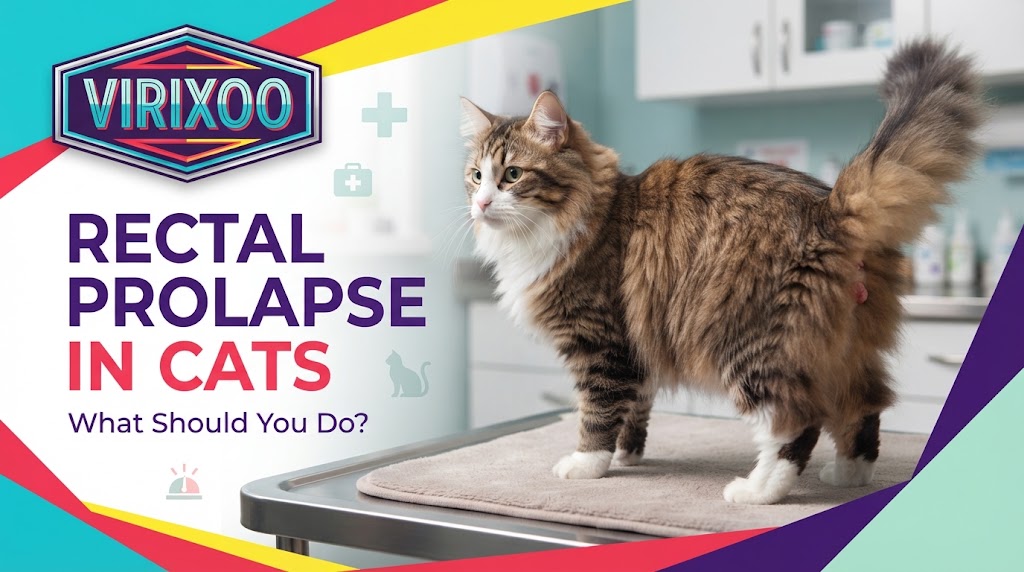
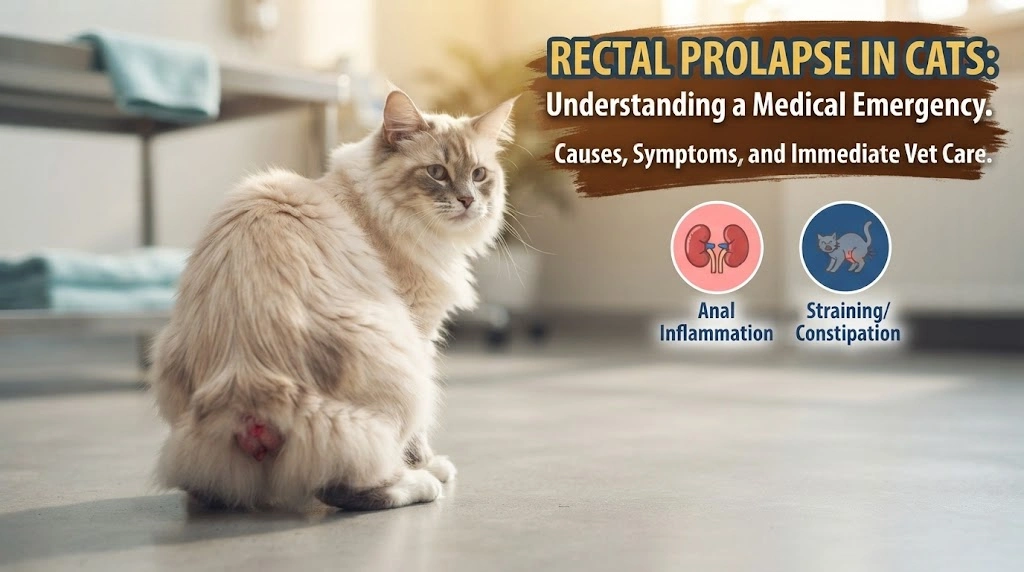
If pink or red tissue is protruding from your cat’s anus, rectal prolapse is an important possibility and veterinary care should be sought promptly. In a prolapse, one or more layers of the rectum extend through the anus after repeated straining. The exposed tissue can quickly become swollen, dry, traumatized, and compromised, so this is not something to push back with your fingers or treat with household creams.
What Rectal Prolapse Looks Like
Merck describes rectal prolapse as a cylindrical mass of rectal tissue protruding through the anus. Early tissue may be moist and pink to red. As swelling and damage progress, it can become darker, dry, ulcerated, or discolored. A small prolapse can still be clinically important because continued straining may make it larger.
Why Straining Causes Prolapse
The common thread is repeated forceful straining, also called tenesmus. Diarrhea, intestinal parasites, constipation, rectal disease, and urinary or reproductive disorders can all contribute. The prolapse is therefore not the entire diagnosis; the reason the cat is straining also needs to be found and treated.
Kittens and Parasites
Young cats with diarrhea or heavy intestinal parasite burdens can strain repeatedly enough to prolapse the rectum. Recently adopted kittens, outdoor kittens, or kittens with persistent diarrhea need fecal evaluation and appropriate veterinary treatment rather than over-the-counter deworming chosen at random.
Constipation Can Also Be a Trigger
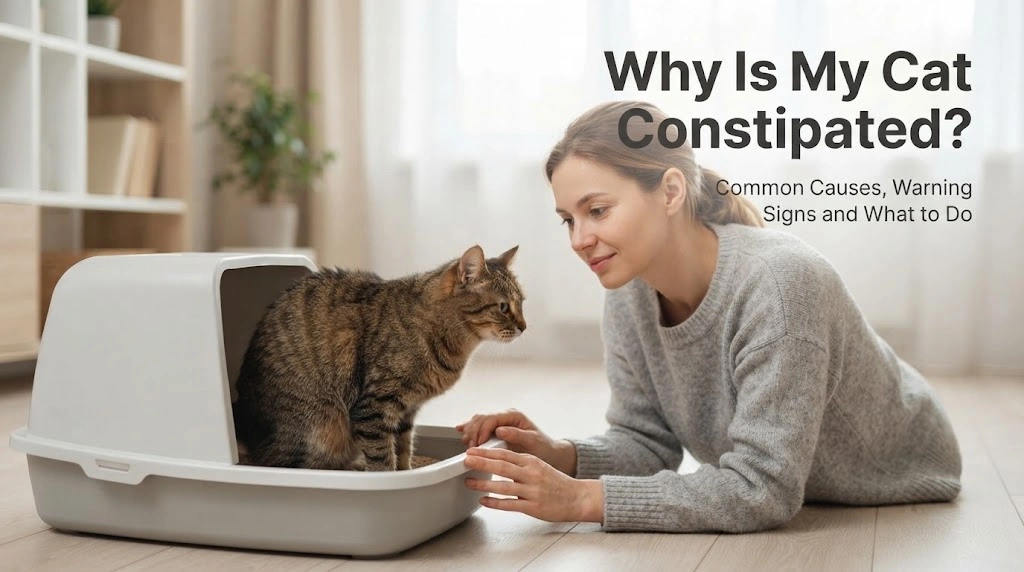
Hard, dry stool can cause prolonged straining. Cats with chronic constipation or megacolon may repeatedly attempt to defecate and place substantial pressure on the rectal tissues. Treating the prolapse without addressing constipation increases the chance of recurrence.
Do Not Forget Urinary Straining
Cats with urinary obstruction may repeatedly strain in the litter box, and owners can mistake this for constipation. Male cats that are producing little or no urine require emergency care. Tell the veterinarian whether you have actually seen urine output, not just litter-box visits.
Why the Tissue Color Matters
Healthy exposed tissue is usually pink to red and moist. Dark purple, black, gray, very dry, or bleeding tissue can indicate severe swelling, trauma, or reduced blood supply and increases urgency. Do not wait for color change before seeking help; early treatment is easier on the tissue.
What to Do Before Reaching the Clinic
Prevent the cat from licking or chewing the tissue. Keep the area as clean as practical without scrubbing. Call the clinic for instructions about keeping exposed tissue moist during transport; they may recommend a specific water-based lubricant or saline approach. Do not apply hemorrhoid cream, steroid cream, disinfectant, sugar, essential oils, or human medication unless a veterinarian explicitly directs you.
Do Not Push It Back Yourself
Reduction may require gentle cleaning, swelling control, pain relief, sedation or anesthesia, and assessment of tissue viability. Forcing swollen tissue through the anus at home can tear it or cause severe pain. A veterinarian may place a temporary purse-string suture after reduction to help prevent immediate recurrence while the underlying cause is treated.
What the Veterinarian Needs to Investigate
The workup may include fecal testing for parasites, assessment of stool consistency, abdominal palpation, rectal examination, urinalysis, and imaging when constipation, megacolon, urinary disease, or a mass is suspected. The cat’s age and history help prioritize causes.
When Surgery May Be Needed
Fresh, viable prolapses can sometimes be reduced without major surgery, but recurrent prolapse, severely damaged tissue, or disease affecting the rectum can require surgical treatment. The earlier the tissue is protected and assessed, the better the chance of avoiding extensive damage.
How to Reduce the Risk of Recurrence
Follow through on treatment for the cause of straining. That may mean parasite control, diarrhea management, constipation treatment, urinary care, or another diagnosis. Monitor litter-box output closely after treatment and contact the veterinarian if straining returns.
A Partial Prolapse Can Be Easy to Miss
Early prolapse may appear only during straining and then retract afterward. Owners may see a small pink ring or tube briefly protrude while the cat defecates. Video can help if the tissue disappears before the appointment, but do not delay care just to capture a recording.
Anal-Sac Disease Can Look Different
Anal-sac swelling usually appears beside the anus rather than as a cylindrical tube emerging from the center. Cats can also develop rectal polyps or masses. Because different anorectal problems can resemble each other, a veterinarian should examine any persistent protruding tissue.
Why Dehydration Can Worsen the Underlying Problem
Diarrhea and repeated straining can dehydrate a cat, while dehydration can worsen constipation. Keep fresh water available and tell the veterinarian about vomiting or poor intake. Do not force water by syringe into a struggling or distressed cat.
Recurrence After Reduction Is Important
If the prolapse returns after being reduced, contact the veterinarian promptly. Recurrence suggests that the underlying cause of straining is still active or that additional surgical support may be needed. Repeated home attempts to replace the tissue increase the risk of trauma.
Post-Treatment Litter-Box Monitoring
After treatment, watch stool consistency, frequency, straining, and urine output. Use a clean box so abnormalities are easy to see. If the veterinarian prescribes stool-softening, antiparasitic, antimicrobial, or other therapy, follow the exact plan and do not stop early merely because the tissue is no longer visible.
Why Protecting the Tissue During Transport Matters
Exposed rectal tissue is vulnerable to drying and trauma. The longer it remains outside the body, the more swelling can develop, which can make reduction harder. Call the veterinary clinic before leaving so they can advise safe transport and prepare for urgent assessment. Prevent the cat from licking or dragging the tissue across rough surfaces.
At the clinic, the veterinarian will judge whether the tissue is still healthy enough to replace. Swelling may need to be reduced, and sedation or anesthesia can help relax the cat and limit pain. A temporary purse-string suture may be used in selected cases, leaving enough space for stool to pass while helping keep the rectum in place.
Long-term success depends on stopping the straining that caused the prolapse. Kittens may need parasite treatment or diarrhea control. Adults may need evaluation for constipation, megacolon, urinary disease, rectal masses, or other disorders. A prolapse that is reduced without treating the cause is more likely to recur.
Bottom Line
Rectal tissue protruding from a cat’s anus is not a normal variation and should be assessed promptly. Protect the tissue from licking and drying, do not force it back, and seek veterinary care. Successful treatment depends on both correcting the prolapse and stopping the underlying cause of straining.