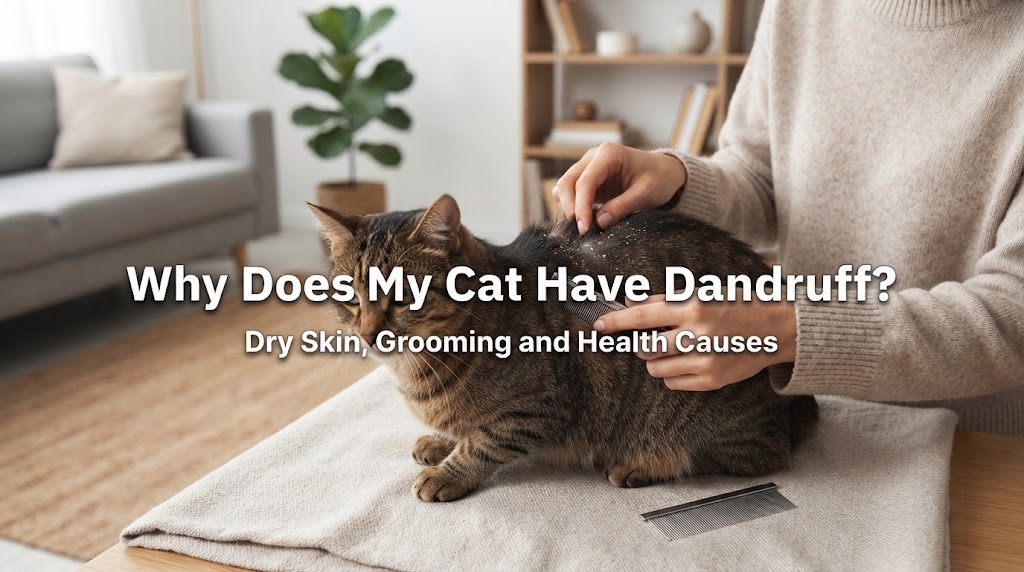
Small white flakes in a cat's coat can be simple surface scaling, but persistent dandruff is best interpreted with the rest of the skin and grooming pattern. Dry indoor air, reduced grooming, obesity, parasites, allergy and skin disease can all contribute. Flakes concentrated over the lower back can be especially noticeable in cats that cannot comfortably reach that area. The useful goal is to identify why scaling increased rather than simply covering the coat with oil.
Quick Answer
Brush gently and look for redness, scabs, greasy skin, hair loss, fleas, intense itching or painful areas. Consider whether the cat has gained weight, is moving less or has stopped grooming normally. Avoid human anti-dandruff shampoo, essential oils and random supplements. Persistent dandruff, significant itch, odor, sores, bald areas or a sudden coat change warrants veterinary assessment.
Why Flakes Appear in a Cat's Coat
Dry environment and normal skin turnover
Low indoor humidity can make mild surface flaking more visible in some cats. If the skin is otherwise calm and the cat is healthy, gentle grooming and environmental review may be enough to start.
Reduced self-grooming
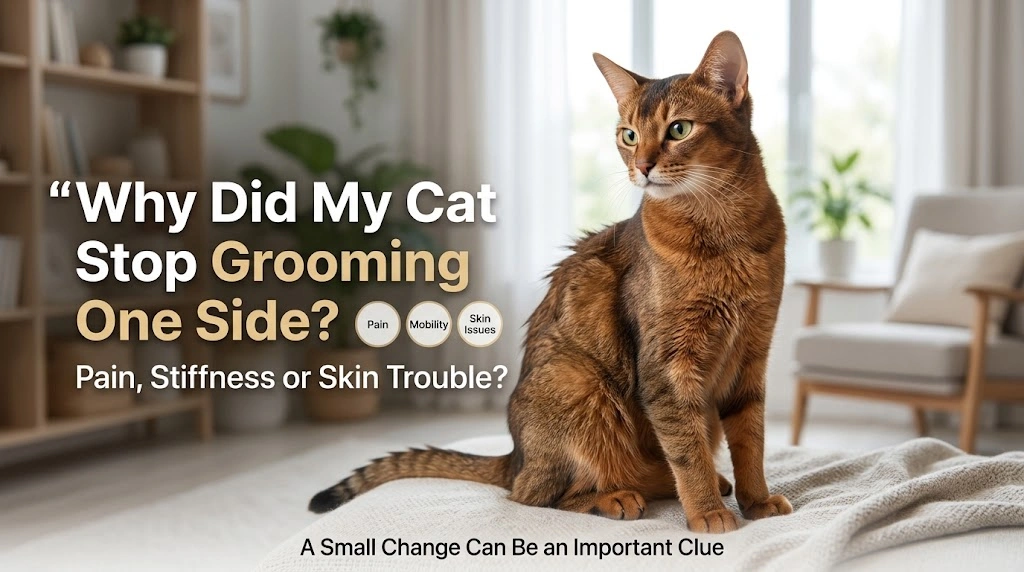
Cats with obesity, arthritis, dental pain or illness may not groom the back and hindquarters effectively. Dandruff in a hard-to-reach area can therefore be a mobility clue rather than just a skin problem.
Parasites
Fleas and certain mites can irritate the skin and alter grooming. Parasites are not always easy to see, so heavy itching or recurring flakes deserve a parasite-control review with your veterinarian.
Allergy or skin inflammation
Allergic skin disease, infection and other inflammatory conditions can cause scaling along with itching, redness, crusts, odor or hair loss. The pattern usually needs diagnosis before choosing treatment.
Nutrition and systemic health
A complete balanced diet supports skin and coat health, but dandruff should not automatically be treated with supplements. Endocrine, metabolic and other health problems can also change coat quality.
What to Do When You Notice Dandruff
Start with observation and gentle coat care.
- Brush the coat in good light and note where flakes are concentrated.
- Part the fur and check for redness, scabs, fleas, wounds or greasy areas.
- Review whether the cat can comfortably reach the back, hips and rear during grooming.
- Confirm the diet is complete and balanced and avoid adding supplements without a reason.
- Use household humidity measures appropriate for people and pets if indoor air is extremely dry.
- Take weekly photos of the same area if the change is mild and you are monitoring it.
- Arrange veterinary care if flakes persist, spread or occur with other skin or health signs.
Clues That Dandruff Is Part of a Bigger Problem
Skin flakes become more meaningful when paired with changes elsewhere.
- Excessive scratching or licking.
- Bald patches or broken hair.
- Redness, odor, greasy coat or crusts.
- Weight gain and difficulty grooming the lower back.
- Reduced jumping or signs of arthritis.
- Weight loss, lethargy or appetite changes.
Dandruff Patterns
Location and symptoms can guide the next question, although they do not provide a diagnosis.
| Pattern | What to Consider |
|---|---|
| Mild flakes, no itch | Dryness or normal scaling possible |
| Flakes over back in overweight cat | Reduced grooming may contribute |
| Flakes plus intense itch | Parasites/allergy/inflammation possible |
| Greasy flakes plus odor | Skin disease/infection possible |
| Flakes plus bald spots | Veterinary skin assessment |
Common Mistakes to Avoid
Do not apply human anti-dandruff shampoo, coconut oil, essential oils or medicated creams without veterinary advice. Oily products can be licked, mat the coat and hide skin changes. Avoid frequent bathing as a default solution because it may worsen dryness or irritation.
When to See a Veterinarian
Book an exam for persistent or worsening dandruff, significant itching, hair loss, sores, odor, greasy skin, parasites or a decline in self-grooming. In an older or overweight cat, also mention mobility and jumping changes because pain can make normal grooming difficult.
Related Virixoo Guides
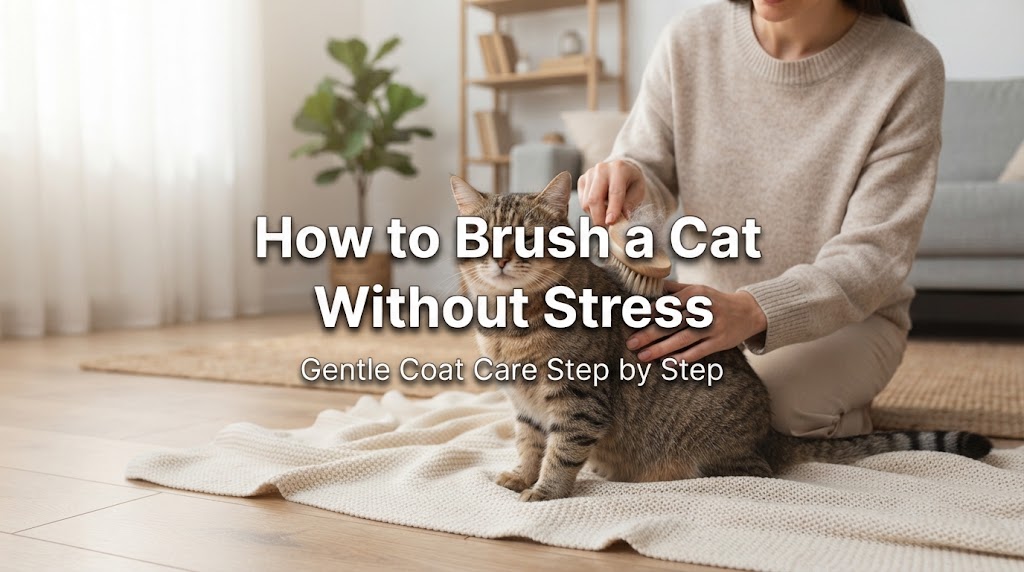
For better coat maintenance, read How to Brush a Cat Without Stress. For hair loss, see Why Is My Cat Losing Hair?.
Brush the Area, Then Recheck the Skin
After a gentle brushing session, wait a day or two and see how quickly flakes return. If dandruff immediately rebuilds in one location, look more carefully for reduced grooming, greasy skin, redness or discomfort there. Diffuse mild flakes during a very dry season may behave differently from a concentrated patch over the lower back. This simple follow-up helps you describe the pattern accurately to your veterinarian.
Do Not Chase Dandruff With Supplements
Fatty acids and other nutrients matter for skin health, but more is not automatically better. Complete commercial diets are formulated to supply required nutrients, and adding supplements can alter calorie intake or nutrient balance. If a veterinarian suspects a nutritional issue, use a specific plan rather than stacking several coat products. Persistent dandruff is a reason to investigate skin and grooming, not a reason to create a supplement collection.
Seasonal Flakes Still Need Context
If dandruff appears only during a dry season and the cat remains comfortable, well groomed and free of skin lesions, monitoring may be reasonable. But “seasonal” should not become a label that hides worsening itch or hair loss. Compare photographs and grooming behavior from week to week and reassess if the pattern changes.
Bottom Line
Dandruff is most useful as a clue. Look underneath the flakes at skin comfort, parasites, grooming ability and overall health, and treat the cause rather than coating the fur with a cosmetic fix.