
A coughing cat is often described as “trying to bring up a hairball,” even when nothing comes up. True coughing originates from the airways and can occur with feline asthma, airway inflammation, infection, parasites and other lung or heart-related problems. Because the body posture can resemble gagging, a short video is one of the most useful things an owner can collect for a veterinarian.
Quick Answer
During an episode, keep your cat calm and watch breathing rather than reaching into the mouth. Note whether the cat crouches low, extends the neck, coughs repeatedly, wheezes or swallows afterward. Record a video if it is safe. Recurrent coughing deserves veterinary evaluation. Open-mouth breathing, blue or gray gums, severe effort to breathe, collapse or inability to settle because of breathlessness is an emergency.
Common Reasons Cats Cough
Feline asthma
Asthma causes inflammation and narrowing of the lower airways. Cats may cough, wheeze, breathe faster or work harder to breathe. Some crouch with the neck extended during an episode. Asthma cannot be diagnosed from the cough alone because other diseases can mimic it.
Chronic airway inflammation
Bronchial inflammation can produce repeated coughing even when a cat appears normal between episodes. Environmental smoke, aerosols and dusty conditions may worsen respiratory irritation, but removing irritants does not replace a medical workup.
Respiratory infection or pneumonia
Infectious disease can involve the respiratory tract and may cause cough along with feverish behavior, low appetite, lethargy, nasal discharge or difficult breathing. Pneumonia is uncommon but potentially serious.
Parasites and other lung disease
Certain parasites and other pulmonary disorders can cause signs that resemble asthma. Travel, geographic location, outdoor hunting and prevention history can all matter to a veterinarian investigating recurrent cough.
Hairball retching that looks like coughing
Hairballs usually involve gastrointestinal retching and may eventually produce hair or stomach contents. A respiratory cough often produces repeated forceful expirations without a hairball. Videos help because descriptions alone frequently blur the two.
Cough, Hairball Retching or Breathing Trouble?
The distinction matters because an airway problem should not be repeatedly treated as a hairball issue without evidence.
| What You See | Possible Interpretation | Response |
|---|---|---|
| Low crouch, neck extended, repeated cough | Lower-airway problem possible | Record and arrange vet assessment |
| Abdominal retching followed by hair/vomit | Hairball or gastrointestinal event more likely | Monitor frequency; discuss if recurrent |
| Cough plus wheeze or fast breathing | Respiratory disease more concerning | Veterinary assessment promptly |
| Open-mouth breathing at rest | Respiratory distress | Emergency |
| One brief isolated cough, then normal | May be transient | Monitor for recurrence |
What to Do During and After a Coughing Episode
Minimize stress and collect objective information.
- Stop active play and allow the cat to remain in a comfortable position.
- Avoid smoke, incense, aerosol sprays and strong cleaning fumes around the cat.
- Film the full body and sound from a safe distance if the episode repeats.
- Count resting breaths when your cat is fully asleep and discuss persistently elevated rates with your veterinarian.
- Write down frequency, duration and whether exercise, dust or another trigger preceded the cough.
What to Track Before the Vet Visit
A respiratory history helps your veterinarian decide whether imaging or other testing may be needed.
- Number of coughing episodes per day or week.
- Whether any hair, foam or vomit is actually produced.
- Wheezing, rapid breathing or increased abdominal effort.
- Indoor smoke, candles, dusty litter or recent respiratory exposure.
- Appetite, weight, energy and outdoor hunting history.
What Not to Do
Do not give human cough syrup, decongestants, inhalers or leftover antibiotics. Do not press on the throat to reproduce a cough. If your cat has known asthma, follow the veterinarian's existing action plan rather than changing medication on your own.
When to Contact a Veterinarian
Recurrent coughing, even in a cat that seems normal between episodes, should be discussed with a veterinarian. Examination and chest imaging may be needed because asthma is only one of several possible causes.
When It Is an Emergency
Open-mouth breathing, blue or gray gums, collapse, marked abdominal effort, a cat that cannot lie down comfortably, or rapidly worsening breathlessness requires emergency veterinary care.
Related Virixoo Guides
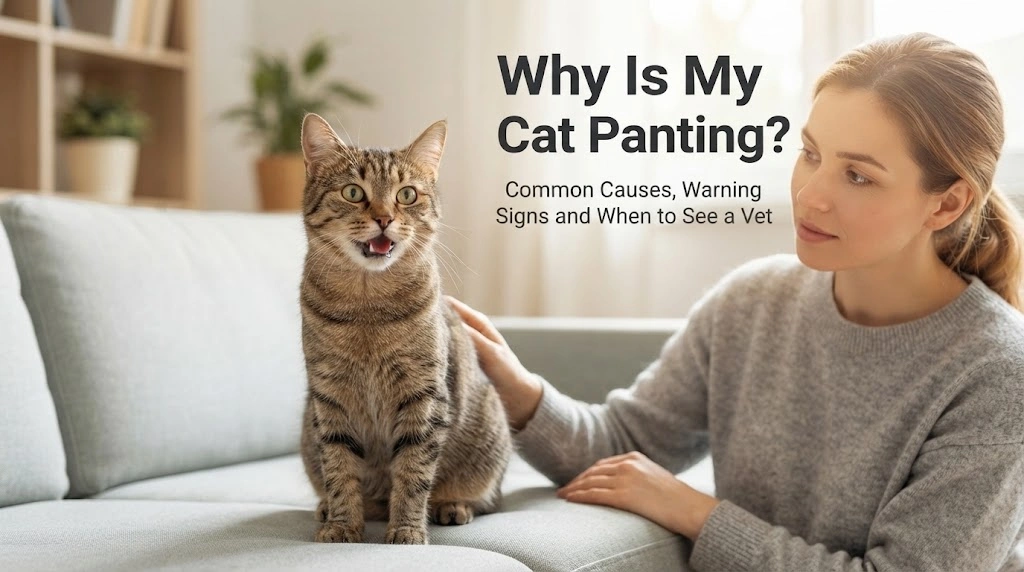
If your cat is breathing with the mouth open, read Why Is My Cat Panting?. If episodes are actually vomiting, see Why Is My Cat Vomiting?.
Build a Useful Cough Record
Because cats may not cough during an appointment, a simple home record can be extremely valuable. Note the date, approximate number of coughs, duration and what the cat was doing beforehand. Film the whole body from the side when safe so the veterinarian can see posture and abdominal movement, not just hear the sound. Mention whether the episode produces hair, foam or food and whether the cat returns immediately to normal. Also record exposure to smoke, fireplaces, scented sprays, dusty renovation work or a recent litter change. These observations do not diagnose asthma, but they help distinguish a recurring airway pattern from occasional retching.
Why “It Must Be a Hairball” Can Delay Care
A cat with chronic airway disease may cough for weeks while owners wait for a hairball that never appears. If your cat repeatedly assumes the same crouched posture and nothing is produced, treat the pattern as a respiratory question. Likewise, do not assume that a young indoor cat cannot have lung disease. Age, lifestyle and normal behavior between episodes do not rule out asthma or another airway problem.
Bottom Line
Do not assume every hacking episode is a hairball. Recurrent true coughing is a respiratory sign worth investigating, and any evidence of breathing distress should be treated as urgent.