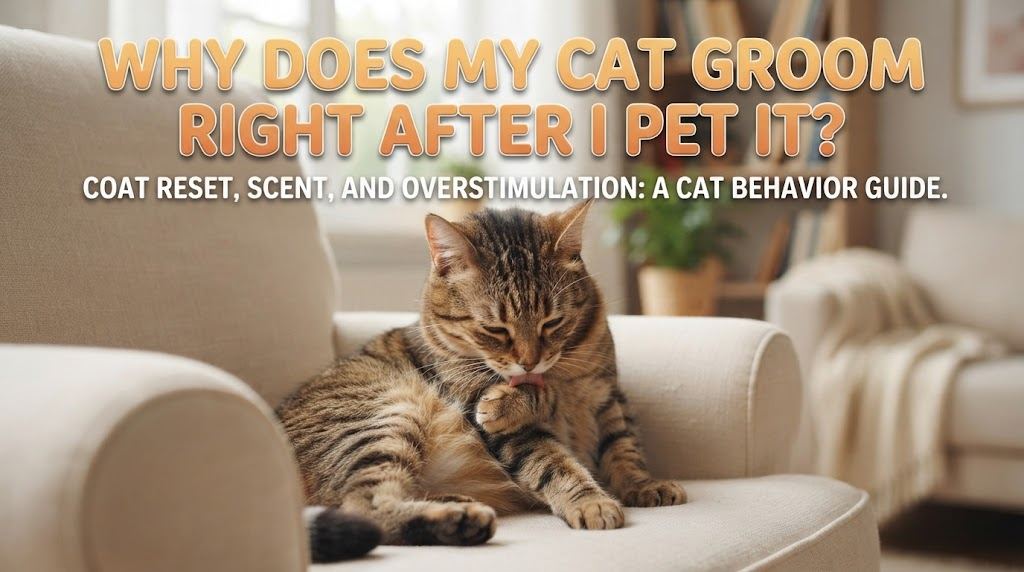
It can feel like an insult: you pet your cat, stop, and the cat immediately licks the exact area you touched. In most cases, that interpretation gives the behavior more human meaning than it needs.
Quick Answer
A cat may groom after petting because the fur has been moved, because grooming is part of a normal transition between activities, or because licking helps the cat settle after stimulation. Brief relaxed grooming is very different from frantic licking, hair loss, skin damage or a painful reaction to touch.
Petting Changes the Coat
Hands flatten, separate and reverse hairs. A cat may simply groom the area back into its preferred arrangement. If the cat remains beside you, has loose body language and grooms calmly for a short time, there is little reason to interpret the behavior as rejection.
Scent May Be Part of the Reset
Cats live in a scent-rich world. Touch transfers odor and changes the smell and feel of the coat. Grooming may be part of returning the fur to a familiar sensory state, but it is too strong to say that every cat is deliberately “washing your smell off.”
Grooming Can Mark the End of an Interaction
Cats frequently move from resting to social contact to grooming and back to rest. A short grooming session can simply be the next behavior in the sequence. In some cats it may also help lower arousal after an exciting or prolonged interaction.
Read Relaxed Grooming and Overstimulation Differently
| Usually less concerning | Needs closer attention |
|---|---|
| Slow, ordinary grooming | Sudden frantic licking |
| Cat remains relaxed nearby | Tail lashing or skin twitching |
| No skin damage | Bald patches, sores or broken hair |
| No sensitivity when touched | Flinching, biting or pain over one area |
| Behavior ends naturally | Cat repeatedly returns to the same spot |
Use Grooming as Feedback About Petting
Notice which body areas you touched and how long the session lasted. Many cats prefer cheek, chin and head contact and may tolerate long strokes over the body less well. Keep sessions shorter and pause before the cat becomes tense. Let the cat reinitiate contact when possible.
When Grooming Is No Longer Just a Behavior Question
Cornell notes that excessive licking can occur with itch, pain and stress, and the location of licking can provide a clue even though causes overlap. A cat that suddenly licks one spot whenever it is touched may be reacting to discomfort rather than simply resetting the coat.
Arrange veterinary assessment for hair loss, red or damaged skin, parasites, wounds, sudden touch sensitivity, persistent overgrooming, or grooming that interferes with normal eating, sleep or activity.
Do Not Punish Normal Grooming
There is no need to interrupt a relaxed cat simply because it grooms after you touch it. Punishment can add stress to an otherwise normal behavior. If the cat has reached its limit for contact, the most useful response is to stop and give it space.
Related Virixoo Guides
If your cat directs grooming toward you, read why cats lick people. If petting ends in a warning strike, see why cats swat during touch. If grooming suddenly becomes uneven on one side of the body, read why one-sided grooming changes deserve attention.
Bottom Line
Grooming after petting usually reflects coat maintenance, scent adjustment or a transition out of social contact—not a personal rejection. The behavior becomes more important when it is sudden, frantic, focused on one painful area or damaging the coat or skin.