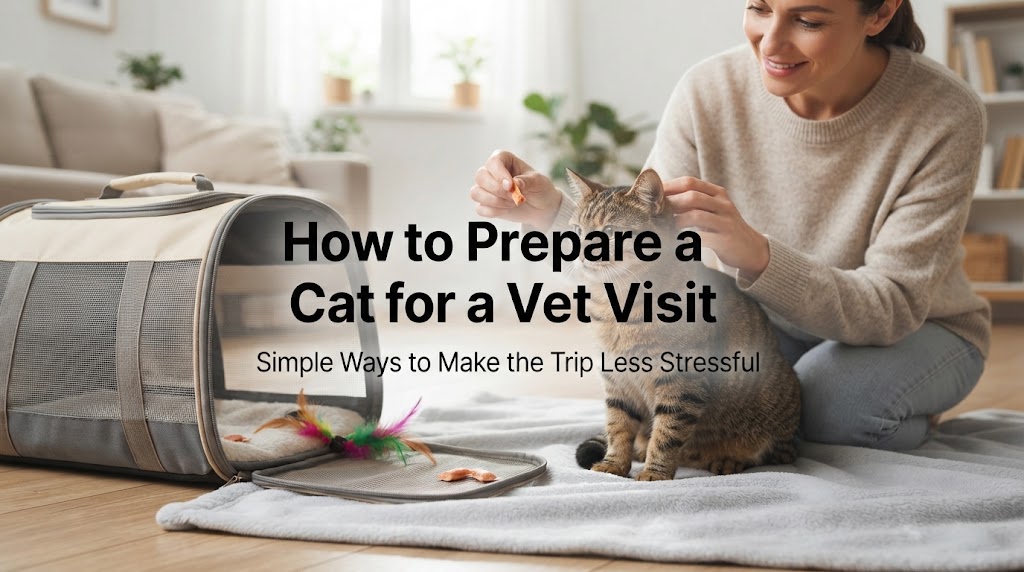
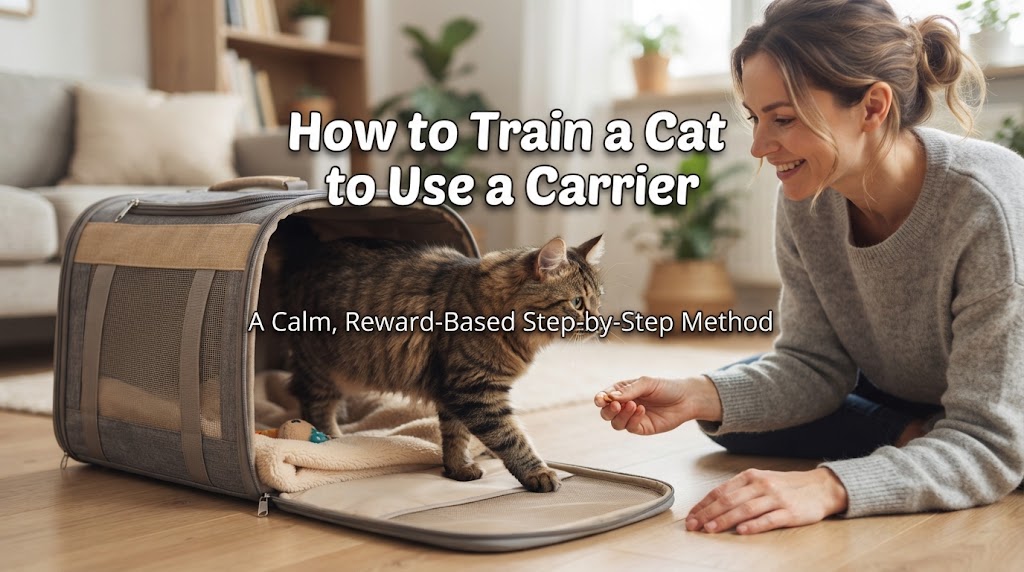
Many cats dislike carriers because the carrier appears only before an unpleasant car ride or veterinary visit. That makes the object itself a predictor of stress. Carrier training changes the association by making the carrier a normal piece of furniture and teaching the cat, in tiny steps, that entering it leads to comfort and rewards. The goal is not to force a cat into a box faster; it is to make voluntary entry and calm confinement increasingly ordinary.
Quick Answer
Leave a sturdy carrier open in a room your cat uses every day. Add familiar bedding and occasionally place treats or meals near, then inside, the carrier. Once the cat enters comfortably, practice closing the door for a second, reopening it and rewarding calm behavior. Build duration, then lifting, then very short car experiences. If your cat panics, go back several steps instead of forcing the session.
Why Cats Learn to Fear the Carrier
It predicts rare stressful events
If the carrier comes out only for vet visits, its appearance becomes an early warning. Keeping it visible between trips breaks that pattern and gives the cat many neutral or pleasant experiences with it.
Being forced inside creates conflict
Chasing, grabbing and pushing a frightened cat through a small door can make the next attempt harder. Training works better when the cat can approach, investigate and retreat while the carrier is not moving.
Unstable movement feels unsafe
A carrier that swings by its handle or slides in the car can be frightening. A sturdy carrier with good ventilation and a removable top is easier to handle and can allow some cats to remain in the lower half during an examination.
Unfamiliar smells matter
Cats rely heavily on scent. Familiar bedding can make the carrier smell like home, while a carrier stored in a garage or closet may smell strange when it suddenly reappears.
A Six-Stage Carrier Training Plan
Move forward only when the current stage looks easy. A few calm repetitions are more useful than one long session that ends in fear.
- Place the open carrier in a quiet familiar room and do nothing else for several days. Let the cat discover it without being approached or trapped.
- Put a familiar blanket or small bed inside. Toss treats near the entrance, then gradually farther inside. Allow the cat to leave immediately.
- Feed part of a meal near the carrier and, if comfortable, just inside it. Do not close the door yet.
- When the cat willingly enters, touch the door, then close it for one second and reopen it. Reward calm behavior.
- Increase closed-door time gradually. Next, lift the carrier from underneath for a second, set it down and reward. Avoid swinging it by the handle.
- Practice very short movements through the home, then brief calm car sessions before you need a real appointment.
Set the Carrier Up for Success
Carrier design and location can reduce avoidable stress.
- Choose a carrier large enough for the cat to turn around and lie comfortably.
- A removable top and more than one opening can make handling easier.
- Keep the carrier out year-round when practical.
- Use washable familiar bedding with the cat's scent.
- Secure the carrier in the vehicle so it stays level and does not slide.
- If you have multiple cats, transport each cat in a separate carrier.
How to Know When to Advance
Body language tells you whether the exercise is still within the cat's comfort zone.
| What You See | Meaning | Next Step |
|---|---|---|
| Walks in, eats, explores | Comfortable | Repeat then increase difficulty slightly |
| Pauses but accepts treats | Mild uncertainty | Stay at current stage |
| Flattens body, ears back, tries to flee | Too difficult | Open access and go back a stage |
| Pants, thrashes or injures itself | Severe distress | Stop and contact veterinarian for a travel plan |
Common Mistakes to Avoid
Do not wait until the morning of an appointment to begin training. Avoid chasing the cat around the house, tipping the carrier vertically as a routine strategy, shutting the door the first time the cat enters, or using the carrier as punishment. If medication has been prescribed for travel stress, use it exactly as directed and test the plan when your veterinarian recommends.
When to Get Professional Help
If your cat remains severely frightened despite gradual training, has a history of panic in the car, becomes motion sick, or is impossible to transport safely, talk with your veterinarian before the next visit. A tailored pre-visit plan may combine behavior work, carrier setup and prescribed medication.
Related Virixoo Guides
For the next stage, read How to Prepare a Cat for a Vet Visit. If your cat hides when unfamiliar people arrive, see Why Does My Cat Hide From Visitors?.
A Two-Week Practice Example
For the first few days, reward only approaching and entering the stationary carrier. In the middle of the week, begin one-second door closures and reopen before the cat asks to leave. During the second week, add slightly longer closed-door periods, then a lift of a few centimeters, a short walk across the room and finally a calm trip to the parked car. This schedule is only an example; a fearful cat may need much longer at each stage. If the cat stops taking treats, freezes, pants or tries frantically to escape, the current step is too difficult. Return to the last easy stage instead of finishing the planned schedule.
Bottom Line
Carrier training works best when the carrier stops being an emergency-only object. Keep it familiar, reward voluntary choices, progress in tiny steps and practice before the day you actually need to travel.