Cats can learn a recall cue just as they learn the sound of a food container or a familiar routine. The key is to make one word or sound consistently predict something worthwhile. A useful recall is not about dominance or obedience; it is a voluntary behavior built through repetition. It can help with meal routines, moving a cat away from a doorway and finding a cat who is resting somewhere in the home.
Quick Answer
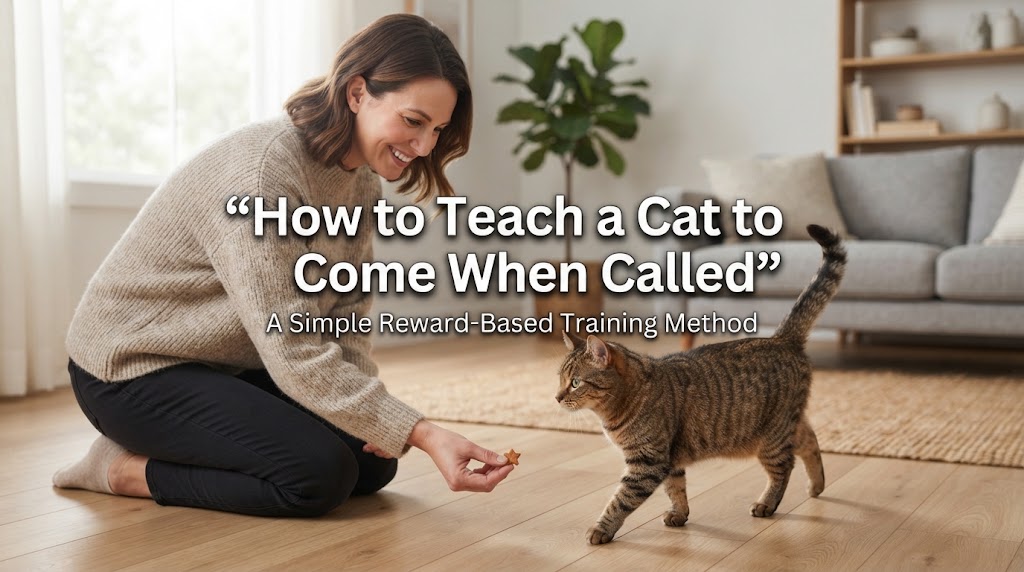
Choose one short cue you do not use casually. Begin only a few feet away in a quiet room. Say the cue once, then immediately offer a high-value reward when the cat moves toward you. Release the cat after the reward so coming to you does not always end fun. Gradually add distance, different rooms and mild distractions. Never use the cue to repeatedly call the cat for unpleasant handling.
What Makes Recall Training Work
A clear cue
A name can work, but names are often used all day in many contexts. A special word, whistle or tongue click may be easier to keep meaningful.
Immediate reinforcement
The reward should arrive as the cat reaches you. Delayed rewards make it less clear which behavior earned the payoff.
Short successful repetitions
Cats often learn better in brief sessions. Three good recalls can be more productive than twenty repetitions after motivation has faded.
A strong reward history
Use food, play or another reward the individual cat genuinely values. The reward should be especially good when you are adding distance or distractions.
Step-by-Step Recall Training
Build the behavior indoors before expecting it to work around exciting distractions.
- Stand a few feet from your cat when the cat is awake and relaxed. Say your chosen cue once.
- Make it easy to succeed at first by showing a treat or taking a small step backward. Reward as soon as the cat reaches you.
- Repeat two or three times, then end the session before the cat loses interest.
- Start calling from slightly farther away and from different positions in the same room.
- Practice from an adjacent room when the cat is already likely to respond. Reward generously for finding you.
- Add everyday distractions one at a time. If response becomes slow, reduce difficulty instead of repeating the cue.
- Occasionally reward and then release the cat back to what it was doing so recall does not predict the end of play or freedom.
Use Recall as Part of Daily Life
Natural routines create useful practice without turning the day into constant training.
- Call before a meal once the behavior is established.
- Practice before opening an interior door, not a dangerous exterior door.
- Use a short play session as the reward for play-motivated cats.
- Ask family members to use exactly the same cue.
- Keep rewards available in several safe locations during the learning phase.
Why a Cat May Ignore the Cue
A failed recall usually means the environment is currently more rewarding or the cue has not been trained at that difficulty.
| Situation | Likely Issue | Adjustment |
|---|---|---|
| Responds in kitchen only | Context-specific learning | Practice in more rooms |
| Comes when treat is visible only | Food has become the cue | Hide reward until response |
| Ignores cue during play | Distraction too strong | Practice farther from play |
| Stops responding after several repetitions | Session too long | Use fewer recalls |
Common Mistakes to Avoid
Do not shout the cue repeatedly, chase the cat after calling, or punish a slow response. Avoid using recall every time you trim nails, give medication or end a favorite activity. Never treat an indoor recall as proof that a cat can safely be off leash outdoors; unexpected sounds and prey can overwhelm even a well-practiced cue.
When to Get Professional Help
A sudden loss of response in a cat who previously came reliably may reflect hearing change, pain, illness or reduced motivation. If it accompanies other behavior or health changes, discuss it with your veterinarian rather than assuming stubbornness.
Related Virixoo Guides
For indoor enrichment that can also serve as reinforcement, read How to Keep an Indoor Cat Mentally Stimulated. For nail handling, see How to Trim Cat Nails Safely.
How to Proof the Cue Without Ruining It
Once the cat responds reliably across the home, vary one difficulty at a time. Call from farther away while the room is quiet, or keep the distance short while a mild distraction is present. Reward the hardest successful recalls especially well. Practice when you do not urgently need the cat so a missed response is only training information, not a crisis. In a multi-cat home, train individually at first so one fast cat does not collect every reward. When both understand the cue, you can decide whether each cat needs a different sound or whether a shared recall is practical.
Use an Emergency Recall Carefully
Some households create a second, rarely used cue paired with an exceptional reward. The cue is practiced occasionally but protected from everyday use. It can be useful when a cat is near an open door or another indoor hazard, yet it is still not a substitute for physical barriers. Training improves your options; it does not make windows, balconies or outdoor traffic safe.
Keep the Cue Valuable Over Time
After recall is reliable, practice only occasionally in easy situations and continue to reward. Vary the payoff between a favorite treat, a short toy chase and access to a desired activity. Do not let the cue become background noise by saying it repeatedly when you have no way to reinforce the response. If reliability slips, return to shorter distance and richer rewards for several sessions.
Bottom Line
A strong recall is built by making coming to you consistently worthwhile. Protect the cue, reward generously and increase difficulty slowly rather than testing the cat before the behavior is ready.