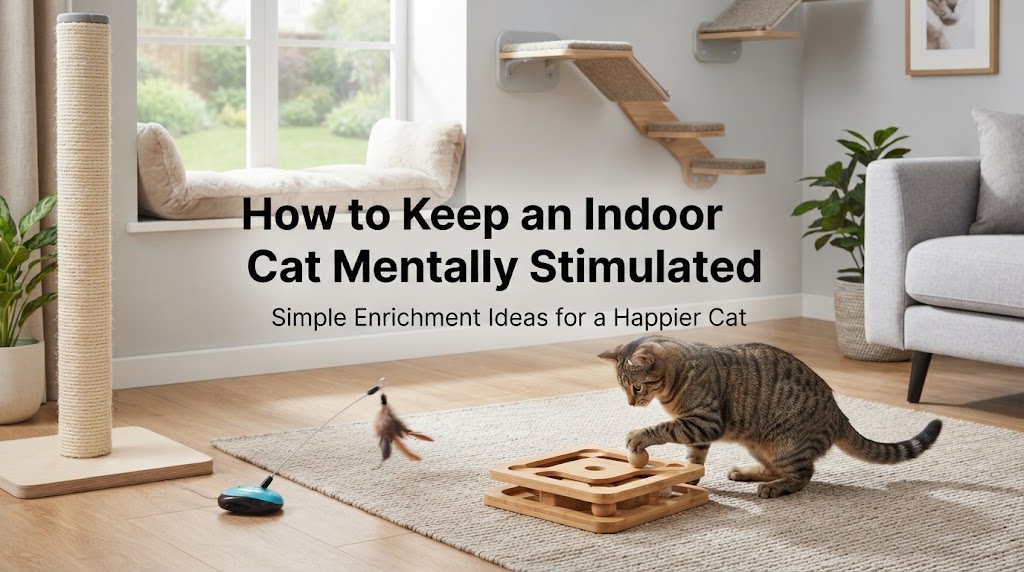
Indoor life protects cats from many outdoor hazards, but a safe home can still become monotonous when food always appears in one bowl and the environment rarely changes. Enrichment does not mean filling the house with expensive toys. It means creating regular opportunities to stalk, chase, climb, scratch, search, hide, smell, watch and choose. The best activities resemble natural feline behavior and can be adjusted to age, mobility and personality.
Quick Answer
Aim for several short interactive play sessions, access to elevated resting places, sturdy scratching surfaces, hiding options and safe opportunities to search for part of the daily food. Rotate toys rather than leaving everything out permanently. Let the cat catch the toy during hunting games so play has a satisfying endpoint. Increase complexity gradually and count food used in puzzles as part of the daily ration.
What Indoor Cats Need to Do
Hunt and capture
Interactive wand toys can imitate prey when they move away, pause, hide and allow a final capture. Constantly waving a toy in the cat's face is less natural than a hunt sequence.
Climb and observe
Vertical space increases usable territory and lets a cat watch without being in the middle of household traffic. Older cats may need steps or lower platforms.
Scratch and mark
Scratching stretches the body, maintains claws and leaves visual and scent information. Offer sturdy surfaces where the cat naturally wants to scratch.
Search and forage
Food puzzles, scatter feeding or hiding small portions can make eating more active. Start easy so the activity creates success rather than frustration.
Retreat and choose
Enrichment also includes control. A cat needs places where it can rest without being followed, handled or interrupted.
Build a Daily Enrichment Rhythm
Variety matters more than constant intensity.
- Schedule a short hunting-style play session before one or two meals.
- Offer part of the daily ration in an easy food puzzle or a few hidden stations.
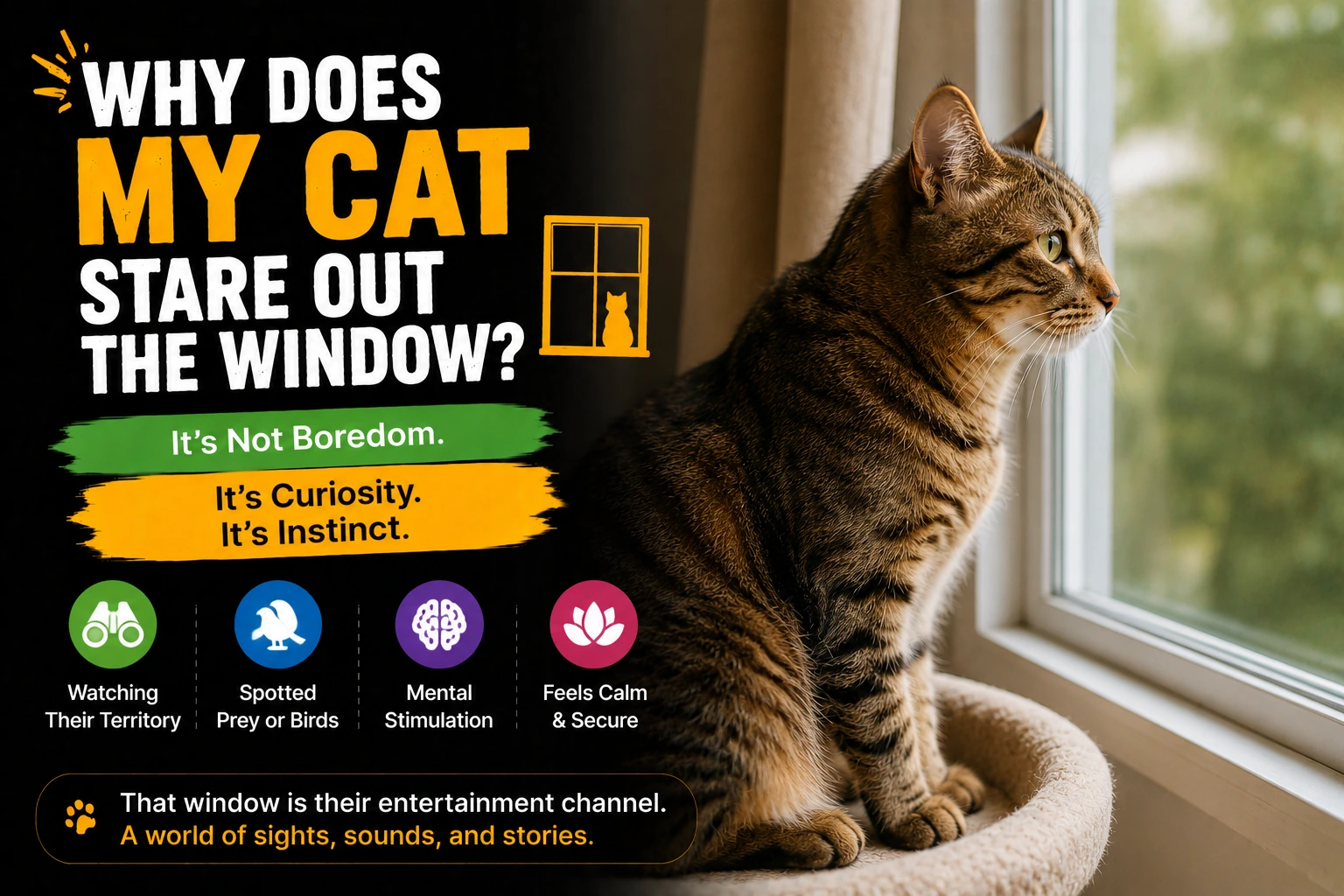
- Open access to a secure window view or elevated perch for visual observation.
- Rotate two or three toys every few days while storing the rest out of sight.
- Add cardboard boxes, paper bags without handles or safe tunnels as temporary novelty.
- Use two-minute training sessions for recall, target touching or carrier entry.
- Finish the day with a calm predictable activity that helps the cat settle.
Enrichment for Different Cats
A senior cat and a young athlete may want very different versions of the same activity.
- For kittens, use frequent short play and protect hands from rough play.
- For adults, combine hunting games with climbing and food-search tasks.
- For seniors, use low-impact toys, ramps and accessible warm perches.
- For multi-cat homes, provide individual play so one cat does not monopolize the toy.
- For shy cats, place enrichment near secure hiding and escape routes.
Is Your Enrichment Working?
Good enrichment produces engagement without leaving the cat persistently frustrated or exhausted.
| What You See | Interpretation | Adjustment |
|---|---|---|
| Stalks, chases, catches, then settles | Good play sequence | Repeat |
| Walks away quickly | Toy/style not motivating | Change movement or timing |
| One cat blocks another | Resource competition | Separate sessions |
| Puzzle causes frantic pawing | Too difficult | Make food easier to access |
| Activity suddenly drops | Possible health change | Consider veterinary check |
Common Mistakes to Avoid
Avoid laser-only play without a physical capture opportunity, string toys left unsupervised, forcing a cat onto equipment, or adding calories through treats without adjusting meals. Do not assume destructive or withdrawn behavior is always boredom; pain and illness can also reduce or alter activity.
When to Get Professional Help
A sudden reduction in play, jumping, grooming or exploration can be an early sign of pain or illness, particularly in older cats. Discuss meaningful activity changes with your veterinarian rather than trying to solve them only by buying more toys.
Related Virixoo Guides
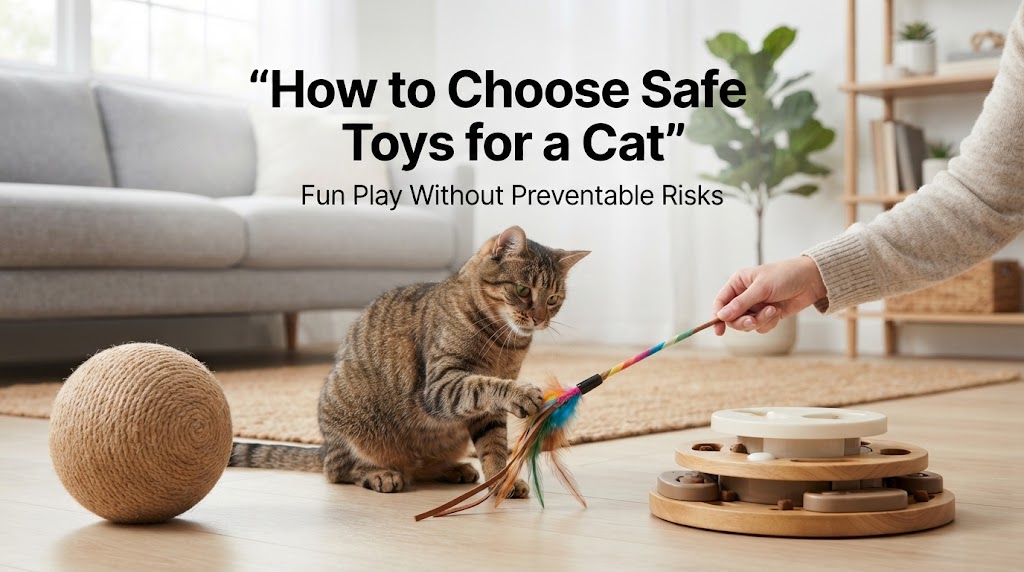
For safe product choices, read How to Choose Safe Toys for a Cat. If your cat prefers boxes, see Why Do Cats Love Boxes?.
Build Enrichment Around the Cat's Natural Schedule
Many cats are most interested in activity around dawn and dusk, although household routines shape individual patterns. Offer hunting-style play when your cat naturally becomes active rather than repeatedly waking a sleeping cat. Follow a successful chase with a small meal or part of the daily ration, then allow rest. This hunt-eat-rest rhythm can be more satisfying than random stimulation all day. Keep some quiet periods truly quiet; constant novelty can be stressful rather than enriching.
Use Novelty Without Rearranging the Whole Territory
Rotate one element at a time: a box in a new location, a different toy movement, a scent-safe object from another room or a puzzle that is slightly more challenging. Cats often value familiarity, so enrichment should add choices without removing favorite beds, scratching posts or routes. If your cat ignores a new item, leave it nearby without pressure or simply try a different activity later.
Track Which Activities Your Cat Actually Chooses
Keep a simple list for a week: wand play, puzzle feeding, window watching, climbing, cardboard exploration and training. Note which activities your cat starts or returns to voluntarily. This prevents enrichment from becoming a collection of things humans find entertaining but the cat ignores. Use the favorites more often and rotate lower-interest activities rather than constantly buying new products.
Bottom Line
Mental stimulation is not a single toy—it is a daily environment that lets a cat make choices and perform cat-like behaviors. Short, varied, safe opportunities are usually better than constant entertainment.