A cat rolling onto its back can look like an invitation for a belly rub, but that is not always what the cat means. The position can reflect relaxation, play, stretching, scent marking, or a social greeting. Read the entire body before reaching in.
A relaxed cat with loose limbs and soft eyes may simply feel safe. Many cats still dislike belly touching because the abdomen is sensitive. Let the cat choose the next interaction.
Common Reasons Cats Roll Over
Relaxation
Exposing the belly can happen when a cat feels secure in the environment.
Play
Rolling may be part of wrestling or toy play.
Stretching
Cats often twist and roll after sleeping.
Attention
If rolling earns interaction, the behavior can become a greeting routine.
Is the Belly an Invitation?
Sometimes, but not reliably. Many cats tolerate chest or cheek contact better than direct belly touching. Watch for tail flicking, grabbing, kicking, or sudden tension.
How to Respond
- Pause and observe.
- Offer a hand near the cheek rather than the belly.
- Use a toy if the cat appears playful.
- Stop when the body becomes tense.
When to Investigate
Repeated rolling with signs of pain, skin irritation, balance problems, or unusual vocalization deserves veterinary attention.
The Belly Is Information, Not Automatic Permission
Rolling onto the back can occur during relaxed greeting, stretching, play, or defensive preparation. The position exposes the abdomen, but that does not mean every cat wants that sensitive area touched. A loose body, soft eyes, and relaxed paws suggest a very different interaction from flattened ears, rapid tail movement, grabbing, or hind-leg kicking.
Let the Next Movement Guide You
Pause after the roll. If the cat leans toward your hand, rubs its cheek, or remains loose, gentle contact around the head or shoulders may be welcome. If the cat stiffens, hooks your hand with the front paws, kicks, or turns away, stop. This approach reduces bites because you are responding to the cat in front of you rather than to a rule about what a belly display must mean.
When Rolling Is Not Just Social Body Language
Repeated rolling accompanied by intense scratching, biting at the skin, loss of balance, pain, or distressed vocalization is different from a relaxed greeting. Those signs justify veterinary evaluation because skin irritation, discomfort, or neurologic problems can also change body movements.
Related Virixoo Guides
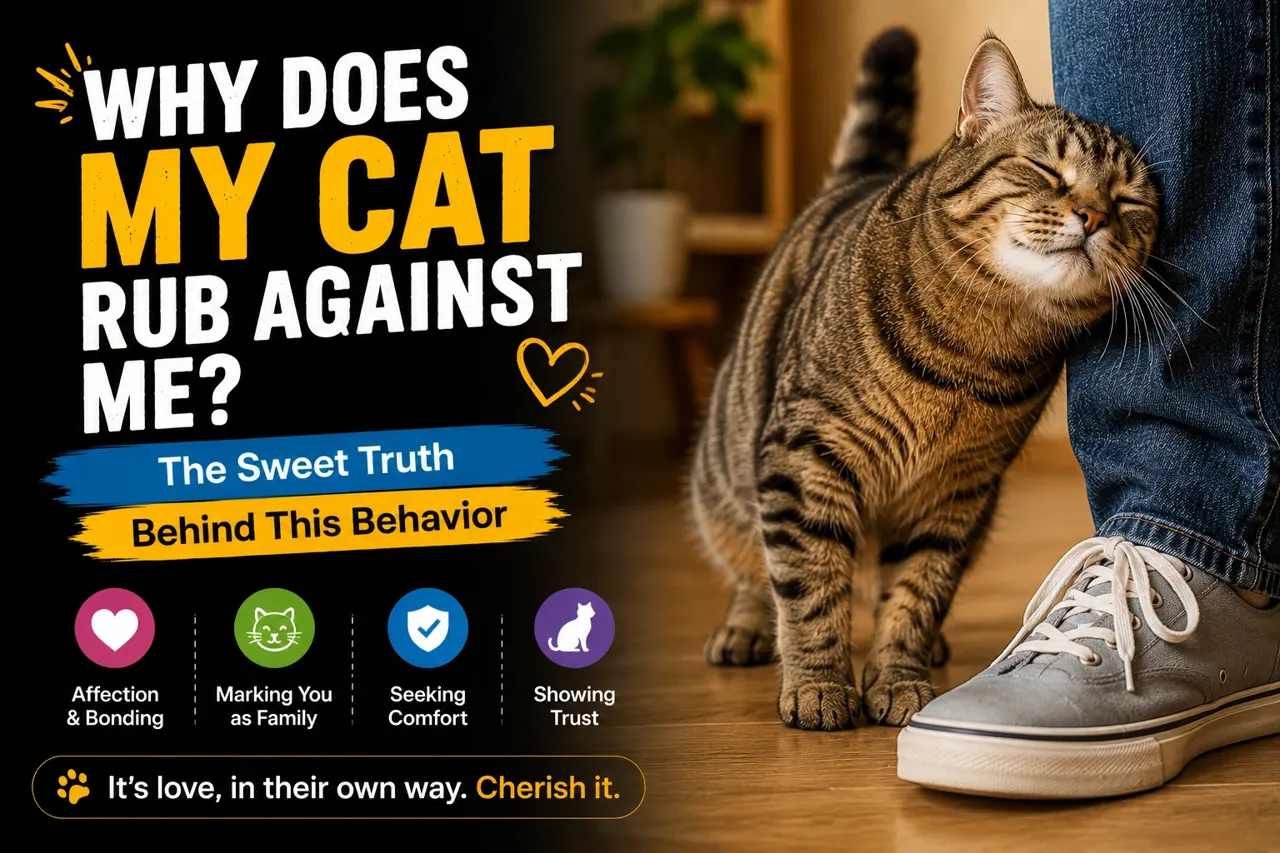
Read why cats stretch when they see their owners. Read why cats stare at their owners. Read why cats rub against their owner’s legs.