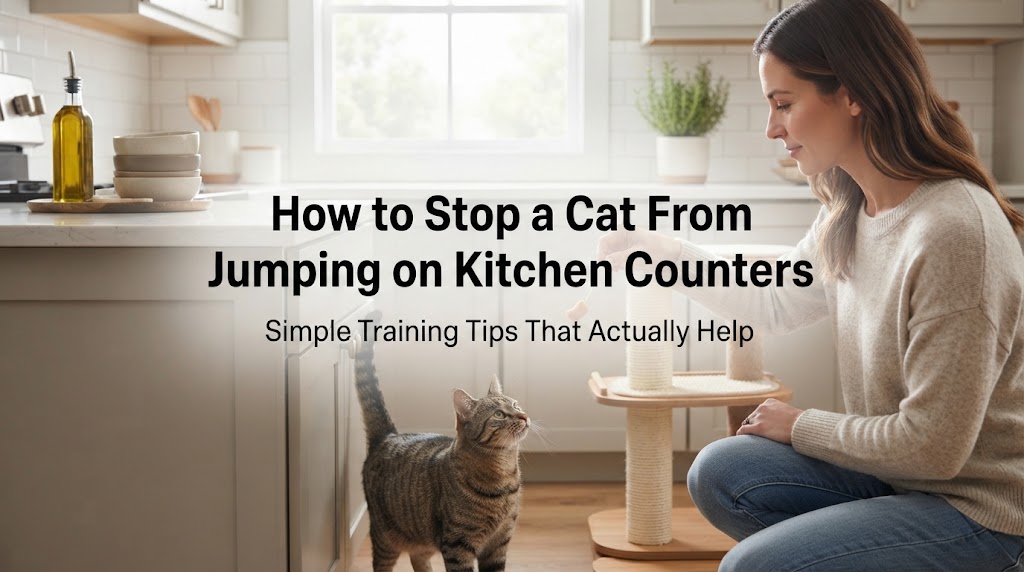
Kitchen counters attract cats for several normal reasons: they are elevated, often smell like food, provide a good view and may place the cat close to a person who is preparing meals. Punishment does not remove any of those rewards and can simply teach the cat to jump up when nobody is watching. A better plan changes the environment, prevents food jackpots and gives the cat a legal high place that pays well.
Quick Answer
Keep counters completely free of food and interesting scraps, block access when you cannot supervise, and place a stable cat tree or perch near—but not connected to—the work area. Reward the cat for using that perch. During food preparation, give the cat an activity there or use a separate room if needed. Avoid spray bottles, yelling and frightening deterrents; they can add stress without teaching an alternative.
Why Cats Choose Counters
Height feels useful
Elevated places let cats watch a room while staying away from foot traffic. If the counter is the best available lookout, repeatedly removing the cat does not solve the underlying preference.
Food rewards are powerful
One forgotten piece of chicken can reinforce many unrewarded jumps. Counter jumping becomes persistent when food appears unpredictably.
The counter is socially important
People spend time preparing meals there. A social cat may jump up because that is where attention, movement and interesting smells are concentrated.
The route has become a habit
Chairs, stools and appliances can create an easy path upward. Repeated successful access makes the location part of the cat's routine.
A Practical Counter-Training Plan
Management and reinforcement need to happen together.
- Remove all edible rewards, dirty dishes, food packaging and crumbs from reachable surfaces.
- Choose an attractive legal perch with enough height, stability and room for the cat to sit comfortably.
- Reward the cat for stepping onto and remaining on the perch when the kitchen is quiet.
- Begin simple meal preparation while delivering occasional treats or play on the perch before the cat jumps toward the counter.
- If the cat jumps up, calmly guide or lure it off without a dramatic reaction, then reinforce the legal location.
- Use a gate, closed door or separate enrichment activity when you cannot supervise cooking safely.
- Keep the system consistent for weeks; intermittent access to food can restart the habit.
Make the Legal Choice Better
The best alternative competes with the same reasons the counter is attractive.
- Provide height and a clear view of the room.
- Place the perch outside the hot cooking zone.
- Offer a puzzle feeder or small part of the daily ration there.
- Keep stools and chairs away from counters if they form an easy ladder.
- Secure dangerous foods, knives, hot pans and medications regardless of training progress.
Troubleshooting Counter Jumping
Look at what the cat gains each time rather than labeling the behavior as disobedience.
| Problem | Likely Payoff | Better Strategy |
|---|---|---|
| Jumps only while cooking | Food and social activity | Station on perch before cooking starts |
| Jumps when alone | Food residue or habit | Clear counter and block access |
| Ignores low cat bed | Counter offers height | Provide taller stable perch |
| Returns after being sprayed | Original reward still exists | Remove reward and reinforce alternative |
Common Mistakes to Avoid
Avoid spray bottles, shouting, pushing, sticky traps or startle devices that make the environment unpredictable. Do not reward a counter jump by immediately producing food to lure the cat off every time; teach and reward the alternative position before the jump occurs.
When to Get Professional Help
If counter seeking suddenly becomes much more intense along with extreme hunger, weight loss or other behavior changes, consider a health problem rather than treating it only as training. A veterinarian should evaluate unexplained appetite or weight changes.
Related Virixoo Guides
If your cat seems constantly hungry, see Why Is My Cat Always Hungry?. For broader enrichment, read How to Keep an Indoor Cat Mentally Stimulated.
Measure Progress by What Happens Before the Jump
Do not judge the plan only by whether you catch the cat on the counter. Count how often the cat chooses the legal perch during cooking, how long it stays there and whether it checks the counter when nobody is preparing food. A week with fewer attempts is meaningful progress even if the behavior is not gone. If jumps continue, search for hidden rewards: a bread bag, a dripping faucet, a warm appliance or the chance to watch a window. The cat is telling you what the counter still provides.
Food Safety Makes Management Non-Negotiable
Training should never be the only barrier between a cat and hot pans, sharp knives, medication or foods that may be unsafe. Clear the work surface, use lidded containers and close the kitchen when necessary. A well-trained cat can still make an impulsive jump when a new smell appears, so physical prevention remains part of responsible training.
Plan for the Hours You Are Not Watching
Counter habits often survive because the cat gets occasional access at night or while the household is away. Before bed, remove food, wash dishes, secure trash and leave an attractive legal perch elsewhere. If one warm appliance remains irresistible, block access safely rather than testing whether the cat will resist. Consistent nights and unsupervised periods matter as much as training sessions because a single food jackpot can renew persistent checking.
Bottom Line
Counter jumping decreases when the counter stops paying and an appropriate high place becomes more rewarding. Prevention, consistency and a good alternative work better than punishment.