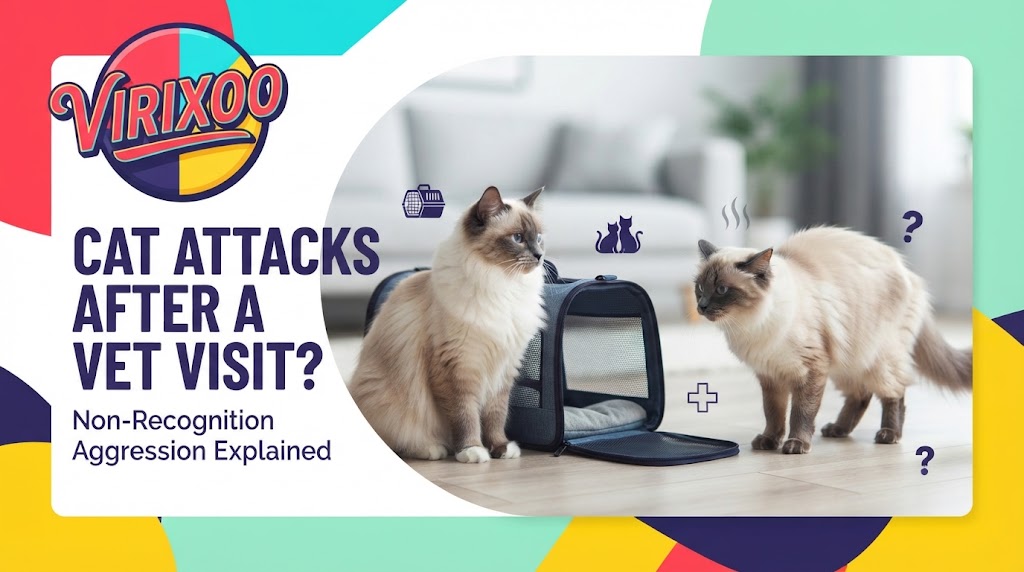
A cat that suddenly hisses at or attacks a familiar housemate after a veterinary visit may be reacting to unfamiliar scent and stress rather than forgetting the relationship. This pattern is often called non-recognition aggression. The returning cat can smell like disinfectant, medication, other animals, or the clinic environment, making the resident cat react as if a stranger entered the home.
Quick Answer
Do not force the cats together. Separate them calmly if there is hissing, stalking, chasing, or fighting. Give the returning cat time to settle and allow both cats to regain normal scent cues. Reintroduce them gradually using distance, food, scent exchange, and short calm sessions.
Why the Vet Visit Changes Scent
Cats rely heavily on scent for social recognition. The returning cat may carry odors from the clinic, alcohol, disinfectant, medication, stress sweat, or unfamiliar animals. Grooming may also be reduced if the cat is sedated or uncomfortable.
Stress Affects Both Cats
The cat returning home may be frightened, painful, or groggy. The resident cat may become alarmed by unusual posture, movement, or odor. This combination can trigger defensive behavior from either cat.
Separate Before a Fight Escalates
If either cat is staring, growling, blocking movement, chasing, or swatting repeatedly, use a door or barrier to separate them. Do not reach between fighting cats with bare hands.
Give the Returning Cat Recovery Time
Place the returning cat in a quiet room with food, water, litter, bedding, and a hiding place. Allow anesthesia or medication effects to wear off and give the cat time to groom and recover normal body odor.
Scent Exchange
Once both cats are calm, swap bedding or gently rub a clean cloth on the cheeks of one cat and place it near the other. The goal is gradual familiarity, not forcing direct contact.
Use Food at a Comfortable Distance
Feed the cats on opposite sides of a closed door or barrier at a distance where both can eat calmly. Over repeated sessions, reduce distance only while body language remains relaxed.
Signs You Are Moving Too Fast
- Hard staring
- Growling or prolonged hissing
- Tail lashing
- Stalking
- Blocking doors or litter boxes
- Chasing
- Fighting
Do Not Punish Hissing
Hissing is communication. Punishment can add stress and make the other cat’s presence predict something unpleasant. Increase distance instead.
What If the Cats Fight?
Use a barrier such as a door, large piece of cardboard, or blanket to interrupt visual contact if safe. Do not grab cats with your hands during an active fight. Give them a longer cooling-off period before trying again.
How Long Can It Last?
Mild cases may settle within hours, while some cats need several days of gradual reintroduction. If aggression is severe, repeatedly returns after vet visits, or causes injury, ask your veterinarian or a qualified behavior professional for a structured plan.
Prevention for Future Vet Visits
For bonded cats, some households transport both cats together when appropriate, while others use familiar bedding in the carrier and allow the returning cat to settle before reintroduction. Ask your veterinarian what approach fits your cats and medical needs.
When Medical Pain Is Part of the Problem
The returning cat may react defensively because it hurts. If aggression is paired with limping, hiding, vocalization, appetite loss, or other pain signs, contact the veterinarian rather than treating it only as a relationship issue.
Bottom Line
Post-vet aggression is usually driven by scent change, stress, and altered behavior. Separate the cats before conflict escalates, allow recovery, rebuild familiar scent gradually, and reintroduce at a pace where both cats remain calm.
Why Bringing Both Cats to the Vet Is Not Always the Answer
Some households find that transporting bonded cats together reduces scent mismatch, but this is not appropriate for every medical visit or every pair of cats. A sick or stressed cat may need quiet isolation. Ask your veterinarian whether shared transport makes sense for your cats.
Use Barriers Before Face-to-Face Contact
Baby gates, cracked doors, or screens can allow scent and visual exposure without direct access. Begin only when both cats can eat, groom, or relax near the barrier without hard staring or stalking.
When Professional Help Is Appropriate
If conflict causes injury, lasts for many days, spreads to litter-box guarding or resource blocking, or occurs after every veterinary visit, a veterinarian or qualified behavior professional can help design a structured reintroduction plan.
What to Record Before You Call
For cat attacks other cat after vet visit, write down the exact time the problem or exposure began, what you saw, and whether the cat is getting better, worse, or staying the same. Record appetite, drinking, urination, stool, vomiting, breathing, movement, awareness, and any unusual behavior. For poisoning or foreign-body concerns, keep the product package, plant photo, object description, or medication label available.
Do not delay urgent care to collect perfect information. When a cat is weak, collapsing, struggling to breathe, seizing, repeatedly vomiting, unable to urinate, or rapidly deteriorating, transport takes priority over documentation.
How to Decide Whether Monitoring Is Still Safe
Monitoring is only reasonable when the cat is comfortable, the exposure or behavior has been professionally judged low-risk, and no red flags are present. A cat that becomes quieter may not simply be resting; it may be becoming weaker. Look at the whole cat rather than one visible sign.
If new pain, breathing changes, neurologic signs, food refusal, repeated vomiting, or abnormal urination develops, contact the veterinarian again even if the original sign appears slightly improved.
Common Mistakes to Avoid
- Waiting for severe symptoms after a known high-risk exposure.
- Giving a home remedy before identifying the substance or object.
- Using medication prescribed for another pet.
- Forcing food, water, or handling when the cat is distressed.
- Assuming that normal walking or eating rules out a serious problem.
What Follow-Up Should Focus On
After treatment or professional advice, track whether the cat returns toward its normal baseline. Appetite, grooming, breathing, movement, litter-box habits, and interaction should all be considered. Follow recheck recommendations even when the visible problem seems better, because some toxicities and internal injuries can evolve after the first examination.
Why Early Advice Often Changes the Outcome
Many feline emergencies are easier to treat before severe symptoms develop. Early veterinary or poison-control guidance can determine whether decontamination, imaging, observation, or immediate treatment is appropriate. Waiting until the cat is obviously ill can remove safer or less invasive options.
When in doubt, describe the exact exposure or behavior, the timeline, and the cat’s current condition rather than trying to diagnose the problem yourself.
Why the Returning Cat May Also Become Aggressive
The cat that visited the clinic may be painful, disoriented, or frightened. If the resident cat approaches too closely, the returning cat may hiss or swat defensively. This does not necessarily mean the relationship has permanently changed.
How to Use Scent Without Forcing Contact
Swap bedding, rotate rooms, and allow each cat to investigate the other’s scent without direct confrontation. Avoid rubbing one cat directly with the other if either is tense. The goal is calm exposure, not scent masking.
Resource Setup During Reintroduction
Provide separate food, water, resting areas, hiding places, and litter boxes so neither cat must pass the other to meet basic needs. Resource competition can turn temporary non-recognition aggression into a longer conflict.
Signs the Cats Are Ready for More Contact
Relaxed posture, normal eating, grooming, play, and the ability to look away from the other cat are good signs. Hard staring, stalking, tail lashing, blocking, or repeated growling mean more distance is needed.
What Improvement Should Look Like
For cat attacks other cat after vet visit, improvement means the cat is returning toward its normal baseline rather than showing only one isolated change. Appetite, grooming, movement, breathing, litter-box habits, awareness, and social behavior should all be considered. If the original sign looks better but the cat becomes weaker, more withdrawn, painful, or unable to perform a normal function, the overall situation is not improving.
Follow any veterinary instructions exactly and complete recommended rechecks. Do not add supplements, human medication, or home remedies unless the veterinary team specifically approves them.
Why Familiar Scent Usually Returns
As clinic odors fade and the returning cat grooms, the household scent profile often becomes familiar again. This can help explain why some mild cases resolve within hours. However, once a serious fight occurs, fear memories can persist longer than the scent difference itself.
How to Avoid Turning One Incident Into Ongoing Conflict
Prevent repeated chasing and cornering during the first hours after the visit. Give both cats separate resources and enough space to relax. Repeated bad encounters can teach each cat to anticipate conflict, which makes later reintroduction harder.
When to Call Again After Initial Advice
For cat attacks other cat after vet visit, call the veterinary team again if the cat develops a new symptom, the original sign becomes more frequent or severe, or basic functions change. Important changes include repeated vomiting, food refusal, weakness, abnormal breathing, inability to urinate, severe pain, tremors, seizures, or collapse.
Describe what changed and when it changed. A clear timeline helps the clinic decide whether home monitoring is still appropriate or whether the cat should be examined sooner.