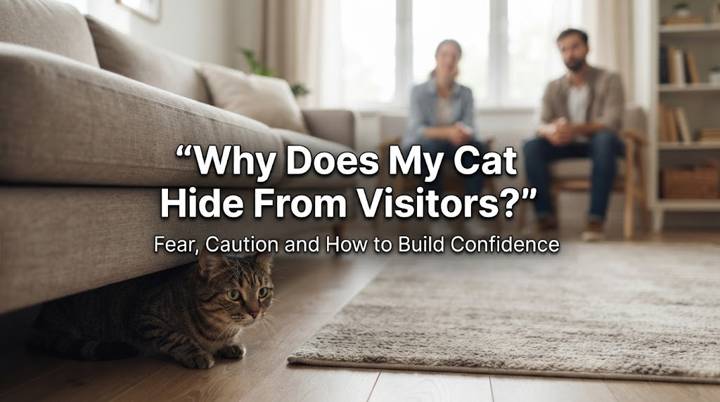

Hiding is a normal feline coping strategy. Under a bed offers darkness, cover, familiar scent, and distance from activity. A cat that uses the space occasionally but still eats, plays, grooms, and interacts normally is very different from a cat that suddenly disappears for most of the day.
Occasional hiding is usually normal. Give your cat access to safe hiding places and do not drag it out. Investigate sudden or prolonged hiding, especially when combined with poor appetite, pain, litter box changes, weakness, or unusual behavior.
Common Reasons Cats Hide
Rest
Some cats simply prefer enclosed, quiet sleeping spaces.
Visitors or Noise
Vacuuming, repairs, children, guests, or a new pet can increase hiding.
Stress
Moving, schedule changes, conflict between pets, and unfamiliar smells can make a cat seek distance.
Illness or Pain
Cats may withdraw when they feel unwell, making sudden hiding a useful health clue.
How to Help a Hiding Cat
- Keep food, water, and litter accessible.
- Provide alternative covered beds or boxes.
- Keep household routines predictable.
- Avoid forced handling.
- Reduce conflict and loud triggers where possible.
When Hiding Becomes a Problem
Concern increases when the cat stops eating, rarely leaves the hiding place, has difficulty moving, vocalizes in pain, vomits repeatedly, or changes urination habits.
When to Contact a Veterinarian
Seek advice for sudden prolonged hiding, especially with reduced appetite, weight loss, pain, breathing changes, or other symptoms.
Normal Retreat or a Behavior Change?
The key distinction is not whether your cat hides, but whether hiding is compatible with normal daily function. A cat that rests under the bed after visitors arrive, then emerges to eat, drink, groom, play, and use the litter box normally is using a common coping strategy. A cat that suddenly stays hidden for much longer, resists moving, stops eating, or no longer follows its usual routine deserves closer attention.
| More Reassuring | More Concerning |
|---|---|
| Hiding is predictable after noise or guests | Hiding begins suddenly without an obvious trigger |
| Cat comes out for meals and normal activities | Reduced appetite, weakness, vomiting, or pain |
| Relaxed posture in the hiding place | Tense posture, rapid breathing, crying, or difficulty moving |
| Returns to normal once the trigger passes | Withdrawal persists or keeps worsening |
Give the Cat Control
Do not drag a frightened cat out from under the bed unless there is an immediate safety need. Instead, keep essentials accessible and offer additional hiding choices such as a covered bed, open carrier, or box in a quiet area. Cats generally cope better when they can choose when to emerge and when important resources are not blocked by another pet.
For senior cats, a new hiding pattern deserves an especially broad look at mobility, vision, hearing, appetite, and comfort because age-related disease can change behavior before the cause is obvious.
Related Virixoo Guides
Read why cats sleep in closets. Read why cats hide from visitors. Read why cats sleep under the covers.