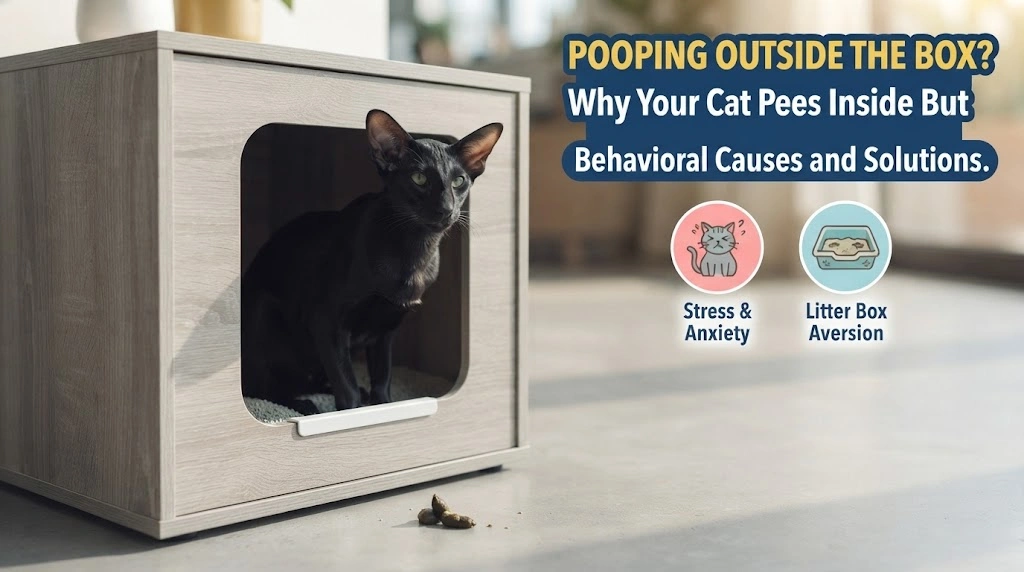

Some cats explode out of the litter box and race through the house immediately after defecating. When the cat otherwise seems comfortable, has normal stool, and uses the box without straining, this can simply be an individual post-litter routine. The behavior becomes more important when the sprint appears connected to discomfort, fear, or abnormal stool.
Quick Answer
Post-poop zoomies can be normal, especially in playful or energetic cats. Watch what happens inside the litter box first. Straining, crying, repeated trips, diarrhea, constipation, blood, or sudden avoidance of the box deserves more attention than the sprint itself.
Why a Cat Might Sprint After the Litter Box
Release of Energy
Some cats show a brief burst of activity after completing a routine bodily function. It may simply feel good to move.
Habit
If the cat has repeated the same sequence for months, it may be a stable routine rather than a sign of illness.
Litter Box Discomfort
A dirty box, unpleasant litter, poor location, or feeling trapped can make a cat leave rapidly. Cleanliness and easy escape routes matter.
Digestive or Anal Discomfort
If defecation is painful, a cat may rush away from the box. This is more likely when stool is very hard, very loose, or accompanied by crying or repeated attempts.
What to Watch in the Litter Box
- Stool consistency.
- How long the cat strains.
- Whether the cat cries.
- Whether there is blood or mucus.
- How often the cat visits the box.
- Whether appetite and activity are normal.
When Zoomies Are Probably Harmless
The behavior is more reassuring when it is longstanding, brief, playful, and follows normal stool without straining. The cat should settle quickly and behave normally afterward.
When to Contact a Veterinarian
Arrange veterinary advice for repeated straining, constipation, diarrhea, blood, vomiting, reduced appetite, weight loss, abdominal pain, or a sudden major change in litter behavior. Urinary straining can look similar to constipation and can be urgent, especially when little or no urine is produced.
Frequently Asked Questions
Why does my cat meow before running?
A brief vocalization may be part of the routine, but new or distressed vocalization is worth observing closely for discomfort.
Should I stop the zoomies?
No, unless the environment is unsafe. Clear fragile objects from common running paths and make sure the litter area does not force the cat into a tight corner.
Can litter type cause the behavior?
It can influence how comfortable the box feels, but the sprint alone does not prove the litter is the cause.
Watch the Litter Box Before the Sprint
The most useful information happens before the zoomies. A cat that enters the box, passes a normal stool without straining, covers it, then runs off playfully is very different from a cat that strains for a long time, cries, repeatedly enters and leaves, or produces very hard, loose, or bloody stool. The sprint itself is usually less important than the quality of elimination.
Keep a Simple Stool and Behavior Log
If the behavior is new or you are unsure whether your cat is uncomfortable, record a few details for several days. You do not need a complicated medical chart.
| What to Note | Why It Helps |
|---|---|
| Stool consistency | Shows whether constipation or diarrhea may be present. |
| Time spent straining | Prolonged effort is more concerning than a quick normal bowel movement. |
| Vocalization | New crying can suggest discomfort. |
| Number of box visits | Repeated unproductive trips deserve attention. |
| Appetite and water intake | Changes can help place litter behavior in context. |
Do Not Confuse Urinary Straining With Constipation
Owners sometimes see a cat repeatedly squat in the litter box and assume it is trying to defecate. Difficulty urinating can look similar. Repeated attempts with little or no urine, distress, licking the genital area, or frequent urgent trips to the box require prompt veterinary attention. This is especially important because urinary obstruction can become an emergency.
Improve the Litter Box Setup
Even when the sprint is harmless, the box should be easy to use. Keep it clean, place it where the cat can enter and leave without being cornered, and avoid sudden unnecessary changes in litter type. In multi-cat homes, provide enough well-distributed resources so one cat cannot guard the only path to a box.
If your cat begins avoiding the box rather than simply running afterward, use the Virixoo guide on cat litter box problems as a separate troubleshooting path. If reduced appetite occurs at the same time, review why a cat may stop eating.
When the Zoomies Are Just Part of the Routine
A stable pattern that has existed for months or years, follows normal stool, and ends with the cat quickly settling is often just an individual habit. Some cats also become active after meals, play, or other routine events. You do not need to stop a harmless sprint; instead, make the route safe by moving fragile objects and providing traction on slippery floors if needed.
When to Move From Observation to Veterinary Advice
Contact a veterinarian for repeated straining, hard dry stool, diarrhea that persists, blood, mucus, vomiting, abdominal pain, weight loss, poor appetite, or a major change in frequency. Also seek help when the cat appears painful before or after eliminating. A behavior that looks funny on video can still be useful health information when it changes suddenly.
Common Mistakes to Avoid
- Do not punish a cat for running after the litter box.
- Do not change litter, box style, location, and diet all at once unless there is a clear safety reason.
- Do not assume every repeated squat is constipation; check for urine output.
- Do not delay veterinary advice when straining is persistent or the cat seems painful.
Changing one variable at a time makes it easier to understand what actually helped. If the cat is otherwise comfortable, a quirky post-litter sprint may require no treatment at all.
Related Virixoo Guides
Read what appetite loss can mean in cats. Read safe ways to support cat hydration. Read how to distinguish normal sleep from a change. Read why appetite may suddenly increase.
Final Thoughts
Post-litter zoomies are often just a quirky routine. Focus less on the running and more on the quality of elimination. Normal stool and a comfortable cat are reassuring; straining, pain, or sudden change deserves attention.