
Many cats make rapid clicking, chirping, or chattering sounds when they watch birds or small animals through a window. The behavior often appears during intense visual focus and hunting-like arousal. It can look dramatic, but in an otherwise relaxed indoor cat it is usually normal.
Quick Answer
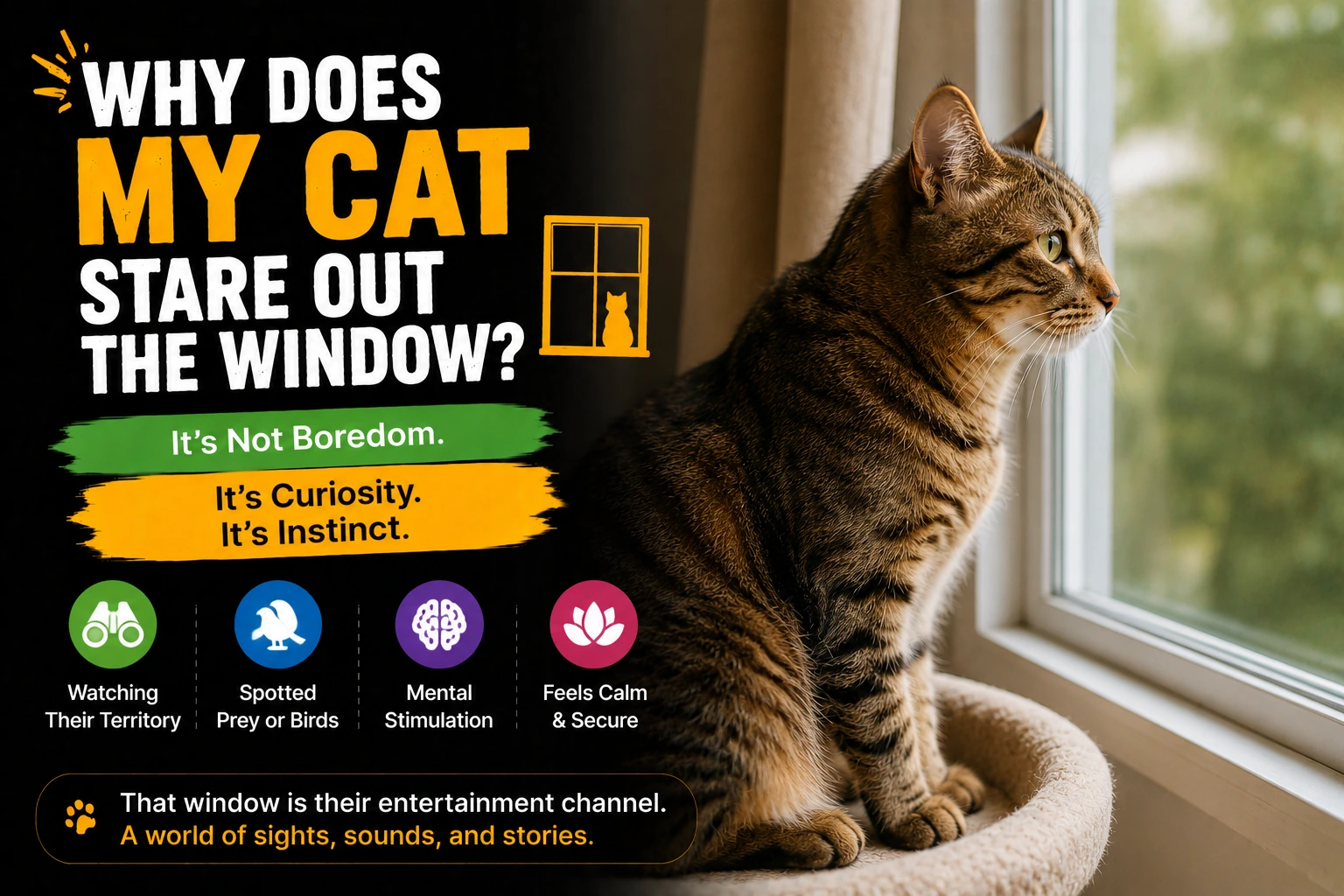
Chirping at birds is commonly associated with excitement and predatory interest. Your cat sees something it wants to track or chase but cannot reach. Provide safe window viewing and interactive play rather than allowing outdoor hunting.
What the Sound Looks Like
The jaw may move rapidly while the cat produces small clicks, squeaks, or short trills. Some cats remain silent and only flick the tail. Others vocalize every time a bird lands outside.
Why Birds Trigger the Behavior
Visual Movement
Birds move quickly and unpredictably, which strongly engages feline attention.
Hunting Arousal
Watching prey-like movement can activate stalking and pouncing behavior even when the cat cannot reach the animal.
Frustration May Contribute
Some cats appear more agitated when separated from the target by glass. If the cat remains highly aroused long after the bird leaves, reduce exposure and redirect to play.
Turn the Moment Into Safe Enrichment
- Provide a stable window perch.
- Use wand toys after bird-watching sessions.
- Rotate toys that mimic darting or fluttering movement.
- Use puzzle feeding to add problem-solving opportunities.
- Keep windows and screens secure.
Do Not Encourage Outdoor Hunting
Indoor enrichment provides hunting-like activity without exposing the cat to traffic, fights, toxins, parasites, or wildlife conflict. If your cat has supervised outdoor access, use secure options appropriate to your home and local environment.
Frequently Asked Questions
Is chattering a sign my cat is angry?
Not usually by itself. It often reflects intense focus or excitement. Read the rest of the body language.
Why does my cat chirp at insects too?
Small moving insects can trigger the same visual hunting interest.
Should I interrupt the behavior?
Not if the cat remains calm and safe. Interrupt only if arousal becomes excessive or the cat starts attacking nearby pets or people.
When to Seek Advice
Contact a veterinarian if unusual vocalization appears suddenly without an obvious trigger, especially with breathing changes, mouth pain, drooling, weakness, or other symptoms.
What Chirping Tells You About Arousal
Chirping, chattering, and short trilling sounds often happen when a cat is highly focused on movement outside. The sound is best understood as part of a larger hunting-like sequence: orienting toward movement, crouching, tracking with the eyes, tail movement, and sometimes rapid jaw motion. Not every cat does it, and the absence of chattering does not mean a cat lacks hunting interest.
Look at What Happens After the Bird Leaves
A cat that watches, chatters briefly, then walks away or settles is generally handling the stimulation well. A cat that remains highly aroused, attacks another pet, races through the house for a long period, or cannot disengage may need a calmer setup. In that case, shorten access to the trigger, close a blind temporarily, or redirect attention before arousal becomes intense.
Turn Window Watching Into a Healthy Routine
- Provide a stable perch. The cat should not balance on a narrow or unsafe surface.
- Secure windows and screens. Excited cats may push harder than expected.
- Add interactive play. A short wand-toy session can give the cat an appropriate outlet for stalking and pouncing.
- End calmly. Allow the cat to settle after play instead of keeping arousal high.
- Rotate enrichment. Combine window viewing with boxes, climbing areas, scratching surfaces, and puzzle feeding.
Bird Watching Is Not a Reason to Let a Cat Hunt Outdoors
A strong reaction to birds does not mean a cat needs unsupervised outdoor hunting. Indoor play and secure outdoor options can provide stimulation while reducing risks from traffic, fights, toxins, parasites, getting lost, and wildlife conflict. The exact safe setup depends on your home and local environment.
Chirping, Staring, and Other Visual Behaviors
Some cats stare silently rather than chatter. Others chirp at insects, screen movement, or reflections. The behavior may overlap with general visual curiosity. The Virixoo guide on why cats stare explains how body posture changes the meaning of sustained attention, while why cats knock things over covers another common curiosity-driven behavior.
When Vocalization Is Not Typical Bird Chatter
A familiar sound that occurs only while watching prey-like movement is generally less concerning than a new unexplained vocalization. Seek veterinary advice when unusual sounds appear with open-mouth breathing, coughing, drooling, difficulty swallowing, mouth pain, weakness, or other physical changes. If the vocalization mainly happens at night without a visual trigger, compare it with nighttime meowing in cats.
The useful question is not whether the sound has one exact translation. It is whether your cat can engage with the stimulus, recover normally, and remain safe.
Prevent Redirected Excitement
Most cats recover quickly after watching birds, but a highly aroused cat may occasionally turn toward another pet or person nearby. If your cat becomes stiff, tail-thrashes, growls, or remains intensely focused, avoid picking it up. Give it space, block the view if needed, and let arousal fall before starting another interaction.
In multi-cat homes, provide more than one window perch so one cat does not control the only high-value viewing spot. Separate resources reduce competition and make bird watching a calmer activity.
What Not to Do
- Do not tap on the glass to intensify frustration.
- Do not open an unsecured window because the cat appears eager to chase.
- Do not punish chattering or chirping.
- Do not assume every unusual mouth sound is normal if it occurs away from visual triggers.
For indoor cats, this kind of visual enrichment can be especially valuable when it is balanced with physical play, rest, scratching, climbing, and feeding activities. Variety matters because watching a window should be one interesting part of the day, not the cat's only source of stimulation.
Related Virixoo Guides
Read how to read a cat's stare. Read why cats investigate and knock things over. Read why cats become vocal at night. Read why cats carry toys to people.
Final Thoughts
Bird chattering is usually one of the most visible examples of a cat's hunting system switching on indoors. Let your cat watch safely, then provide appropriate play to turn that interest into healthy activity.