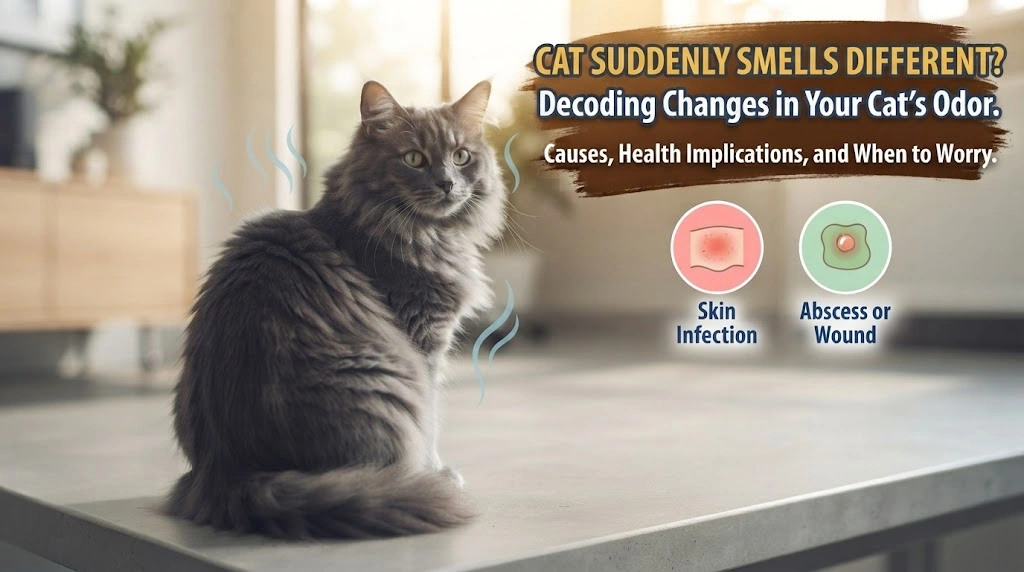

When groceries arrive, furniture moves, or a visitor enters the home, your cat may inspect every change nose-first. Smell provides information that people cannot detect and is an important part of how cats investigate their environment.
Quick Answer
Frequent sniffing is usually normal curiosity. Allow safe investigation while keeping chemicals, medications, toxic plants, essential oils, and unsafe foods out of reach. Sudden repetitive sniffing with breathing or neurological changes deserves veterinary attention.
What Cats Learn Through Smell
Who Has Been There
People, animals, shoes, and bags can carry unfamiliar scents into the home.
Whether Something Is New
A changed object can be investigated before the cat decides whether to approach further.
Food Information
Smell is important when cats assess food.
Territorial Information
Familiar and unfamiliar scents help cats notice changes in their environment.
Safe Scent Exploration
- Let your cat inspect safe new objects at its own pace.
- Store household chemicals securely.
- Avoid intentionally exposing cats to concentrated fragrances or essential oils.
- Keep potentially toxic plants and foods inaccessible.
Frequently Asked Questions
Why does my cat sniff my shoes?
Shoes collect many outdoor scents and can be especially information-rich.
Why does my cat sniff a spot then open its mouth?
Cats can use a specialized scent-processing response that may briefly produce an open-mouth expression.
Why does my cat sniff food and walk away?
The food may be unappealing, but persistent appetite loss requires attention.
When to Contact a Veterinarian
Seek advice if unusual sniffing accompanies nasal discharge, breathing difficulty, appetite loss, disorientation, seizures, or another sudden change.
Related Virixoo Guides
Read sniff My Face. Read lick the Window. Read stare at Me.
Final Thoughts
Sniffing is a major information-gathering tool for cats. A safe home gives them plenty to investigate without exposing them to harmful substances.