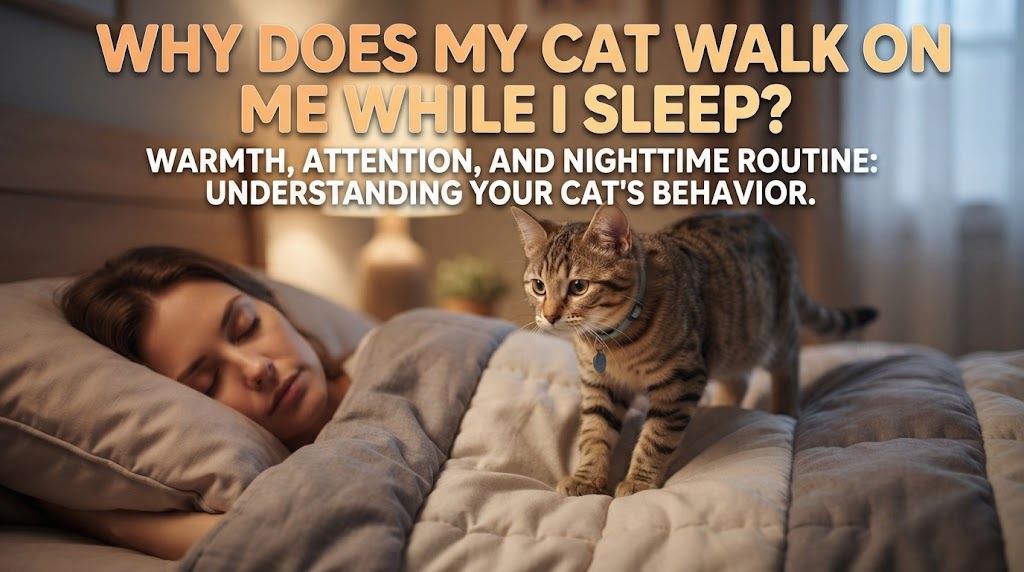
Being used as a nighttime walkway can feel personal, especially when a cat steps directly across your chest or stomach at 3 a.m. In most cases, though, the behavior is practical rather than mysterious.
Quick Answer
Your cat may walk on you while you sleep because you are between the cat and a preferred resting place, because your body is warm, because the cat wants interaction, or because waking you has become a successful routine. Look at what the cat does next: settling down, heading to the food area, meowing, or immediately leaving all point toward different explanations.
Sometimes You Are Simply Part of the Route
A bed is a large elevated surface, and your body may be the shortest path between two spots. If the cat walks across you and continues to the pillow, foot of the bed, windowsill or edge, there may be no social message at all. The cat is navigating a familiar nighttime route.
Warmth Makes a Sleeping Person Attractive
Human bodies provide a warm surface, and cats often choose comfortable resting areas based partly on temperature. A cat may step onto you while deciding where to settle, especially on cool nights. If the walking ends with curling up on your legs, chest or beside your head, warmth and comfort are likely part of the pattern.
Walking on You Can Work as an Attention Signal
If stepping on you reliably makes you wake, speak, pet the cat, get up, or provide food, the behavior can become reinforced. The cat does not need to understand that it is “annoying” you. It only needs to learn that this action predicts a useful response.
| What happens next | Most useful interpretation |
|---|---|
| Cat curls up and sleeps | Resting location and warmth are likely important |
| Cat meows and walks toward the door or bowl | The cat may be prompting you to follow |
| Cat crosses you and leaves the bed | You may simply be part of the route |
| Cat repeats the behavior after you respond | Your response may be reinforcing the routine |
How to Reduce Nighttime Walking Without Frightening Your Cat
First, make the desired alternative easy. Offer an appealing bed or blanket beside you, at the foot of the bed, or on a nearby stable perch. Schedule interactive play before bedtime and keep nighttime feeding predictable. If the cat is healthy and has learned that walking on you produces entertainment, keep responses calm and consistent rather than turning the episode into a game.
Do not shout, push the cat off roughly, spray water, or use startling deterrents on the bed. These methods can add stress without teaching a clear alternative.
Sudden Nighttime Restlessness Is Different
If an older cat suddenly begins pacing over you, vocalizing at night, appearing confused, or changing sleep-wake patterns, discuss the broader change with a veterinarian. Pain, hyperthyroidism, sensory decline, cognitive changes, and other medical issues can alter nighttime behavior. The walking itself is not diagnostic; the new pattern is what matters.
Related Virixoo Guides
For a cat that settles directly on your body, read why cats sleep on people. If your cat consistently chooses the end of the bed, see why cats sleep at your feet. For pillow-area sleeping, read why cats sleep beside your head.
Bottom Line
A cat walking over you at night is usually using the bed, your warmth, or your response as part of a familiar routine. Watch what happens immediately afterward, then change the environment or your response based on the actual function of the behavior.